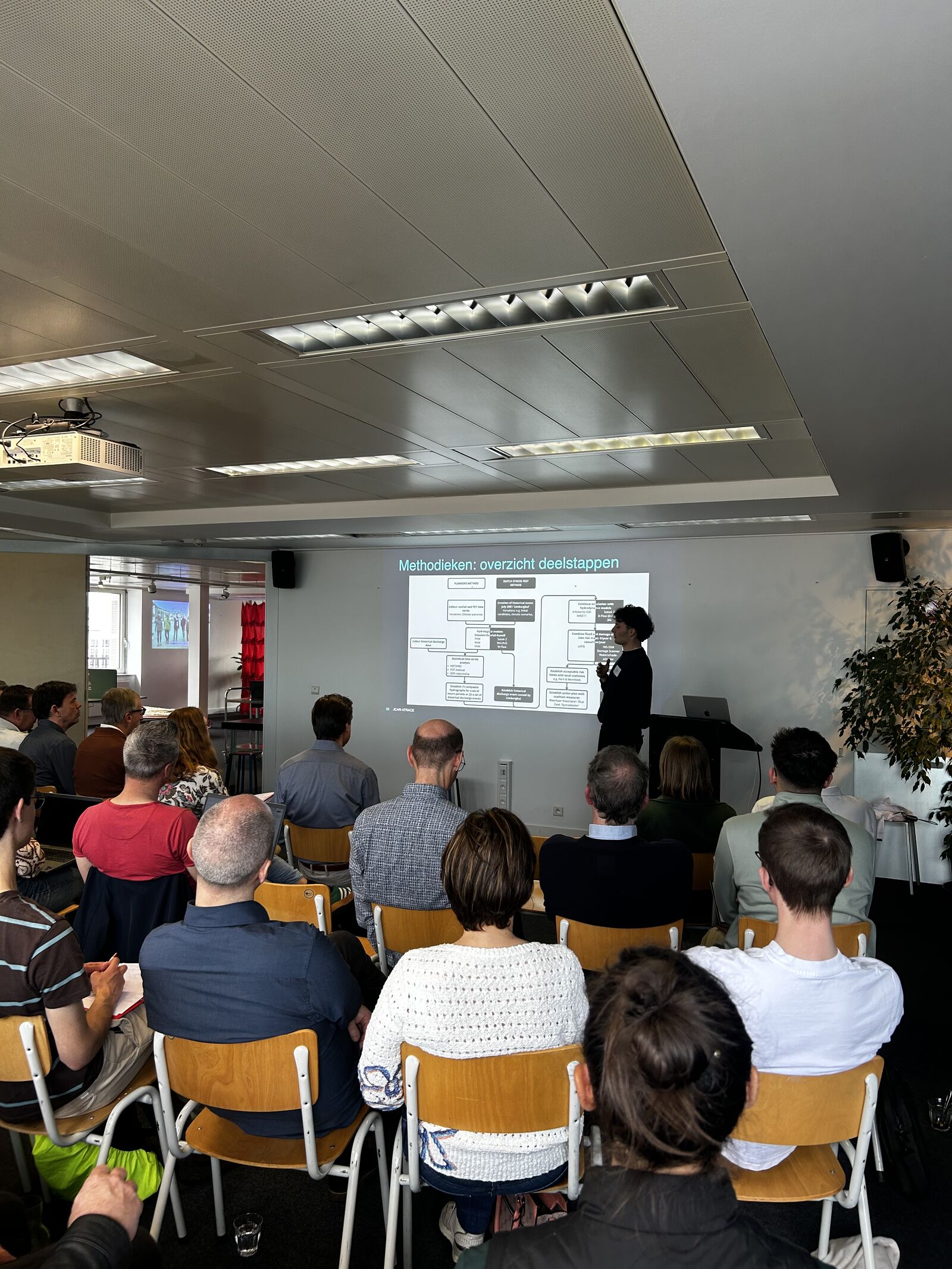
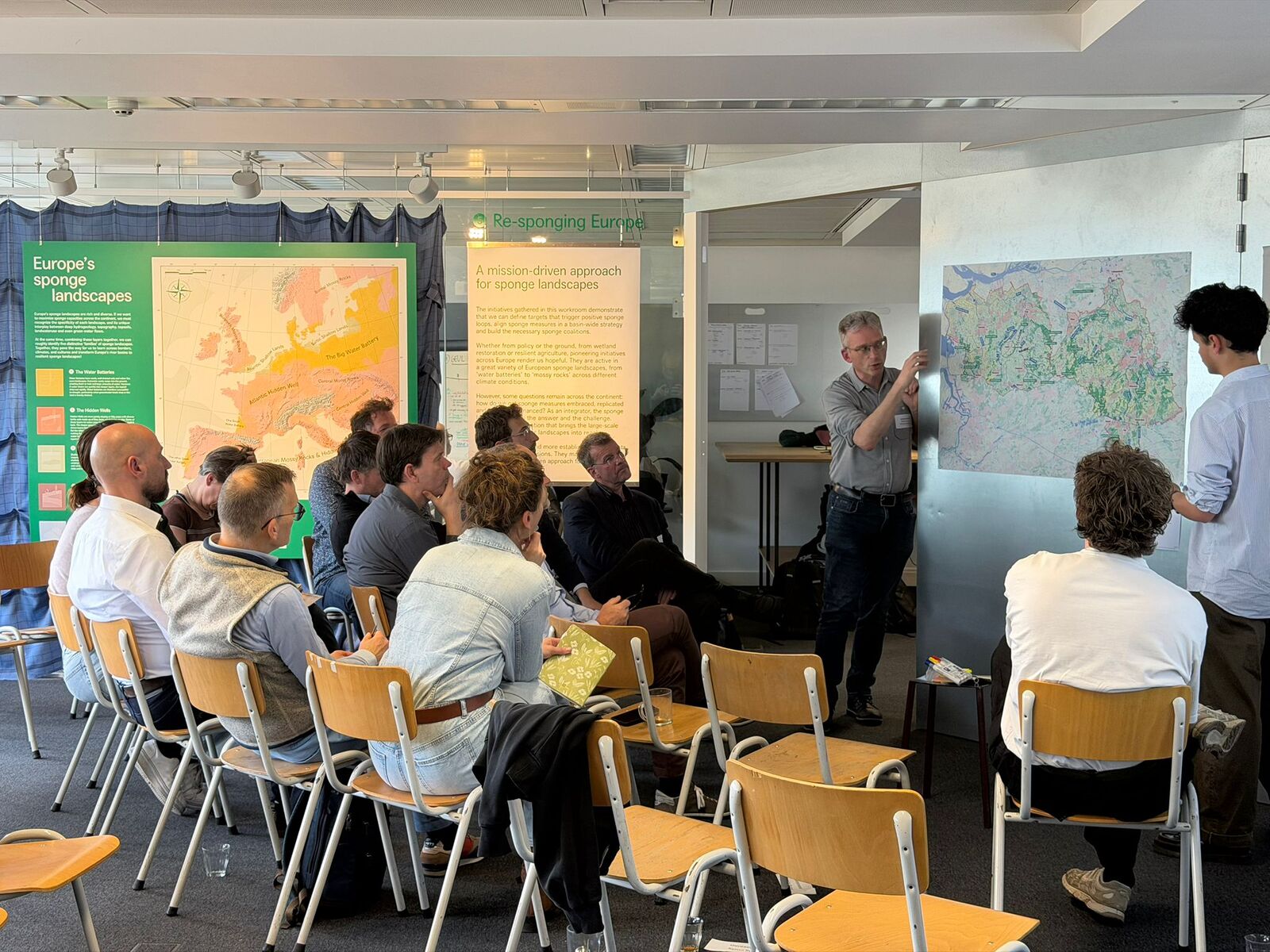
Water doesn't stop at the border! In addition to climate challenges, river basins in the border region also have to deal with the associated complexity of a national border. So how do we take our responsibility together, especially in those regions where agreements and rules, data and models differ? Not by continuing to reason from everyone's own interests or from persistent cultural differences, but by jointly setting out the outlines for long-term cooperation with a cross-border coalition at the scale of the river basin. Together with the international research programme JCAR ATRACE, we support area actors in launching cross-border area coalitions, setting up international processes and conducting area-specific research.
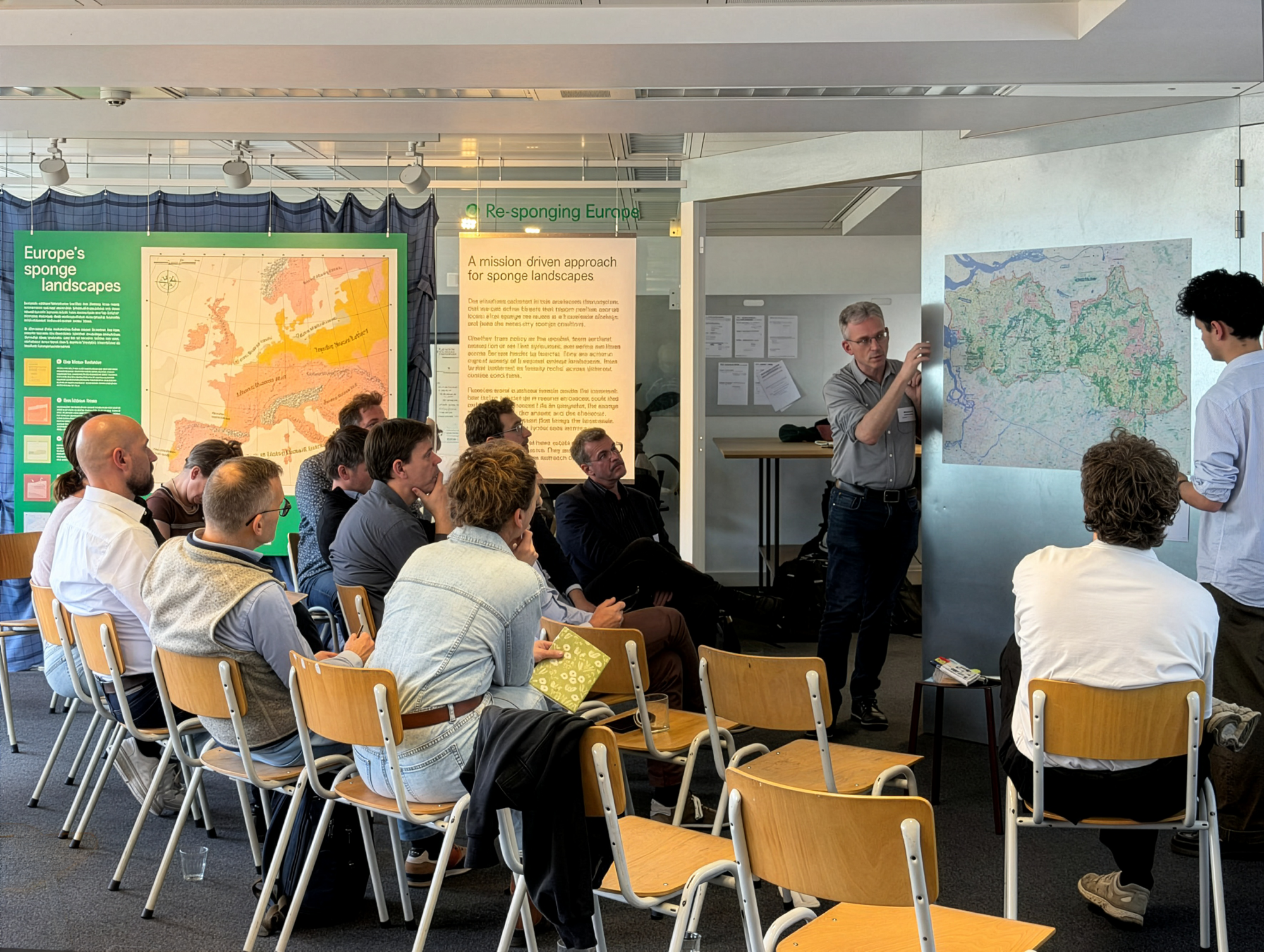
Working together based on urgency and complementarity
Longer periods of drought and increasing risk of flooding make the region of the Low Countries vulnerable. Cross-border water basins are particularly sensitive in this respect, because the decisive and executive powers are fragmented. The Water Bomb of 2021, also known as the Limburg Storm, led to the conclusion that we need to work better across national borders to protect ourselves against incidents of this magnitude in the future. This has resulted in the international research programme JCAR ATRACE (Joint Cooperation programme on Applied scientific Research to Accelerate Transboundary Regional Adaptation to Climate extremes), which supports regional governments in making themselves resilient to flood and drought strategies.
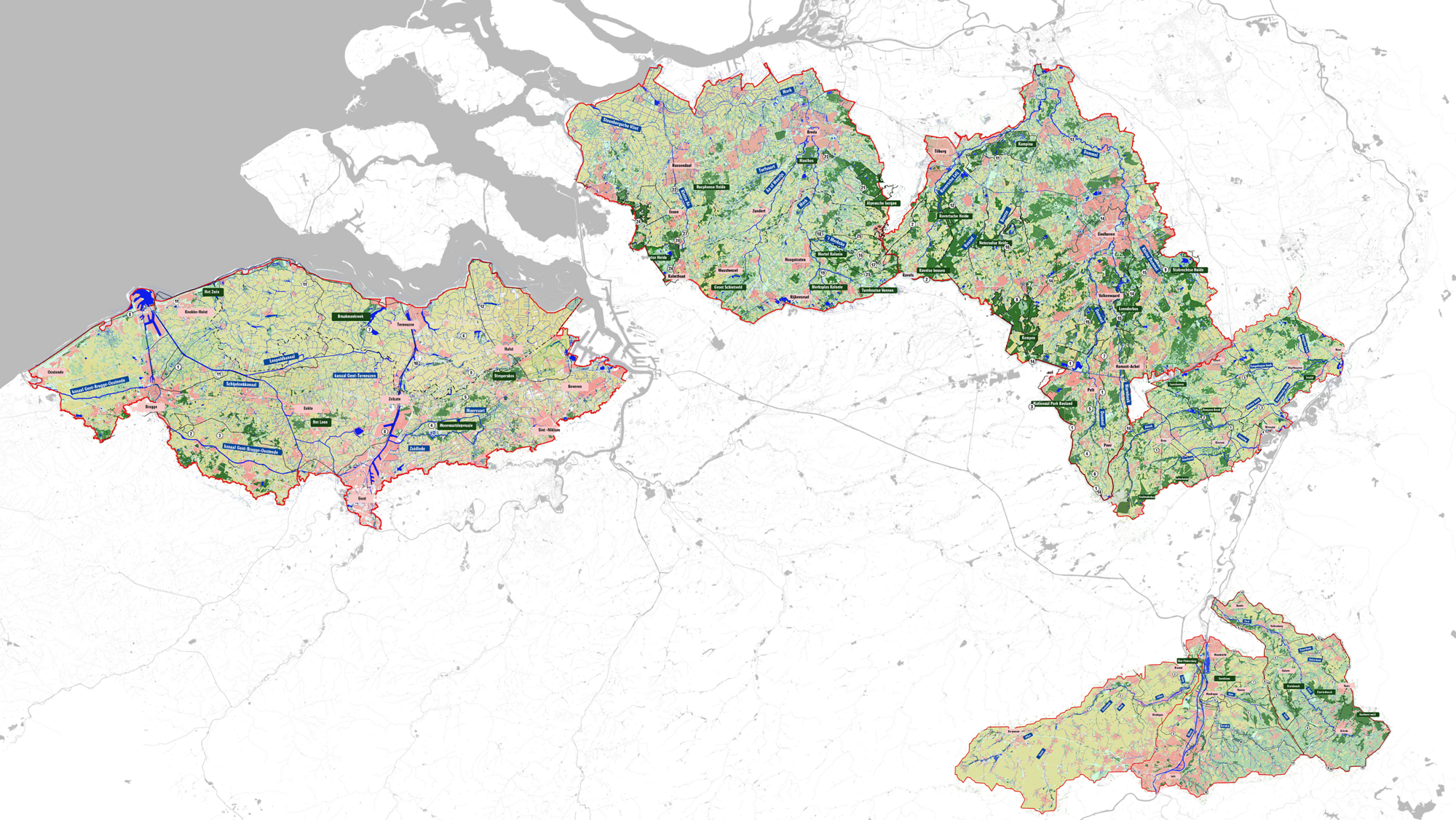
The Netherlands has a long history in civil engineering water management and flood safety, and is strongly organised in this area through the Water Boards. In Flanders, on the other hand, working with area coalitions around sponge goals has grown as a common practice in recent years. The collaboration between JCAR ATRACE and Workroom in this process offers an opportunity to bring these two knowledge bases together and to work from the complementarity of sponge measures and the civil engineering approach in different river basins in the border region, each from the specificity of the water system and the local needs. Across the eight border river basins, we distinguished three types of water systems in the border region. Together with area actors such as Water Boards, Provinces, Regional Landscapes, Flemish partners, knowledge institutions and test centres, we map out the task for each river basin:
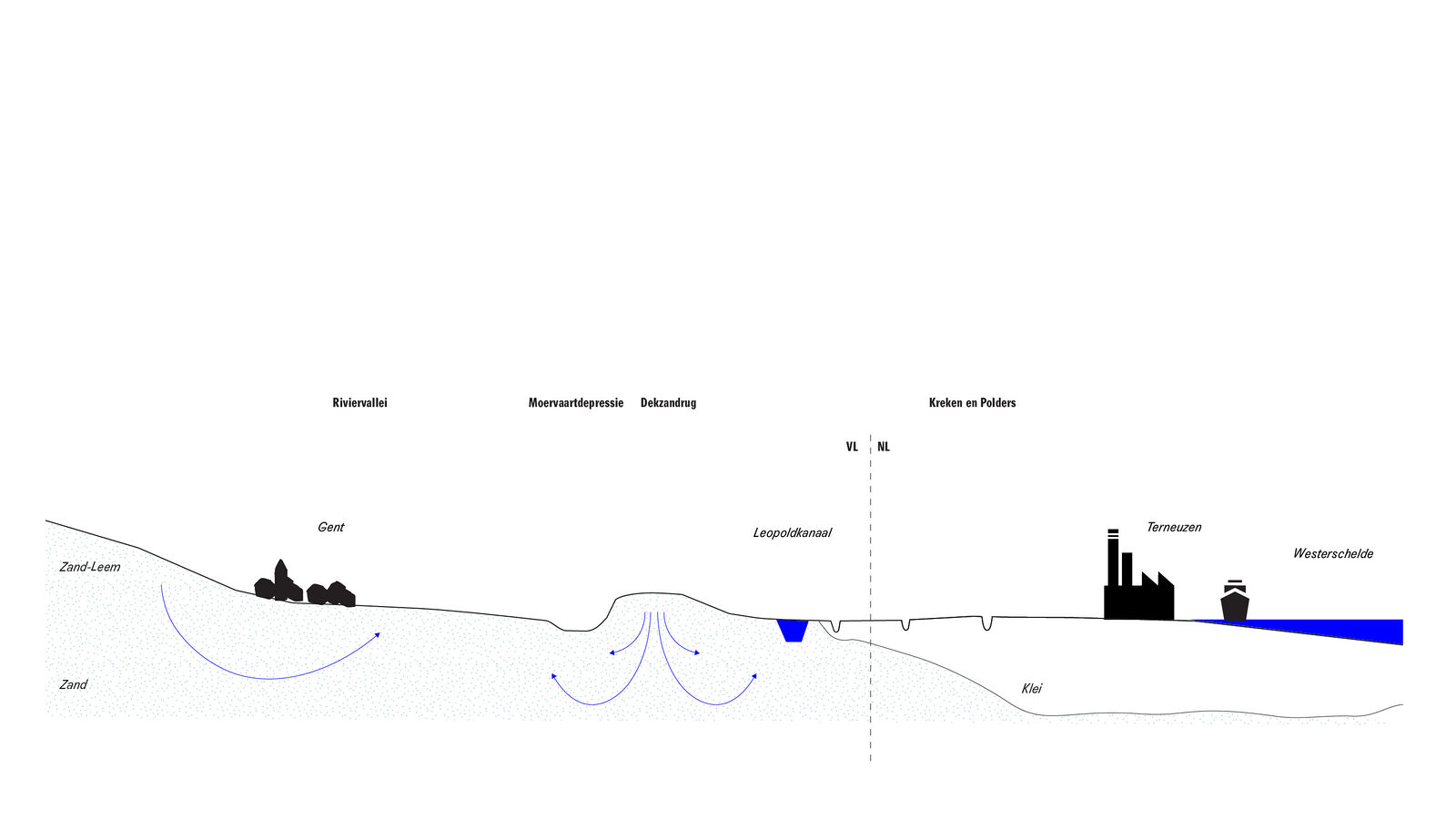
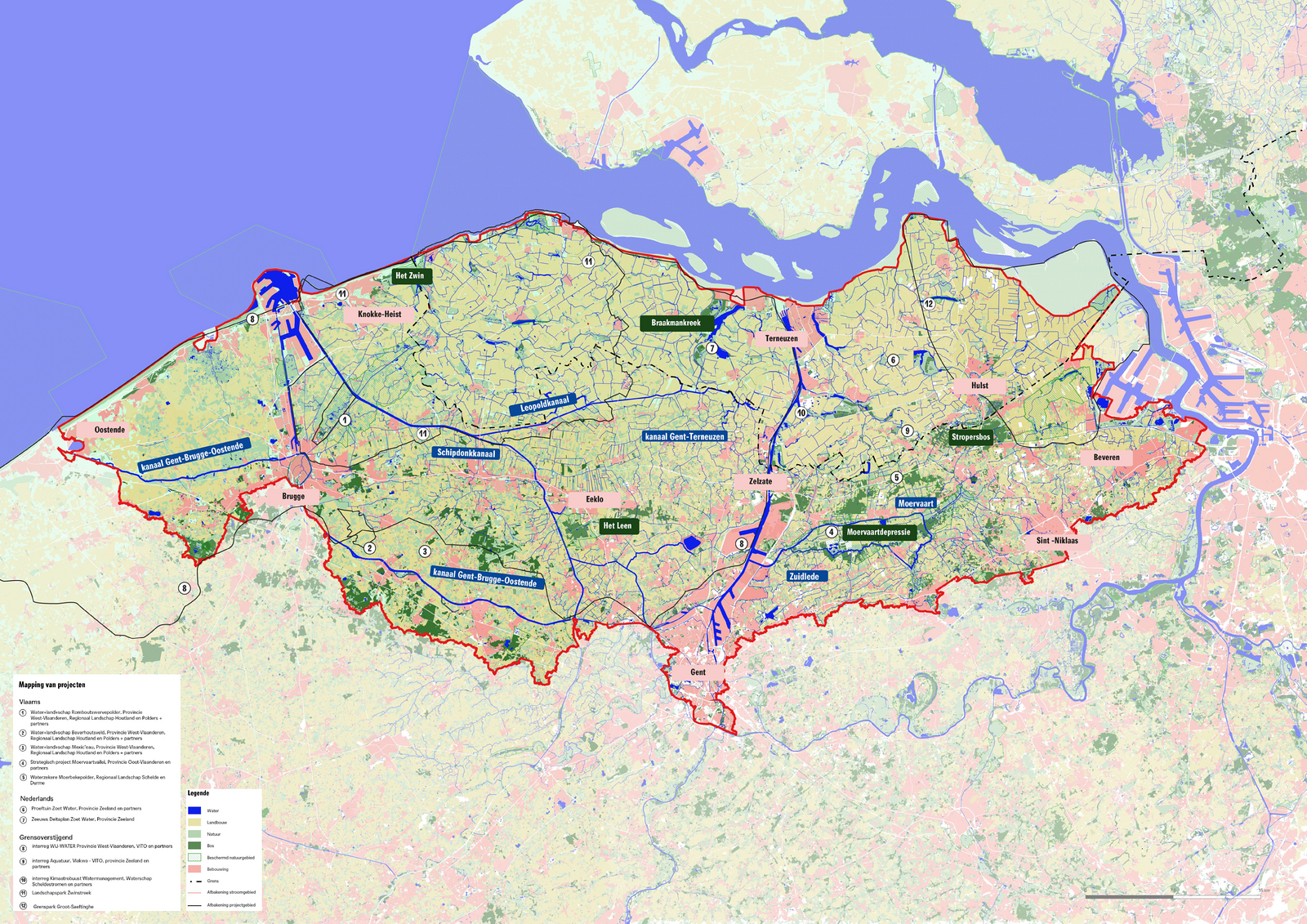
• Creeks, polders and the Ghent Freshwater Canals: This catchment area in Zeeland, East and West Flanders is crossed by the Maldegem-Stekene sand ridge, which forms the border between the Sand Region in Flanders and the clay polders in Zeeland and is characterized by a largely artificial water system. The presence of the sand package makes the areas on the sand ridge sensitive to drought. In addition, the proximity of the North Sea creates both salinization pressure and a flood protection task. It is also a challenge to make bottlenecks on the constructed infrastructure, such as the Ringvaart near Ghent, resilient to increasing flood incidents.
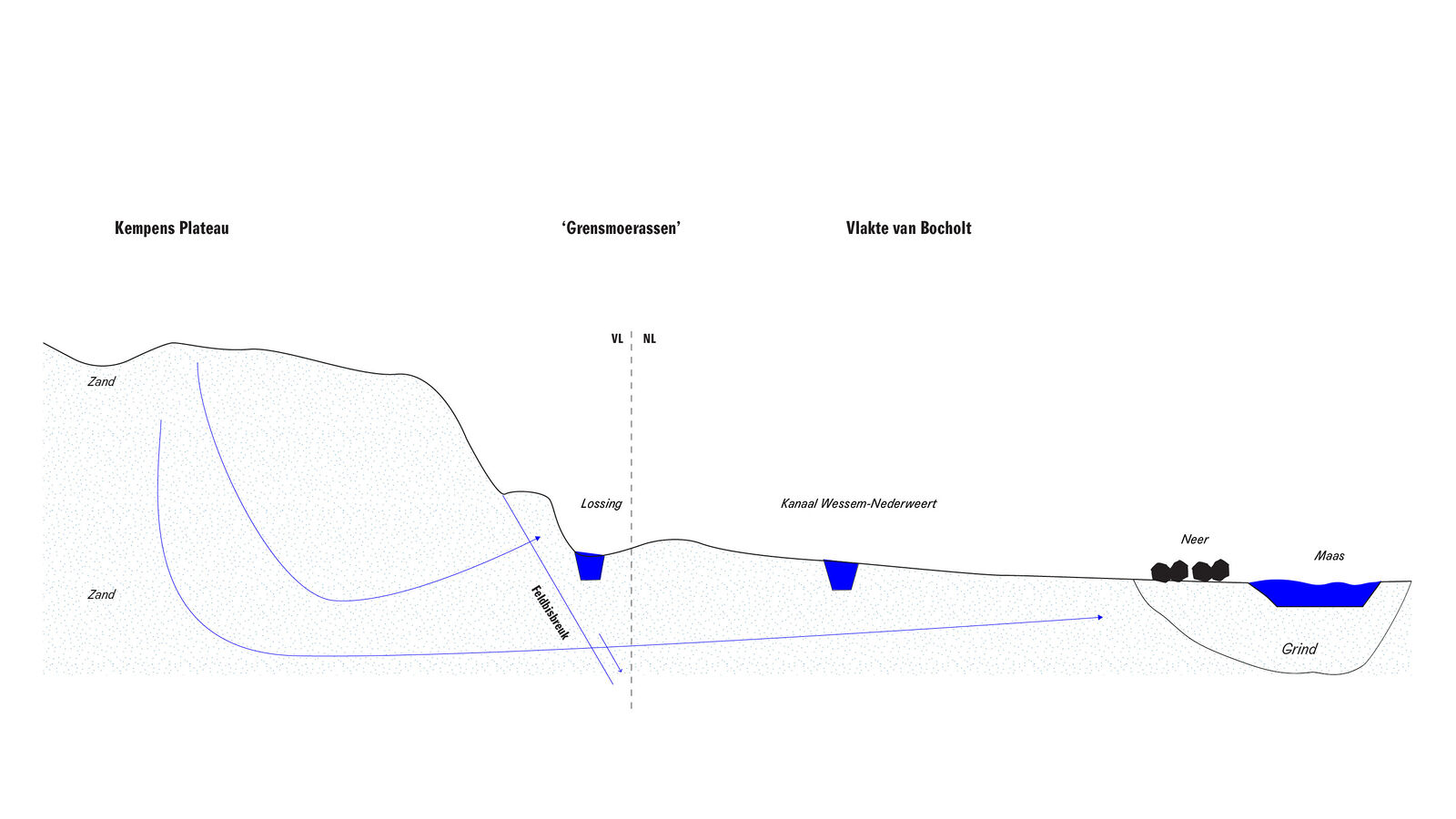
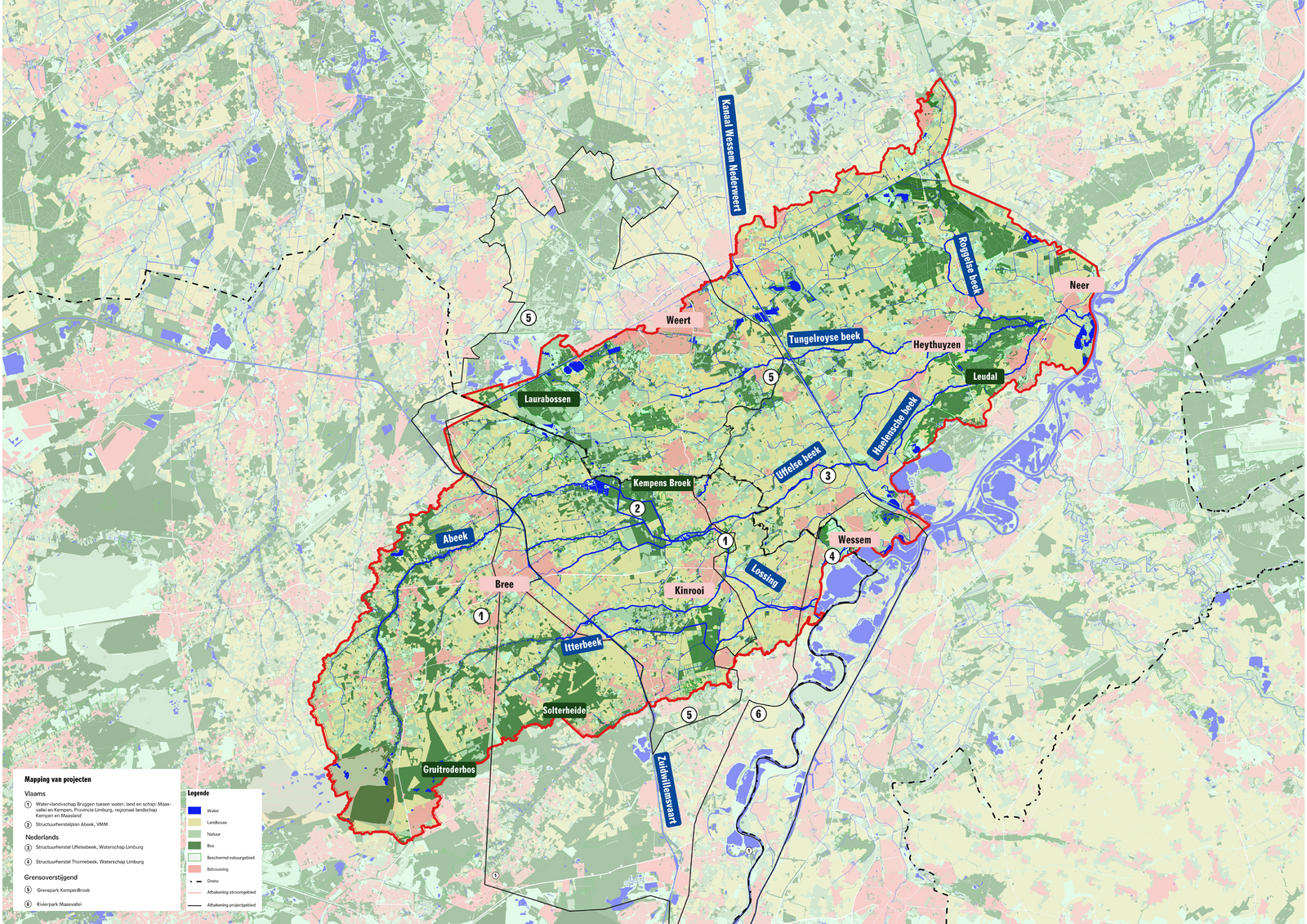
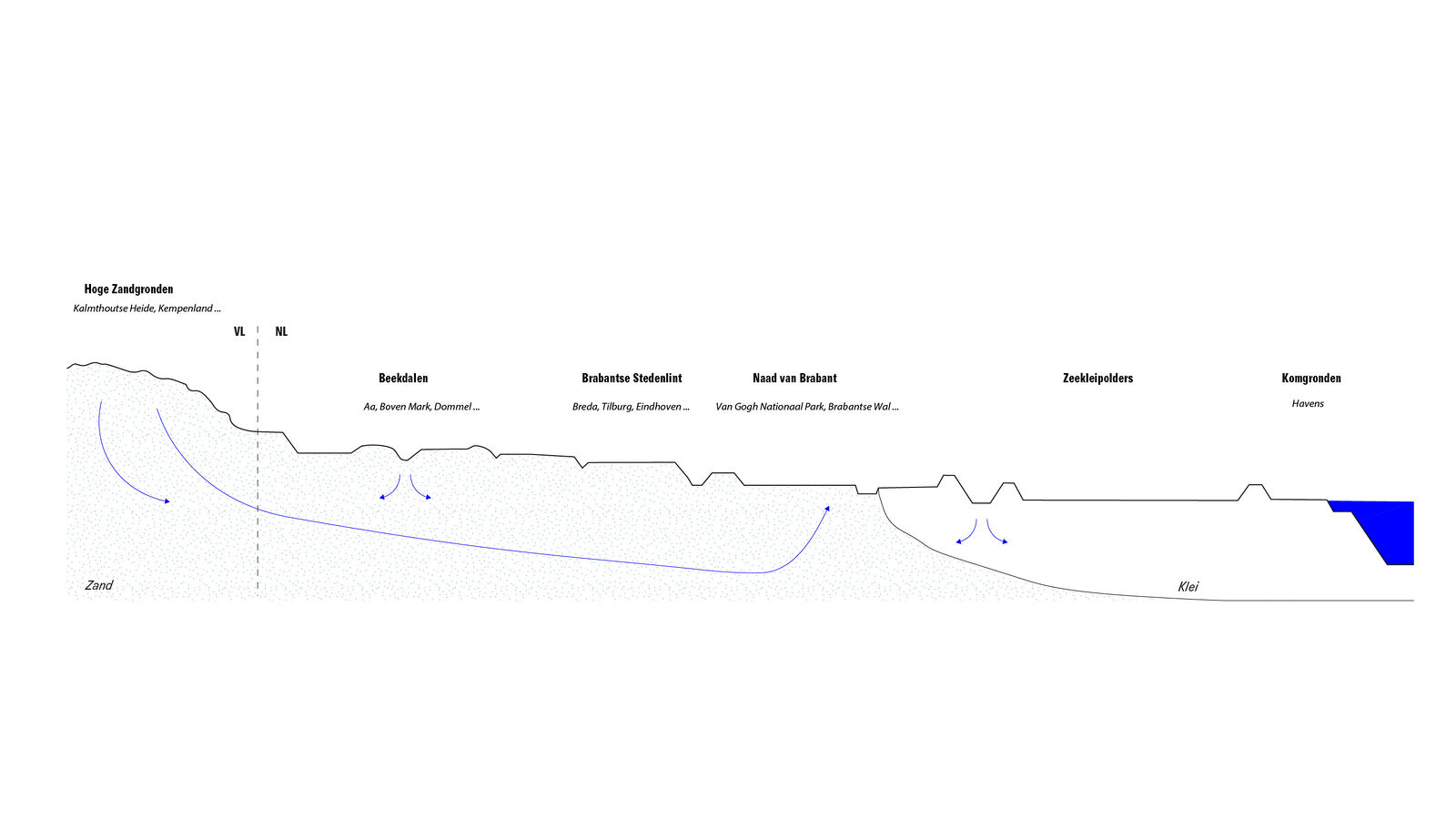
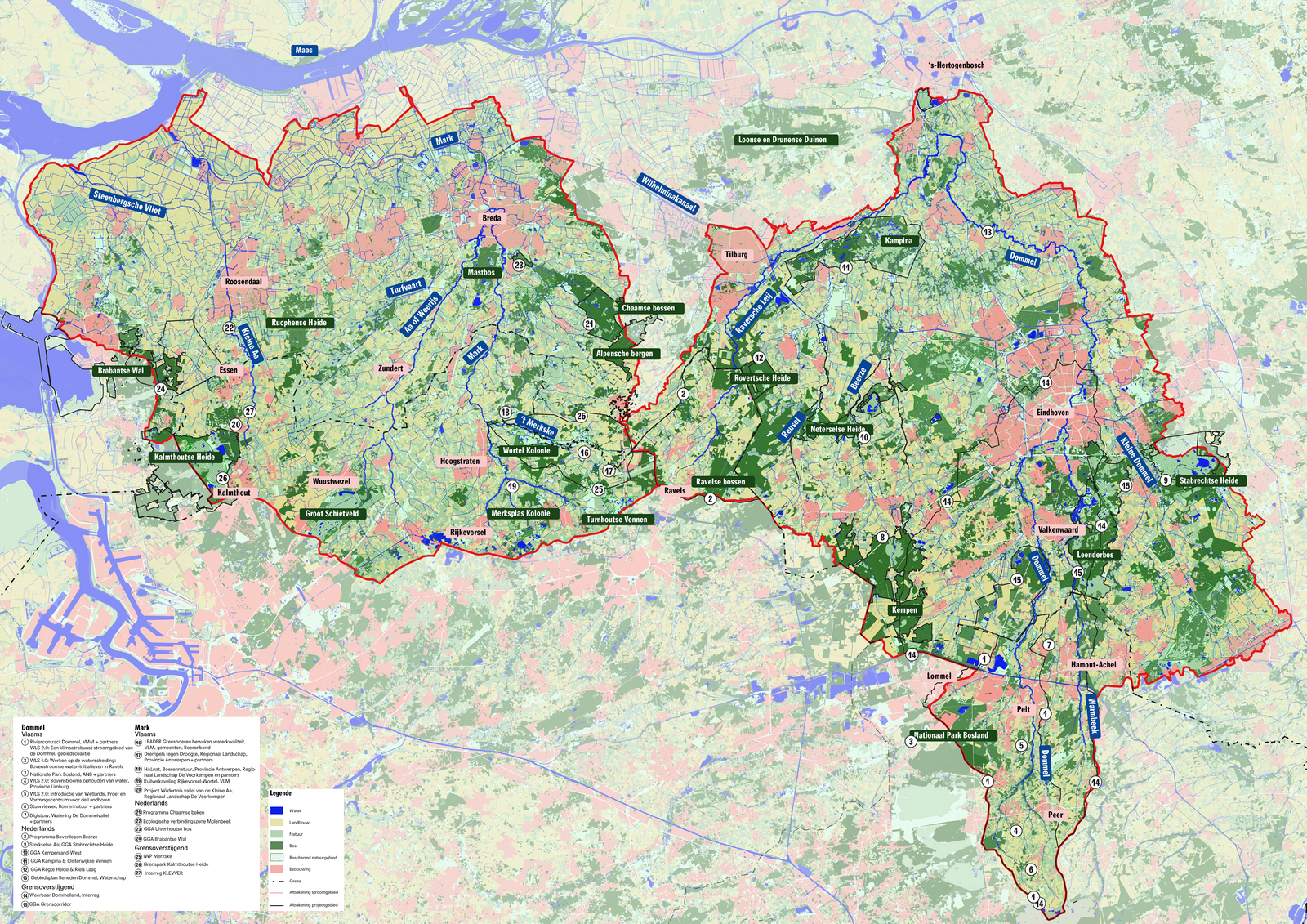
• The Brabant High Sandy Soils: The 'Kempen', which includes the catchment areas of the Mark, Dommel and Abeek/Uffelsebeek, consist for the most part of high-lying sandy soils that are crossed by a mesh of waterways. A huge asset of this area is the access to a water battery in the subsurface. But due to the historical reclamation of this area in combination with the changing precipitation pattern, the region is increasingly vulnerable to drought on the high-altitude sandy soils and flooding in the depressions, the polders in West Brabant and the Bocholt plain in Limburg.
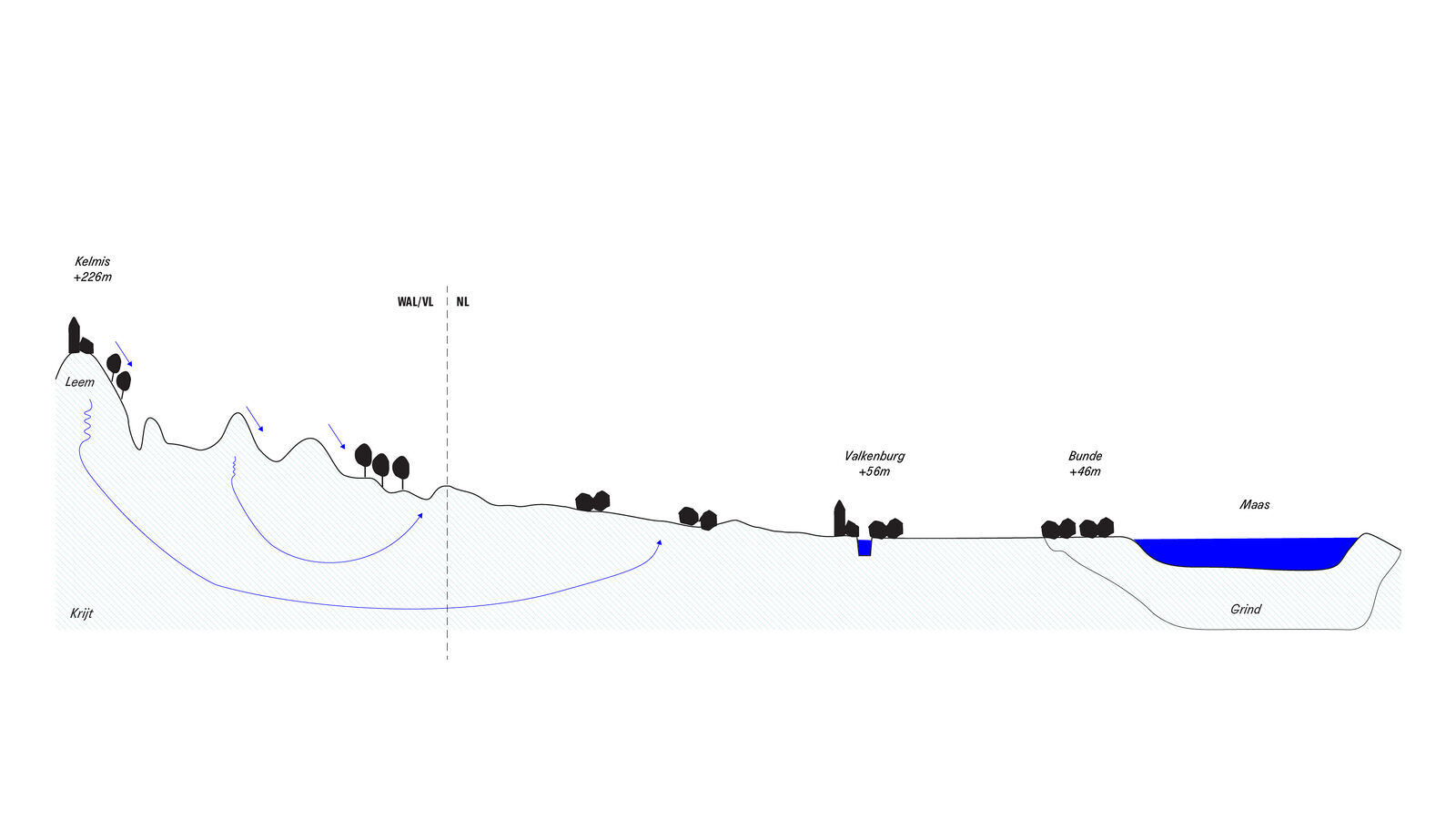
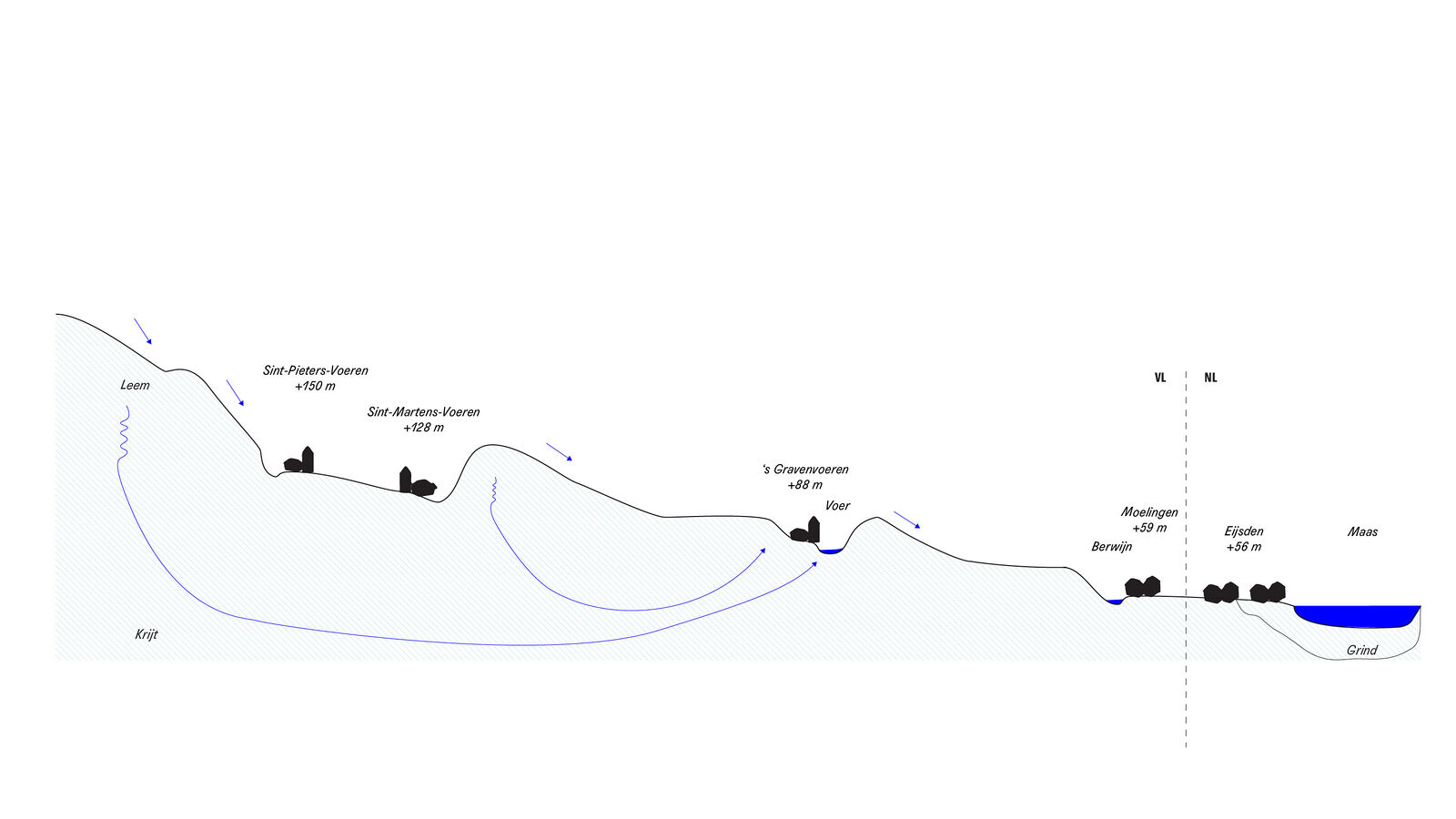
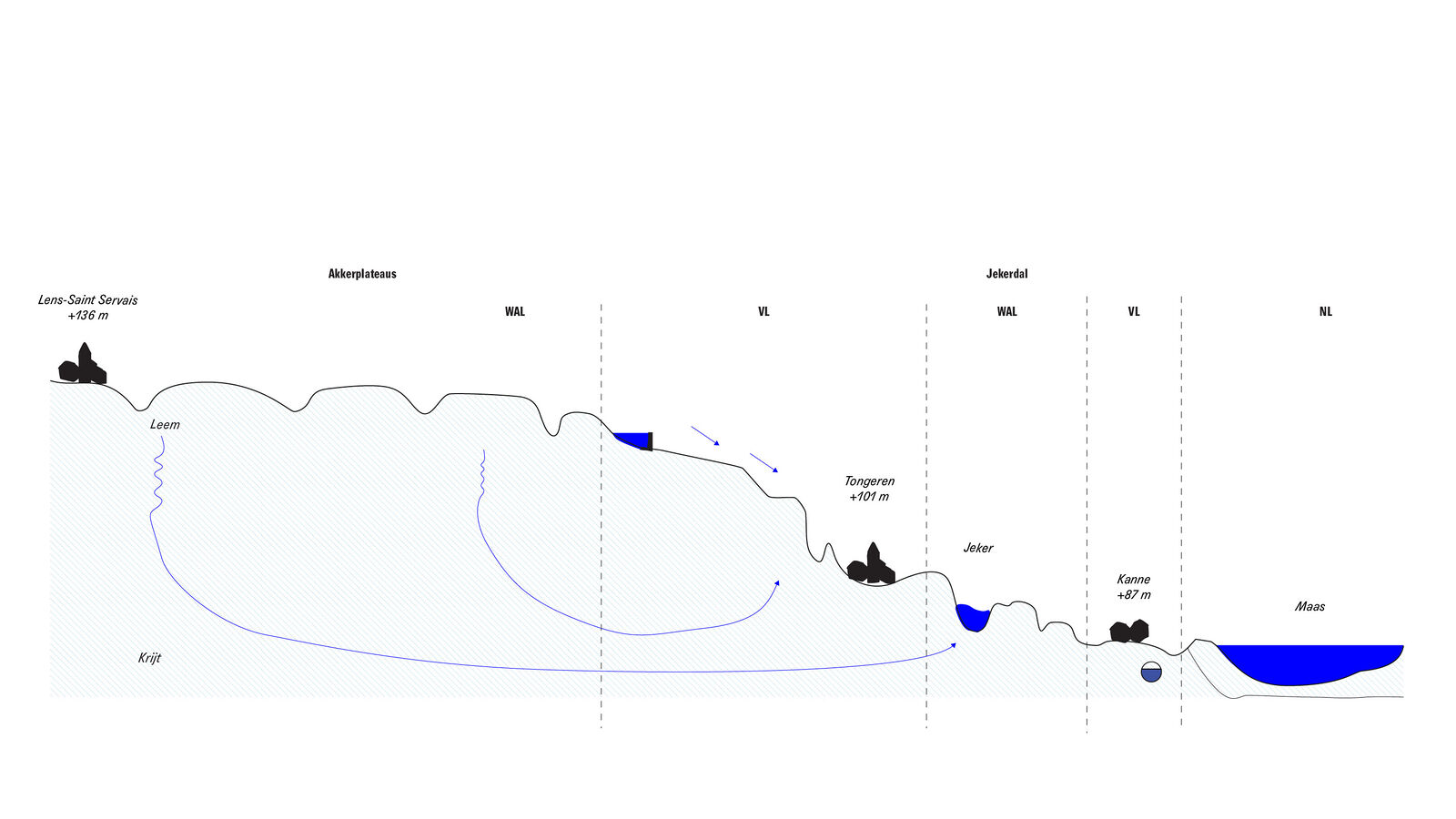
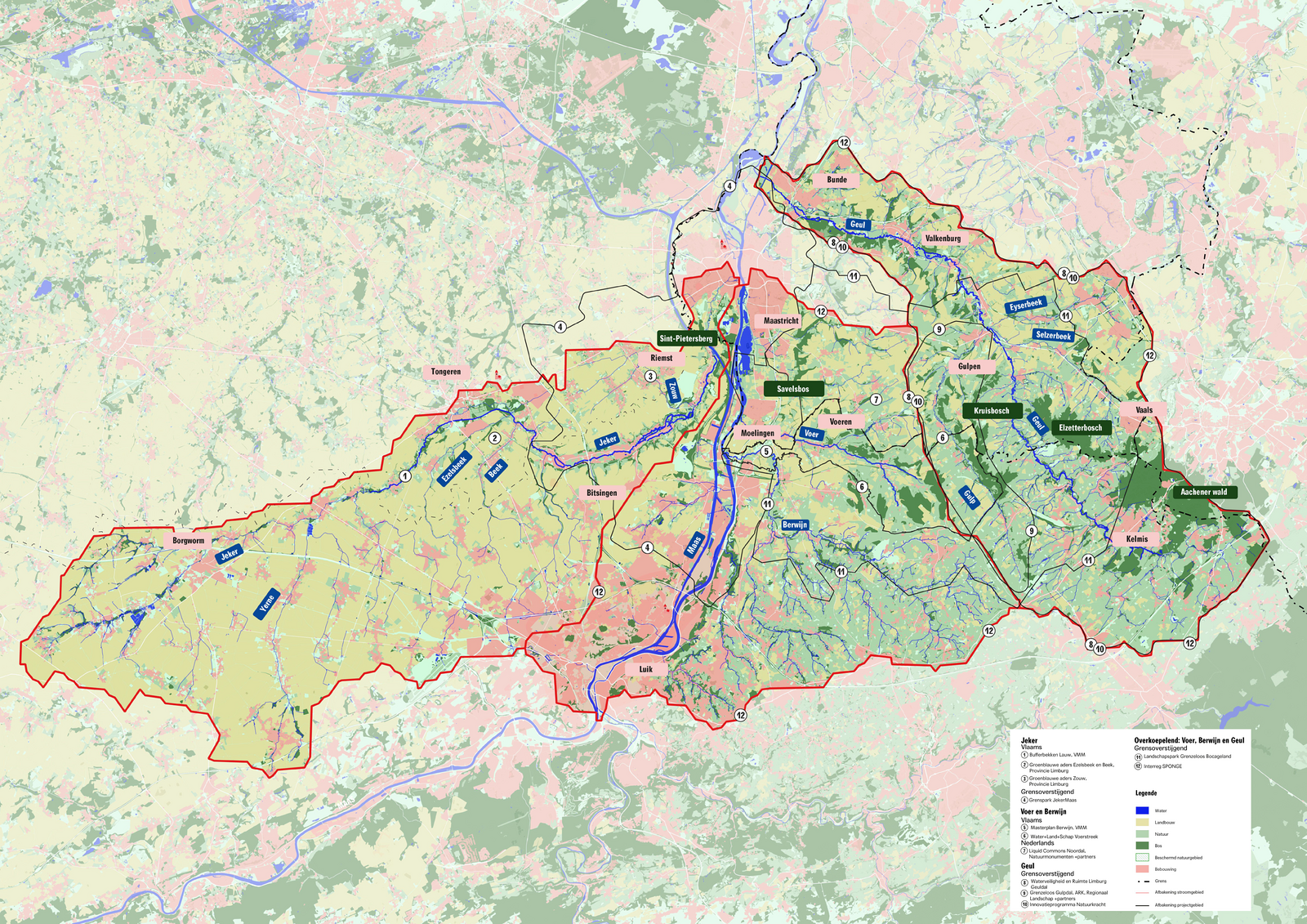
• The Limburg Cretaceous-Clay Massifs: The catchment areas of the Jeker, Berwijn, Voer and Geul form an atypical landscape for the Low Countries. They are characterized by a steep relief and significant height differences. In combination with the loamy soil, in the event of extreme precipitation, such as in 2021 and 2024, huge volumes can quickly flow into the buildings in the valley. In addition, it is a challenge to be able to bridge periods of drought, for which the chalk aquifer in the subsurface must be sufficiently nourished.
From a cloud of projects to structural cooperation in area coalitions
Innovative area-specific projects are underway on both sides of the border: in Flanders, Water+Land+Schap and since 2026 the Local Blue Deals are in charge of coalitions throughout the territory to make the landscape resilient to floods and droughts. In Brabant, 13 Green-Blue Area-Based Approach areas are active, and in Limburg, the Flood Risk Management and Spatial Planning Limburg programme is shifting up a gear in flood protection. There are also already many consultative bodies: the Cross-border Water Consultation, the Landscape Parks and Border Parks, cross-border Integrated Water Projects, and Interreg projects such as WIJ-WATER, Aquatuur, Wbaar Dommelland and SPONGE, ...
The many cross-border collaborations, projects and consultative bodies show a great willingness to cooperate. But we are still not collectively resilient: there is often still a lack of a common overview, information or knowledge base, collective quantitative goals and a framework for long-term cooperation. It is precisely in this area that JCAR ATRACE wants to support regional governments. The actions we carry out in this context can be distinguished according to three steps:
- We are drawing up a shared overview of the task and ongoing area processes, aimed at water bear, in all river basins in the Flemish-Dutch border region.
- Together with area coalitions in the catchment areas of the Berwijn – Voer – Geul in South Limburg and the Kleine Aa – Aa or Weerijs – Mark in the Voorkempen and North Brabant, we are testing an innovative approach to international water objectives.
- Based on these common objectives, we draw up a long-term co-investment plan .
To this end, we work on two tracks: the platform is a knowledge environment for all cross-border river basins, from which we also work on the agenda. In the Living Labs, we go into depth: we compare the Dutch and Flemish methods to achieve water objectives and draw up action plans. The lessons learned from these Living Labs and other innovative projects feed the platform.
Context: JCAR ATRACE as an international research programme
JCAR ATRACE is an international research programme in which 9 knowledge and research institutions from the Benelux+ work together (RWTH Aachen, TU Delft, KULeuven, LIST, ULiège, Deltares, VU Amsterdam, Utwente, GFZ Potsdam). The Dutch Ministry of Infrastructure and Water Management is the initiator of the programme. Contact with the Dutch Ministry dates back to 2022 and 'Resilient Waterland', the advice of the flood protection expert panel to the Flemish Government. Together with the KULeuven and Professor Patrick Willems, the Flemish partner in the research programme, we are helping to set up the Living Lab Herk and Mombeek in which we tested an innovative methodology for sponge targets in practice with a local area coalition led by Regional Landscape Haspengouw and Voeren. In Flanders, this approach forms the blueprint for the Flemish Blue Deal and the Water Security Goals and also inspires in the Netherlands.
| Longread: research up to March 2026 (nl) | 103 MB |