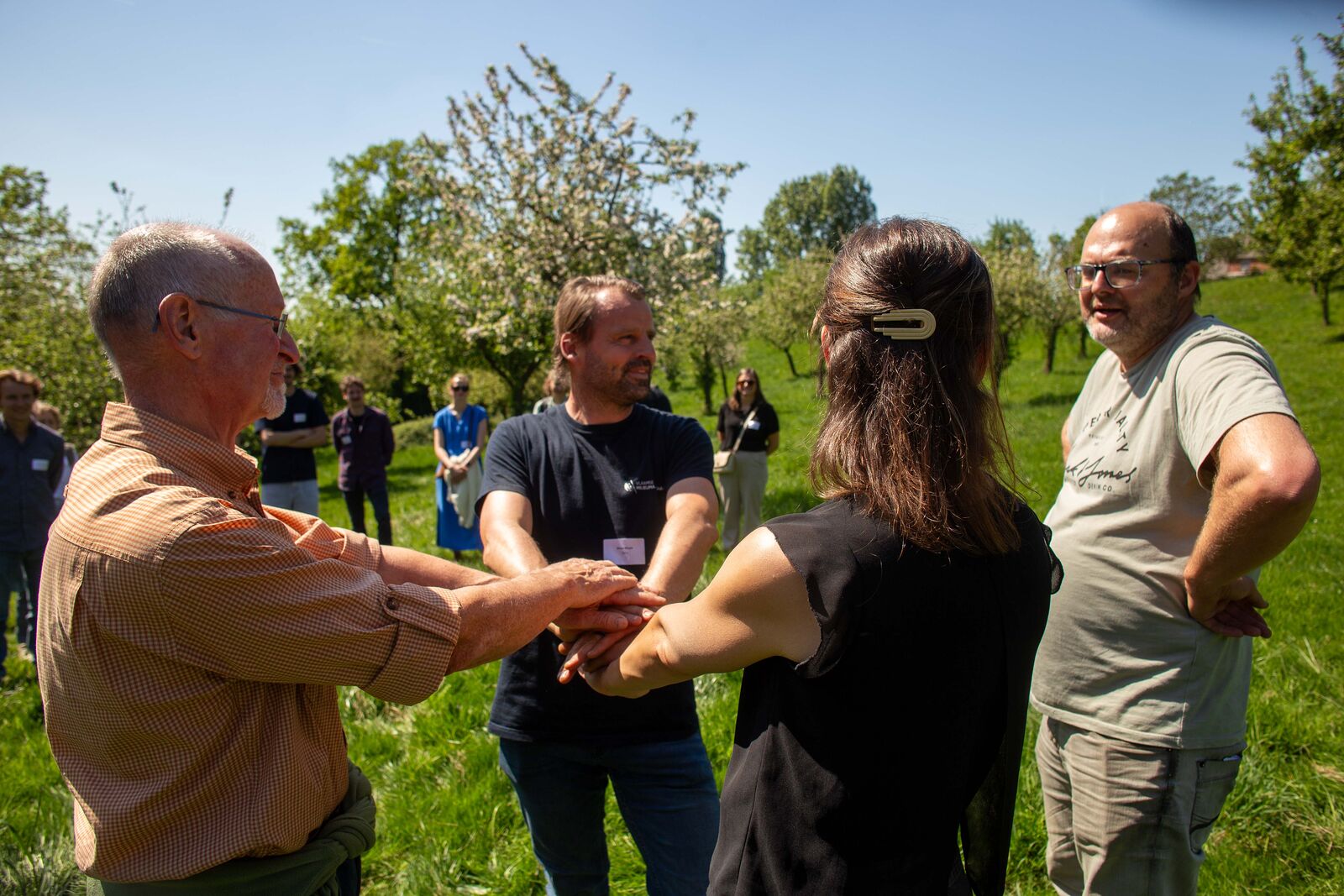
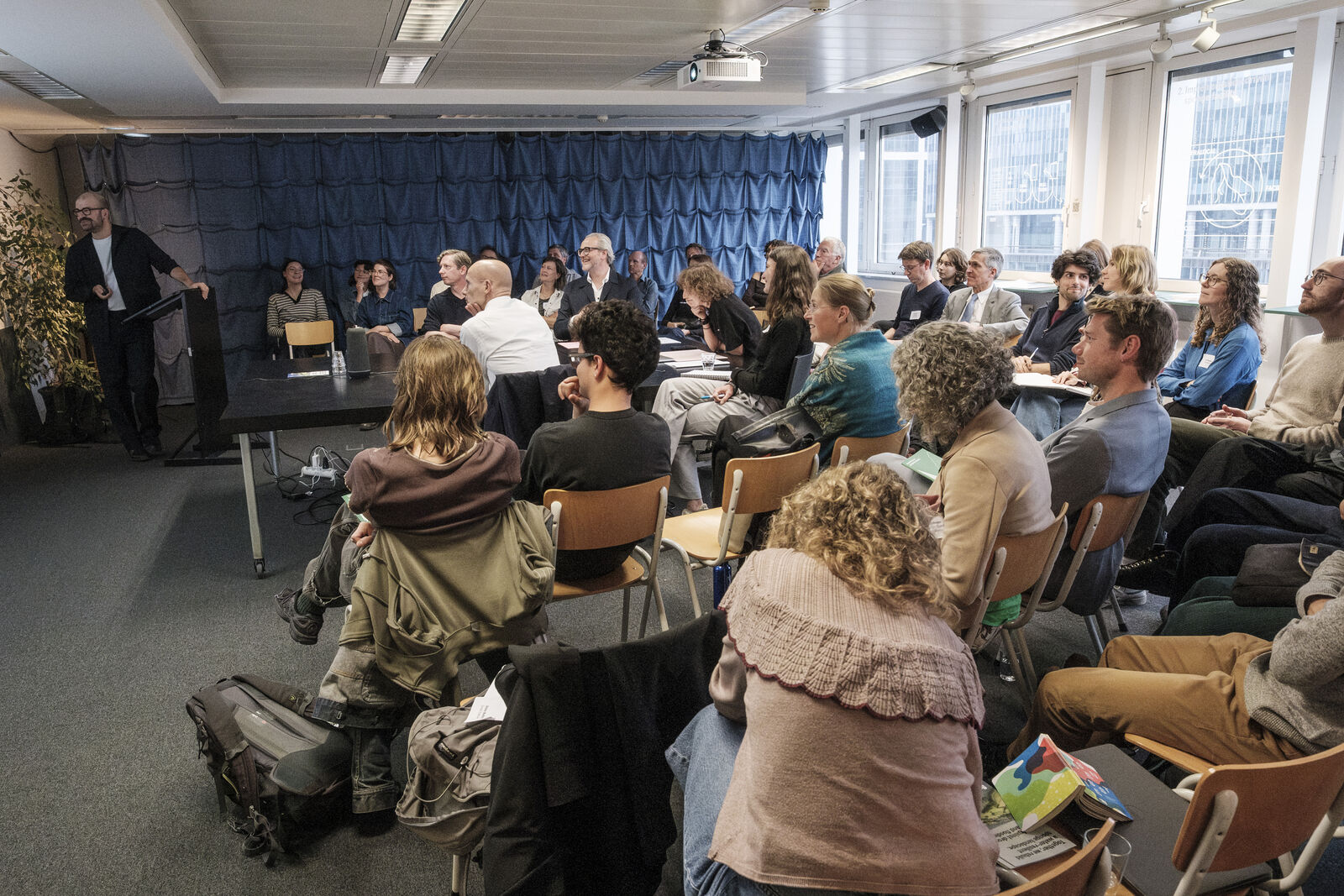
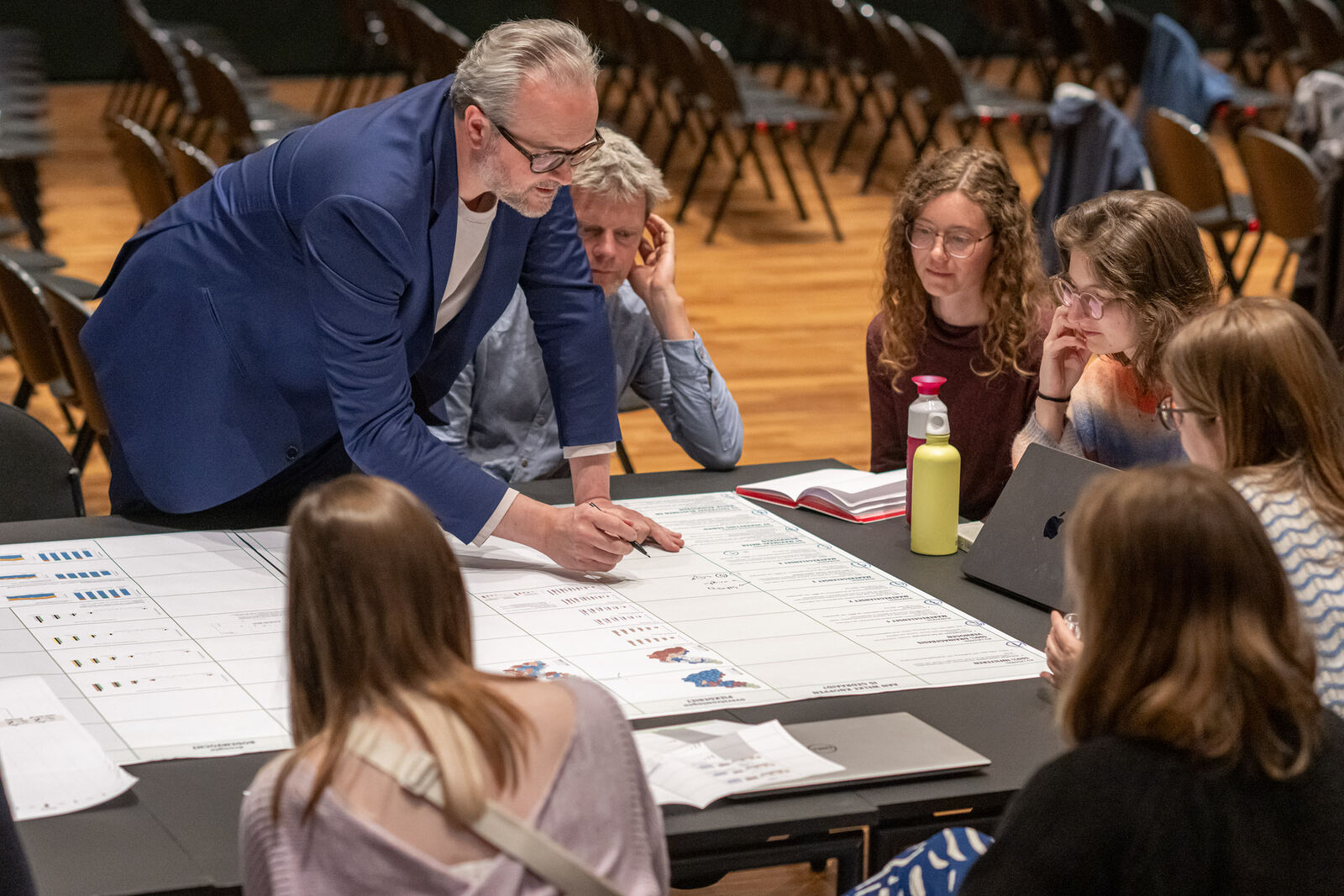
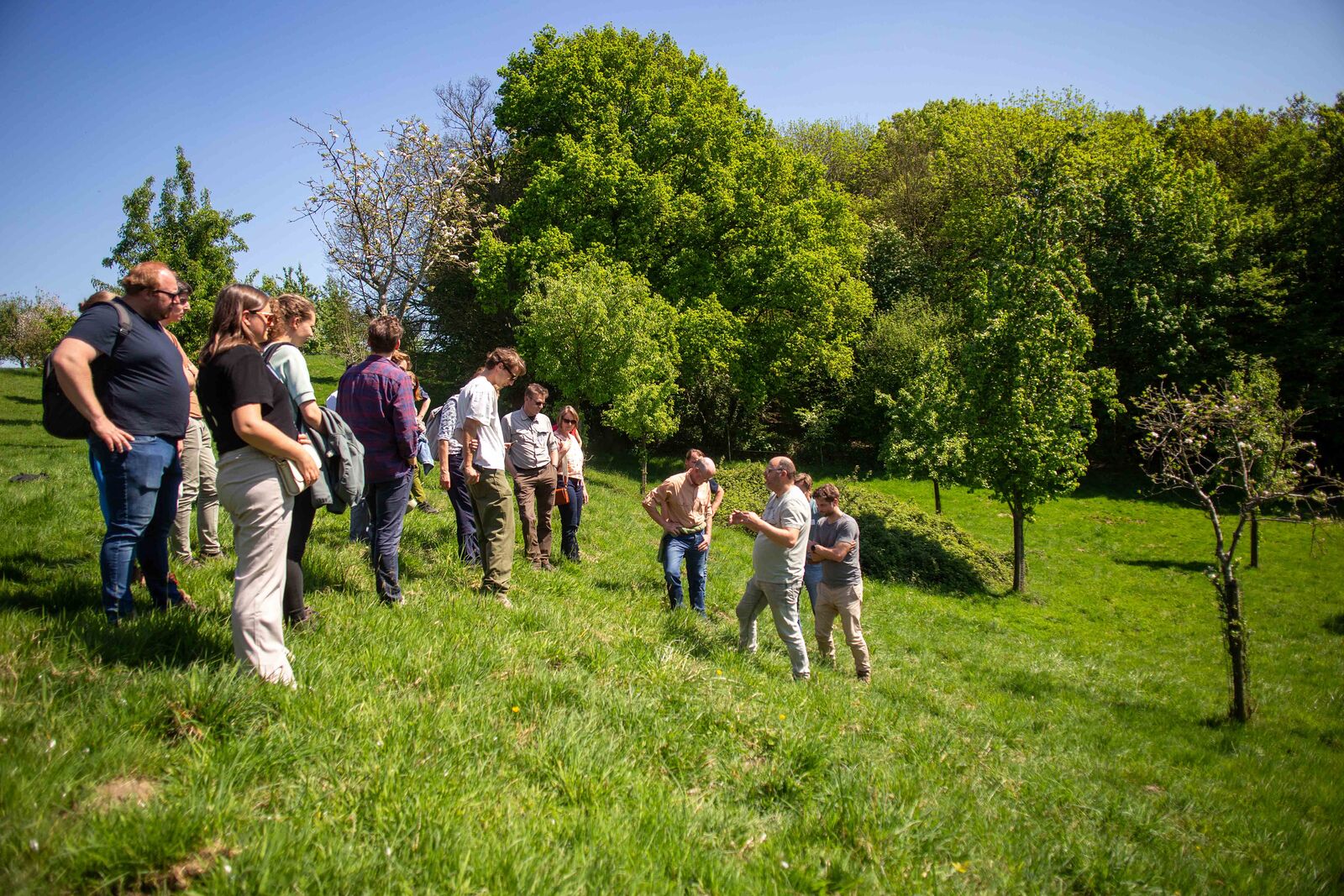
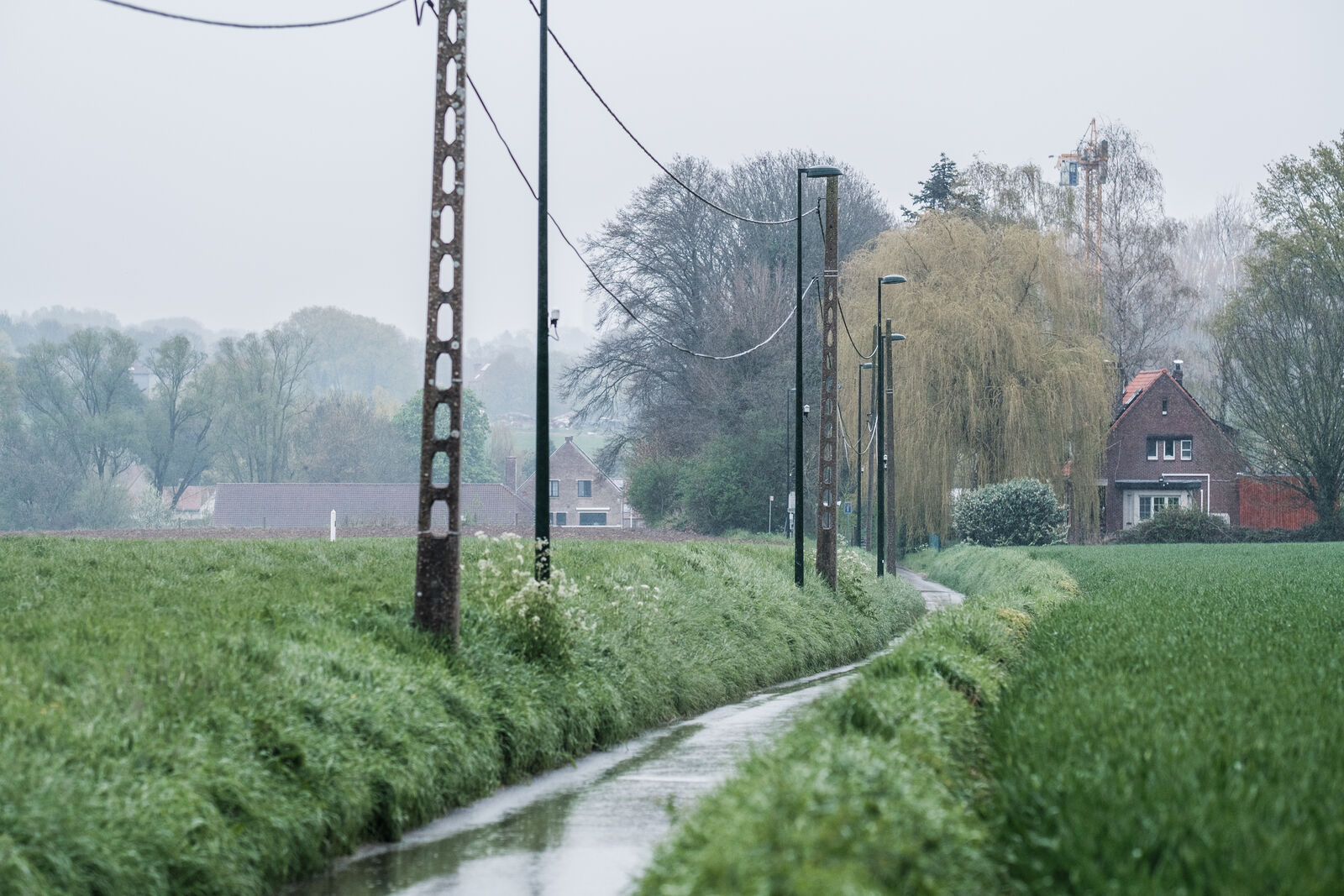
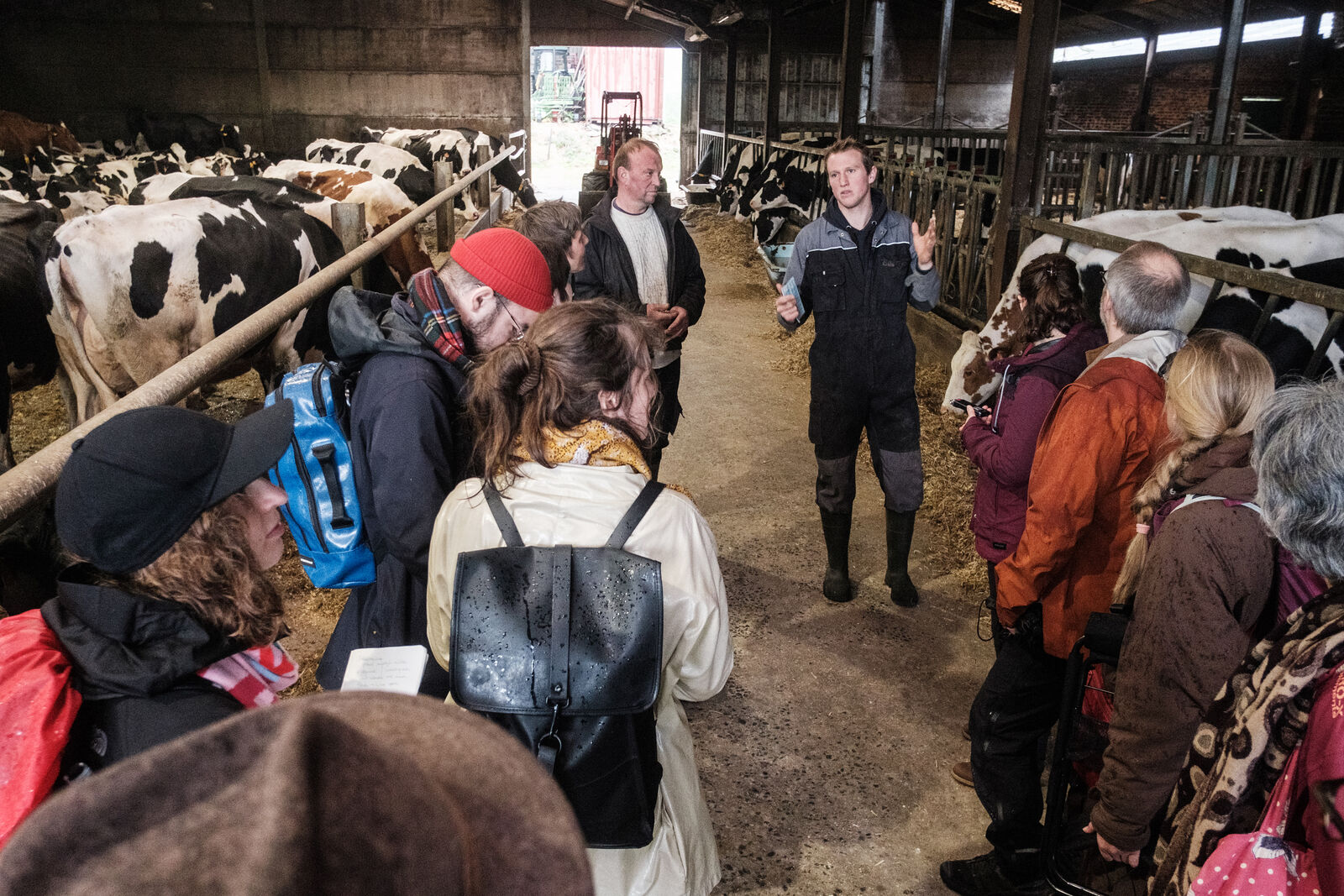
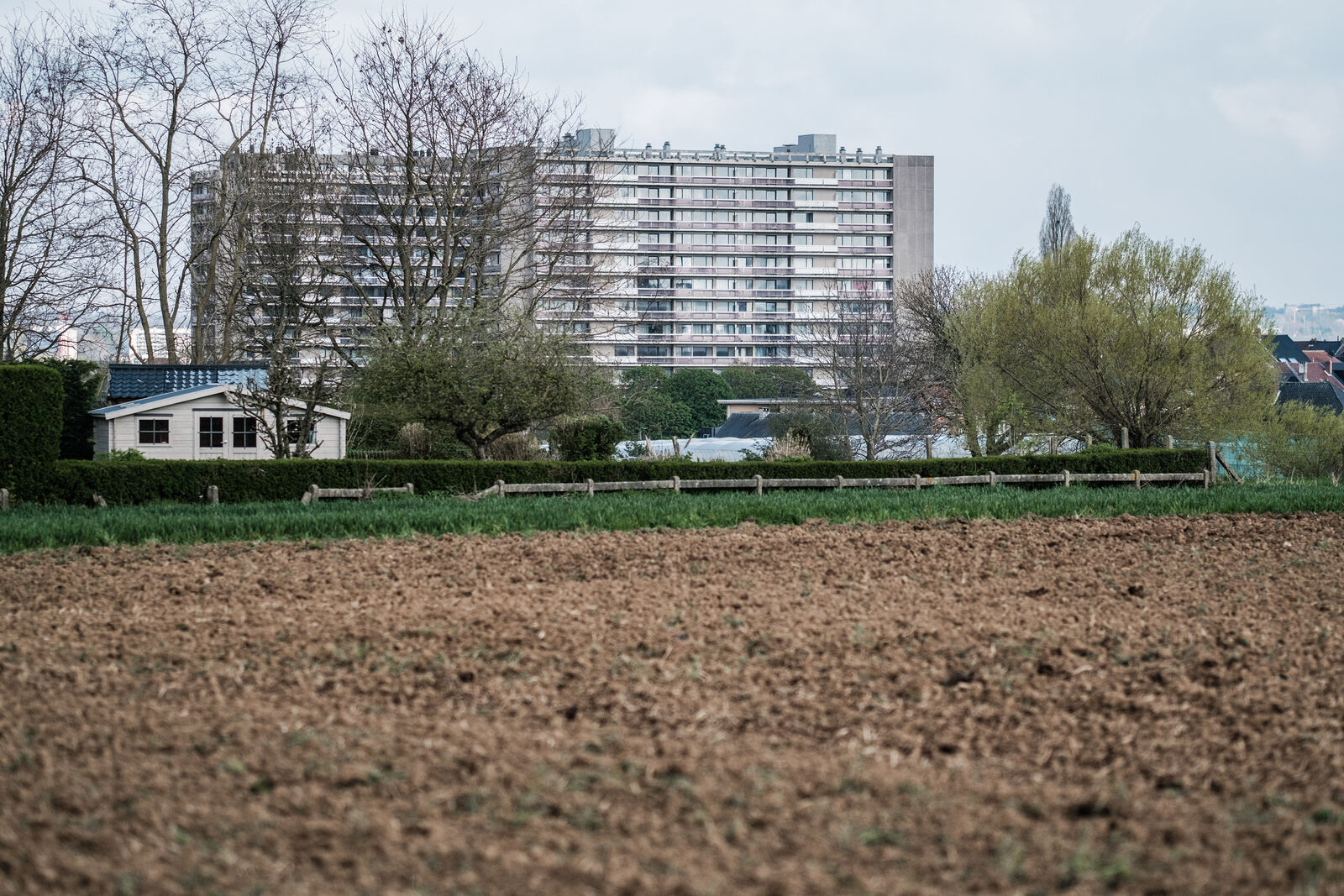
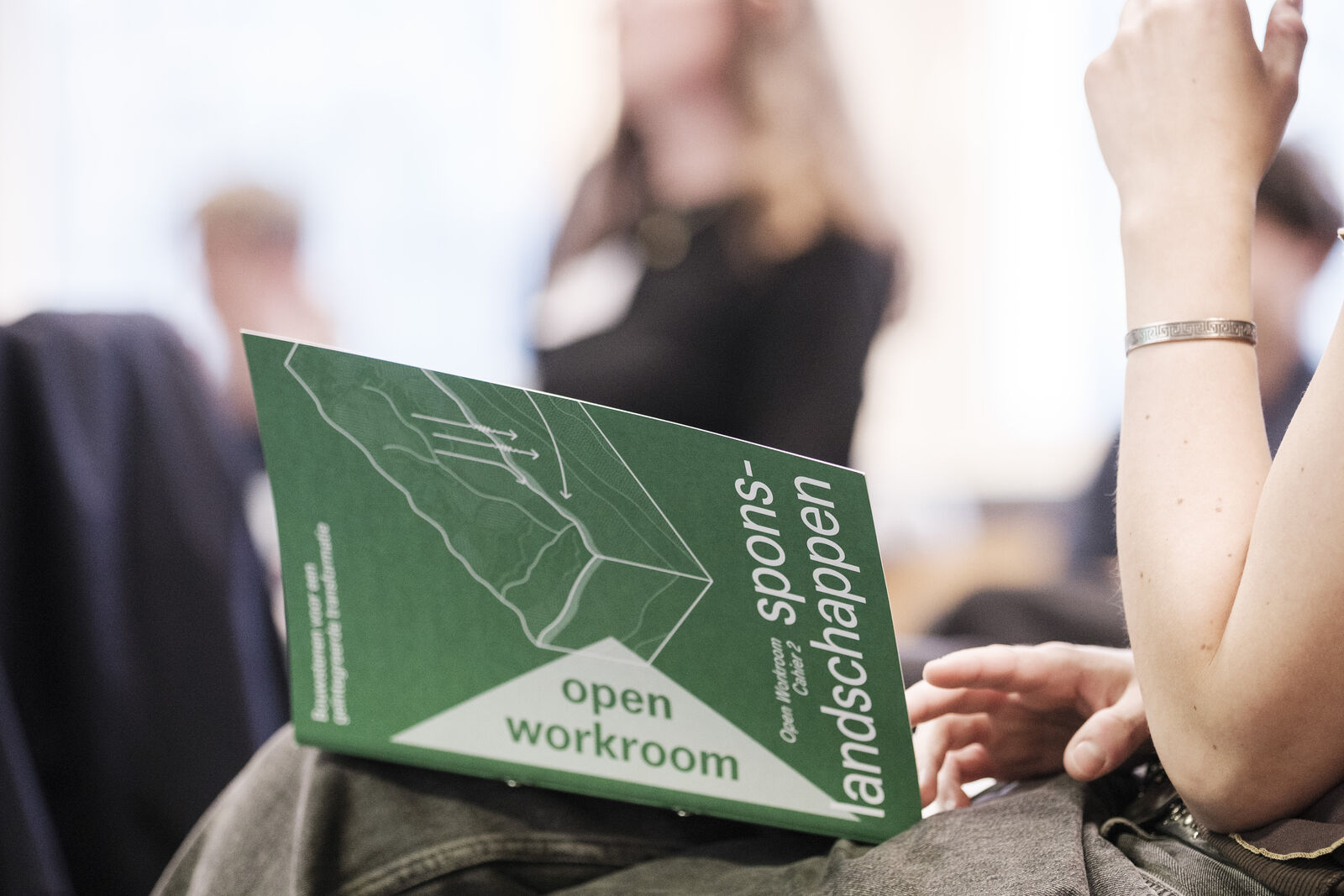
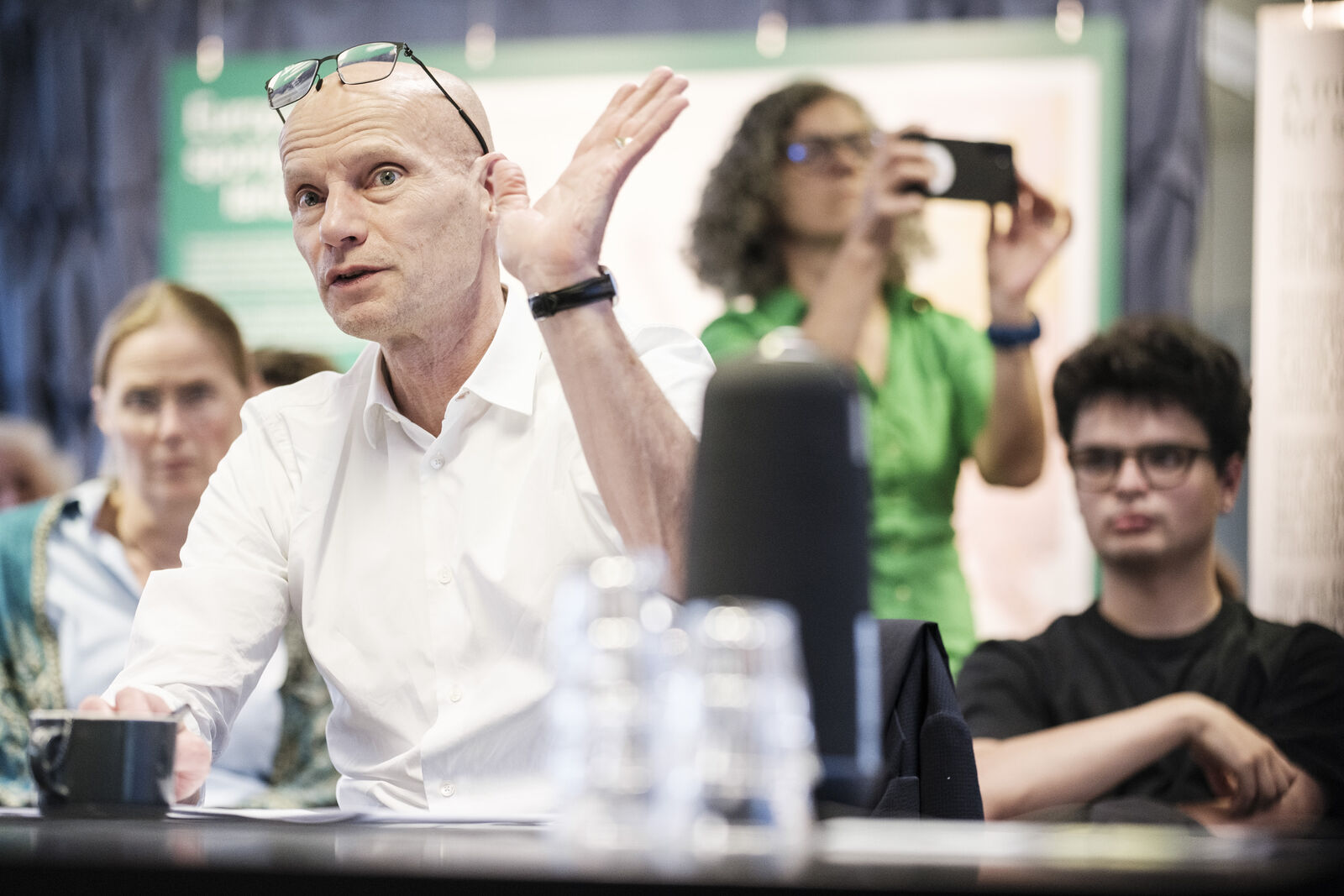
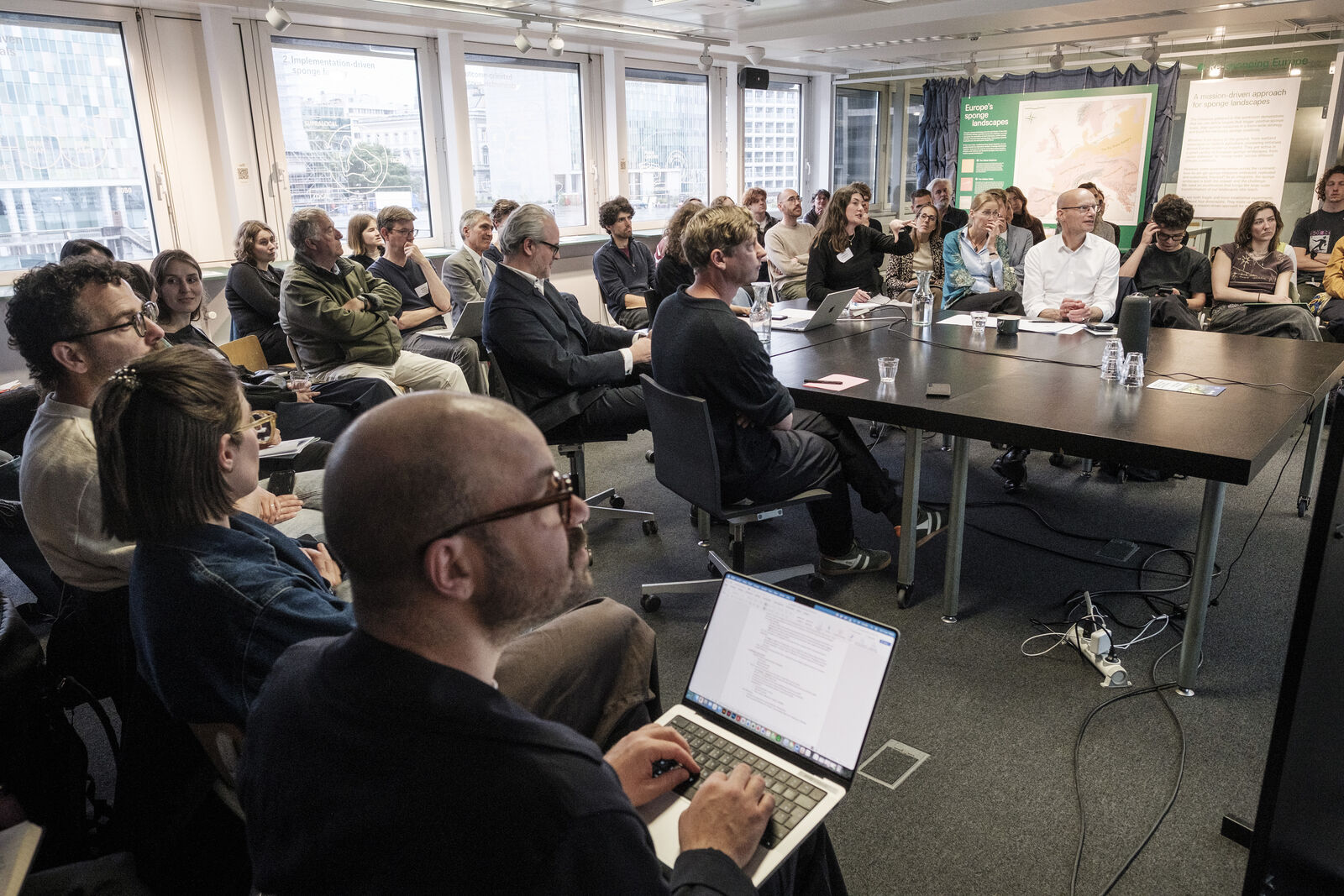
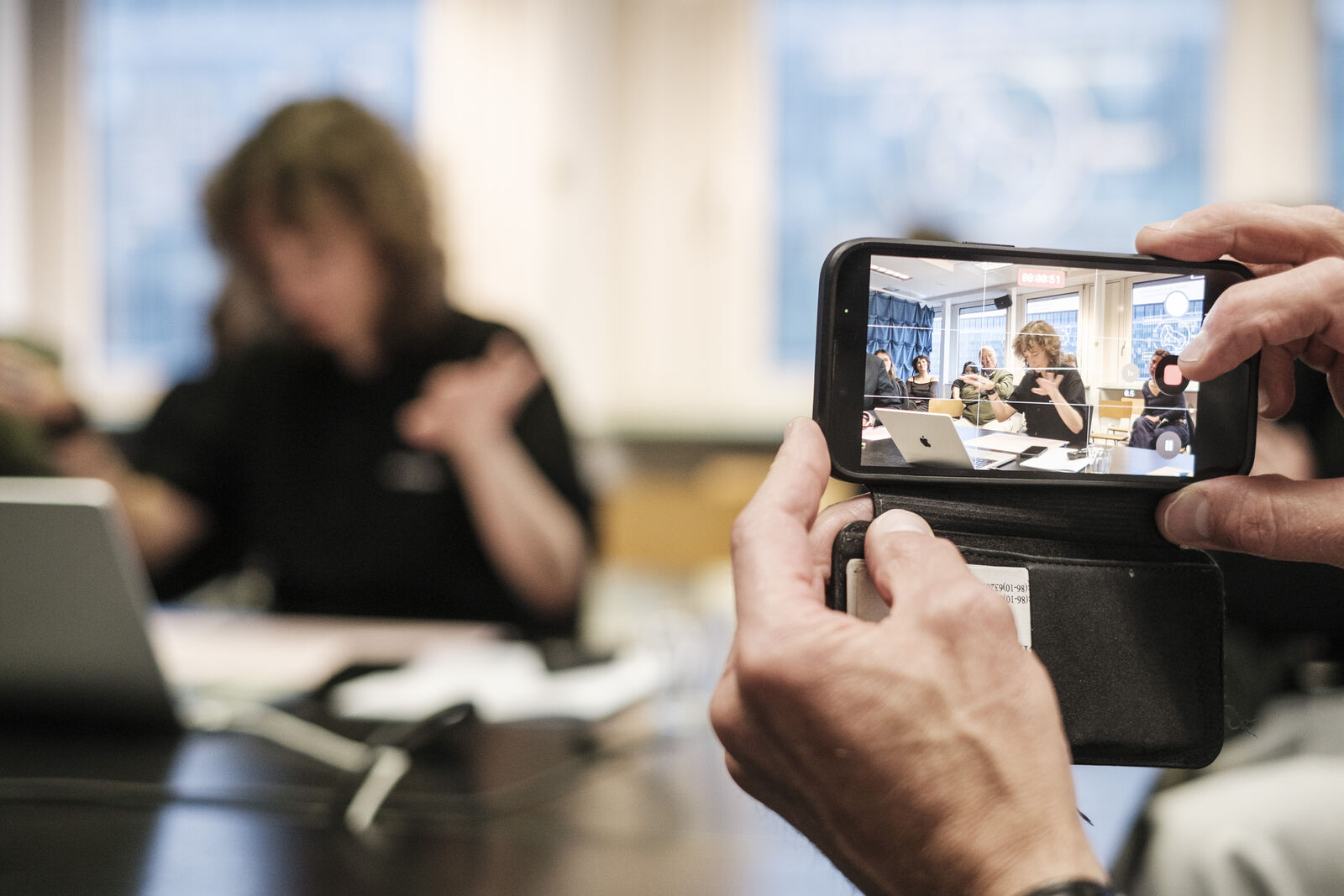
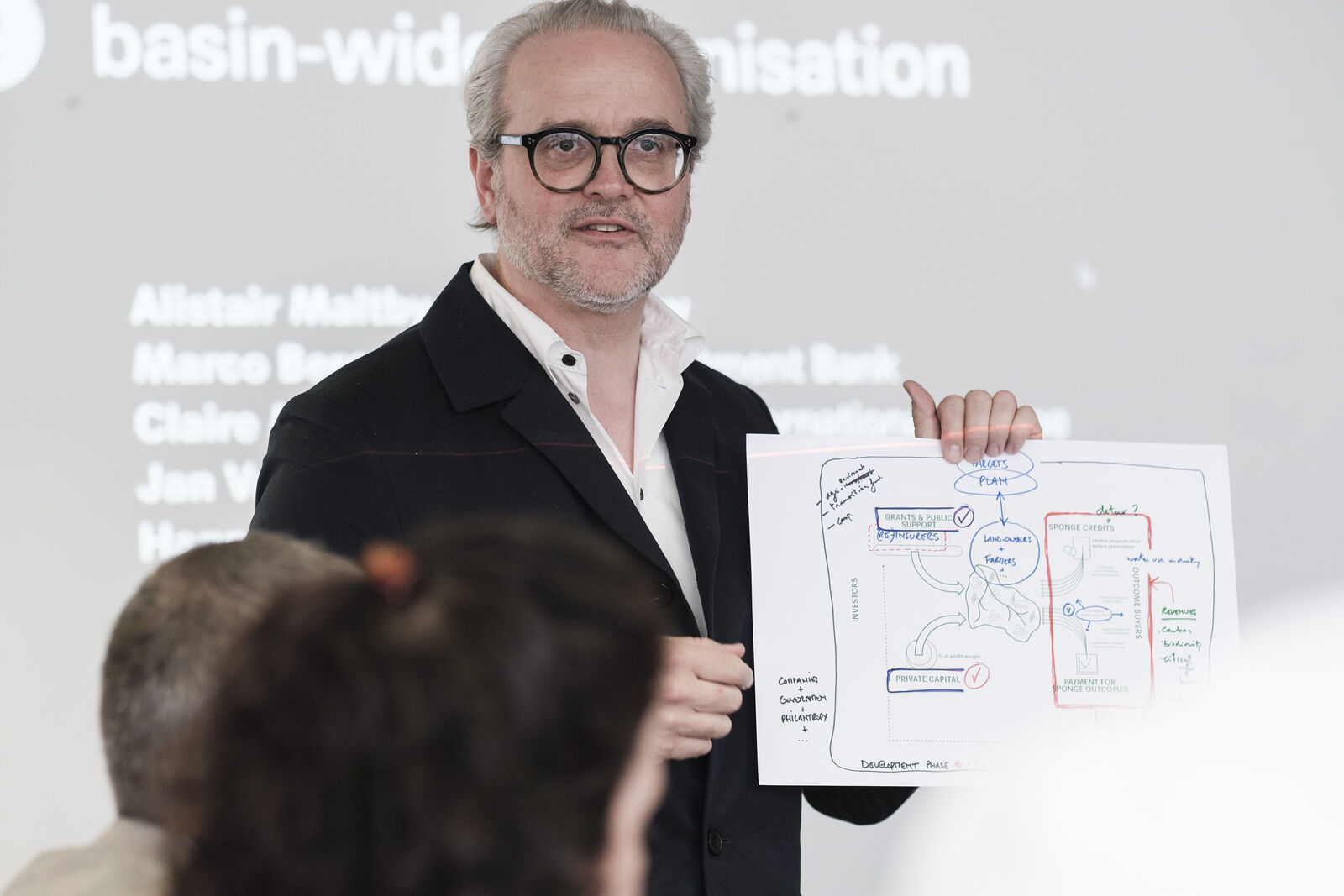
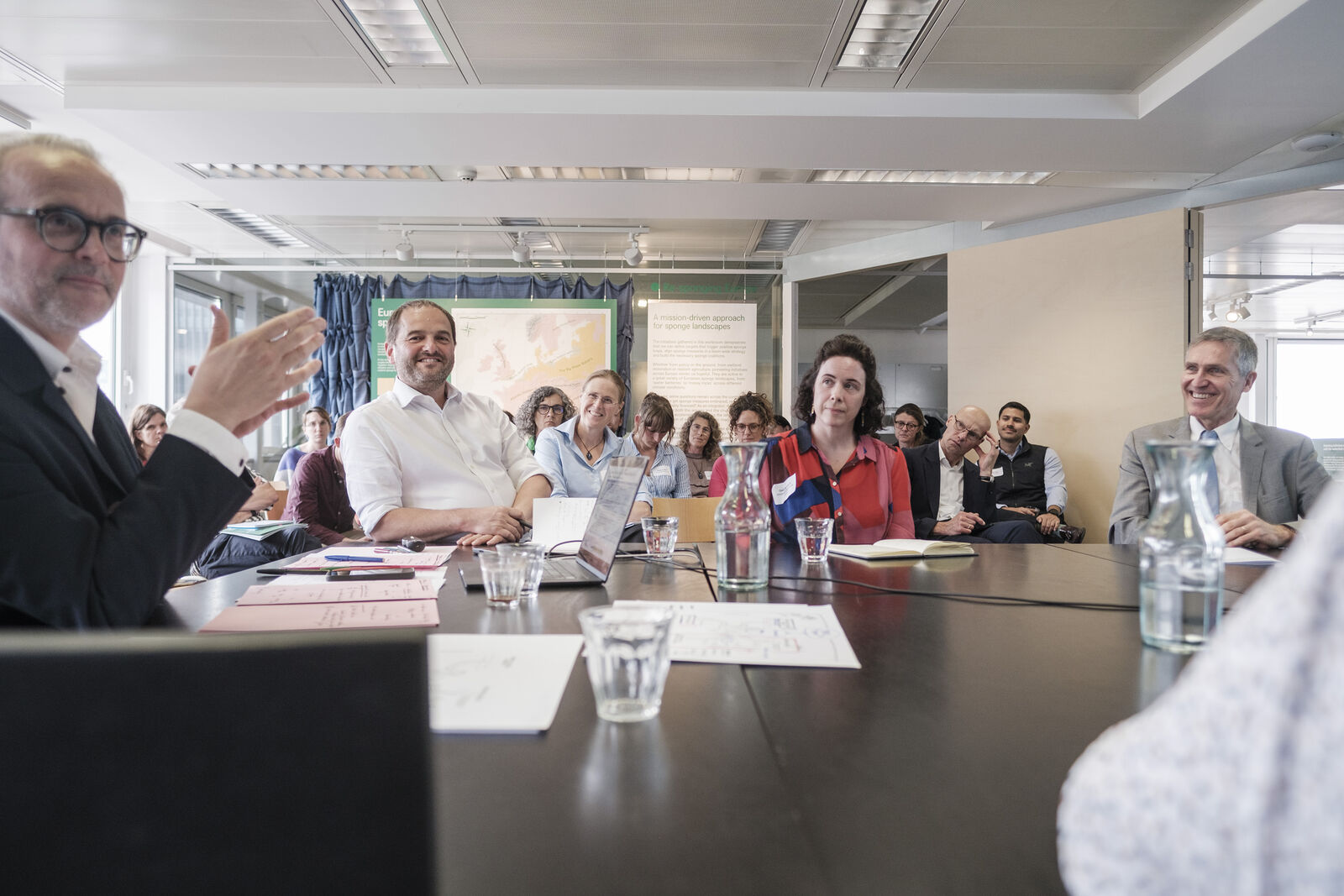
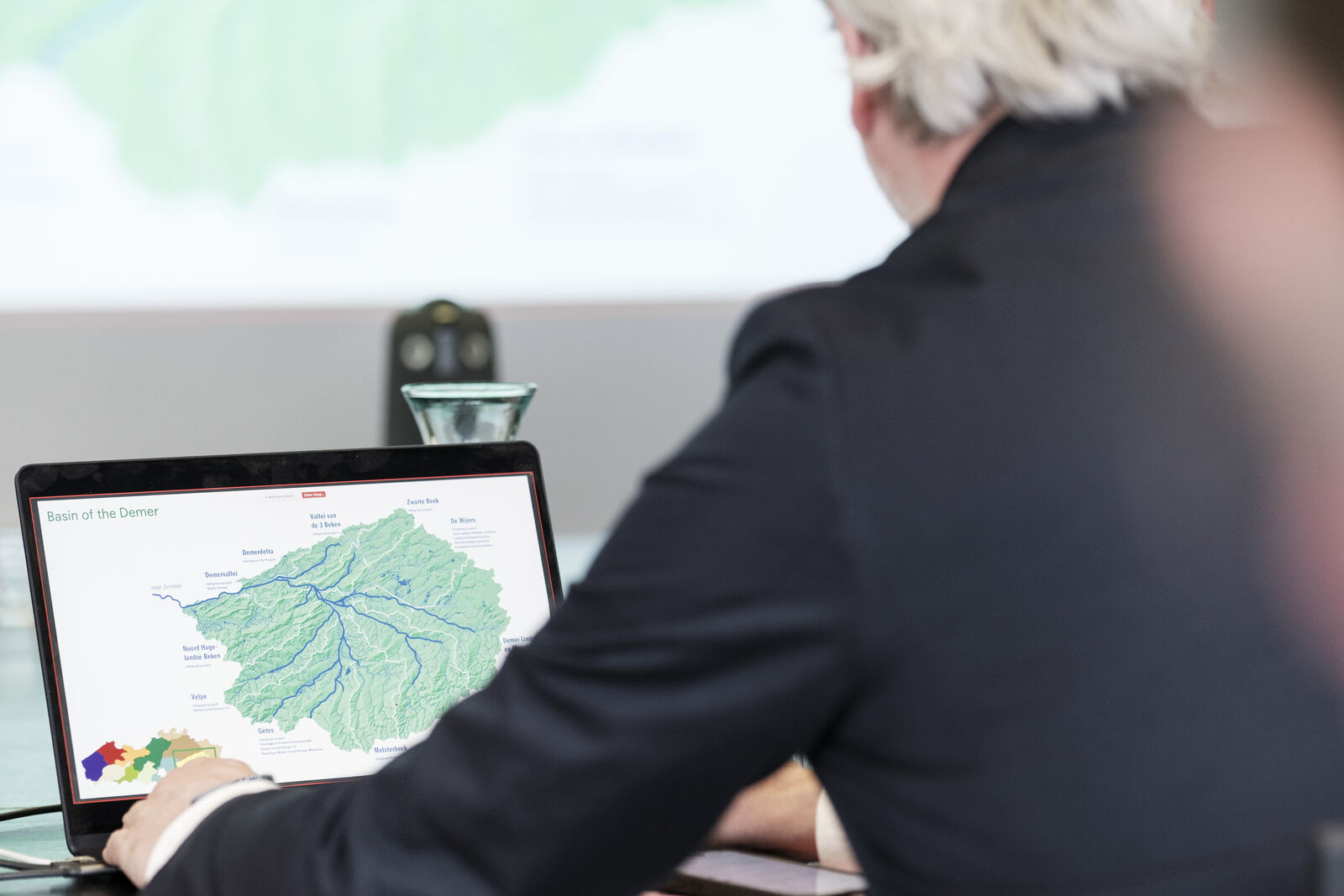
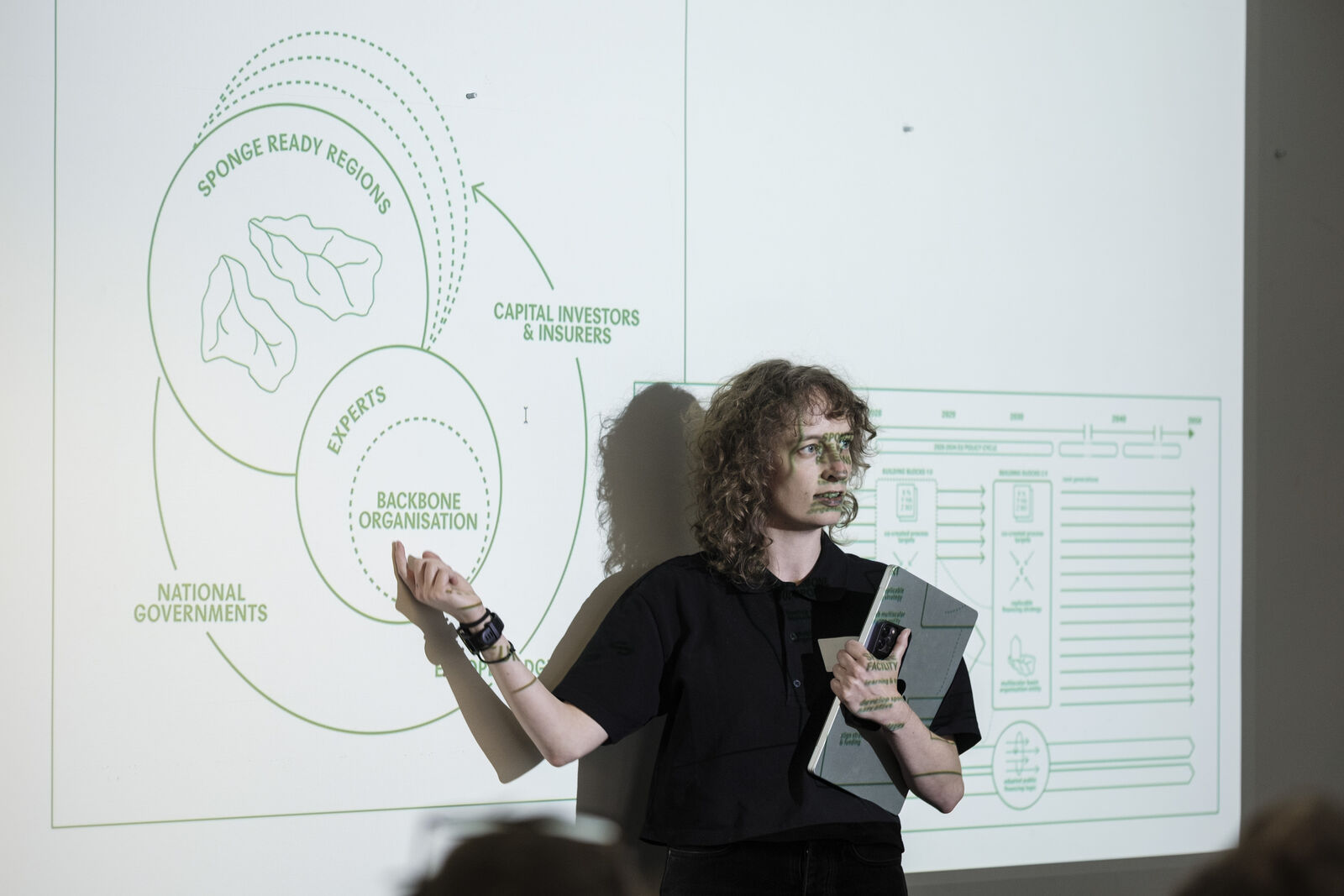
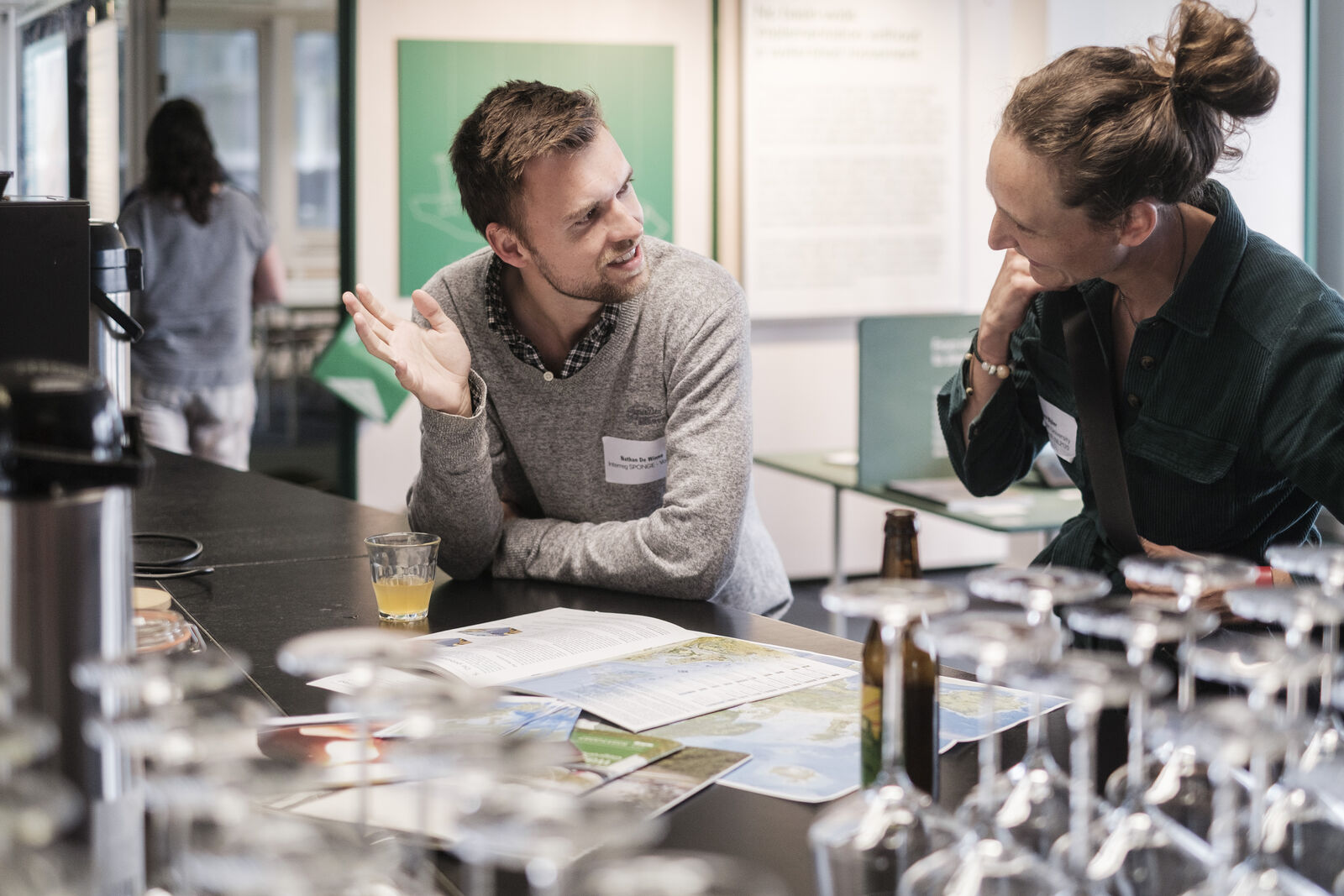
selection of images of the SPONGE TALKS As part of the open workroom SPONGE LANDSCAPES, a series of ‘sponge talks’ took place: a panel discussion focusing on a specific breakthrough in sponge landscapes, preceded by a guided tour of the exhibition.
open workroom SPONGE LANDSCAPES © We Document Art Sponge landscapes offer a hopeful and integrated response to the challenge of making our landscape more resilient to flooding and drought. But how do we shape a collective (European) sponge mission? The open workroom assesses the state of the European sponge landscape and positions the Flemish approach in a broader context. 
open workroom SPONGE LANDSCAPES: sponge summit © Ivan Put The Sponge Summit marked the launch of the open workroom SPONGE LANDSCAPES: a working session with participants from various sectors and policymakers to jointly shape a European sponge mission and define the role of the open workroom in this. 
Goal setting with local coalition and experts in June 2024 © Jonas Roossens How do you determine quantitative water targets for an entire area? In the Living Lab Herk & Mombeek(2023-2025), we are bringing together a broad coalition of stakeholders from across the region. By starting from the principle of “acceptable damage”, the parties recognise their shared destiny and arrive at targets that everyone can agree on. 
Weerbaar Waterland - Living Lab Herk en Mombeek This short documentary, made on the occasion of the 12th Demerdag, shows the importance of coordination between sectors (agriculture, nature, built environment, etc.) and the effect of the sum of many small measures. 
Pitch Water+Land+Scape
12th Day of the Demer “Resilient Haspengouw” © RLHV The living lab took centre stage at the twelfth Demerdag ‘Weerbaar Haspengouw’ (Resilient Haspengouw): we presented the most important lessons learned and the action plan with the first measures to be implemented in field labs. 
A range of sponge measures These maps were developed as part of the living lab Herk and Mombeek and illustrate a wide range of measures designed to buffer water, retain it for longer periods, and facilitate its infiltration into the landscape.
Land van Neerpede: Everyone's a guide April 2023. © Bob van Mol The Land of Neerpede is one of the last large open spaces in the Brussels-Capital Region. Despite its scenic and rural qualities, the area was under increasing pressure, while the existing urban instruments did not offer sufficient tools to strengthen it. Since 2022, Workroom has been working on a future-oriented vision for Neerpede, through a local area coalition of associations committed to preserving the open space character, with the aim of establishing clear leadership and a shared long-term vision for the preservation and enhancement of the area. 
Advice Resilient Waterscape The expert panel's advice, entitled “Weerbaar Waterland” (Resilient Waterland), sets out a ten-point plan to make Flanders future-proof against flooding and drought. The report, led by Dutch Water Envoy Henk Ovink with support from De Vlaamse Waterweg, the Flemish Environment Agency and supervised by Workroom, advocates an integrated, area-wide approach to watercourses, sponge landscapes and urban areas, with a focus on feasibility, financing and multidisciplinary implementation. 
10 coalities voor de open ruimte. Illustraties: Chloé Dierckx
Open Ruimte Coalities The publication Open Ruimte Coalities (Open Space Coalitions) paints a picture of a growing practice of collaboration in open spaces. Based on 10 future stories about open space coalitions, 179 open space projects are depicted within the framework of the Open Space Platform. 
Soil Forum, octobre 2022 The soil forum focuses on the lessons learned from the Grond+Zaken programme, supplemented with lectures, workshops and insights from the field and policy. 
EN FR NL
WORKROOM

Since 2010, Architecture Workroom Brussels has focused on the future of our living environment. The organisation began as a safe haven to address the link between space and societal transitions, aimed at fostering a futureproof design practice, commissioning and building culture.

It has now become evident that the transformation of our streets, neighbourhoods, and landscapes is both a prerequisite and a lever for achieving societal goals in synergy. Yet we observe that these transformations remain difficult to imagine and implement. They span so many sectors and involve so many actors that responsibility falls on everyone, and therefore, ultimately, on no one.

That is why we make it our mission to create the space that connects them. And with this refined mission comes a new name: WORKROOM, House for transformation. WORKROOM is the shared space where the future of our living environment is not only imagined but also organised.

We are currently taking the lead on three mission-driven transformations:

  • SOCIETAL INCUBATORS - By 2030, stakeholders from the youth, culture, sports, care and education sectors will join forces to create renewed societal spaces that tackle loneliness and counteract the fragmentation and pressure on public infrastructure.
  • FOSSIL-FREE NEIGHBOURHOODS - By 2030, at least ten neighbourhoods will be underway with the transition to fossil-free energy in an inclusive and affordable way, with a view to completely phase-out fossil fuels by 2040.
  • SPONGE LANDSCAPES - By 2030, we will have achieved our water, agriculture and nature goals through a single, coherent approach at catchment area level, in which strong regional coalitions collectively enhance the landscape's sponge capacity.

To make these transformations a reality, WORKROOM works shoulder to shoulder with pioneering designers, local authorities, organisations and businesses, governments, knowledge institutions and impact investors.

Through co-creative design, we imagine shared pathways to the future in exhibitions, publications, innovation programmes and public programmes. These are the workrooms where we connect the actors capable of realising these transformations. From there, we design shared ownership and the organisational, funding and policy models that lead to real change.

The name is simpler. The stakes are higher. WORKROOM is the shared space where we tackle the social and spatial transformations that no one can achieve alone. In an era of polarisation, compartmentalisation and instability, that is perhaps the most radical thing we can do.