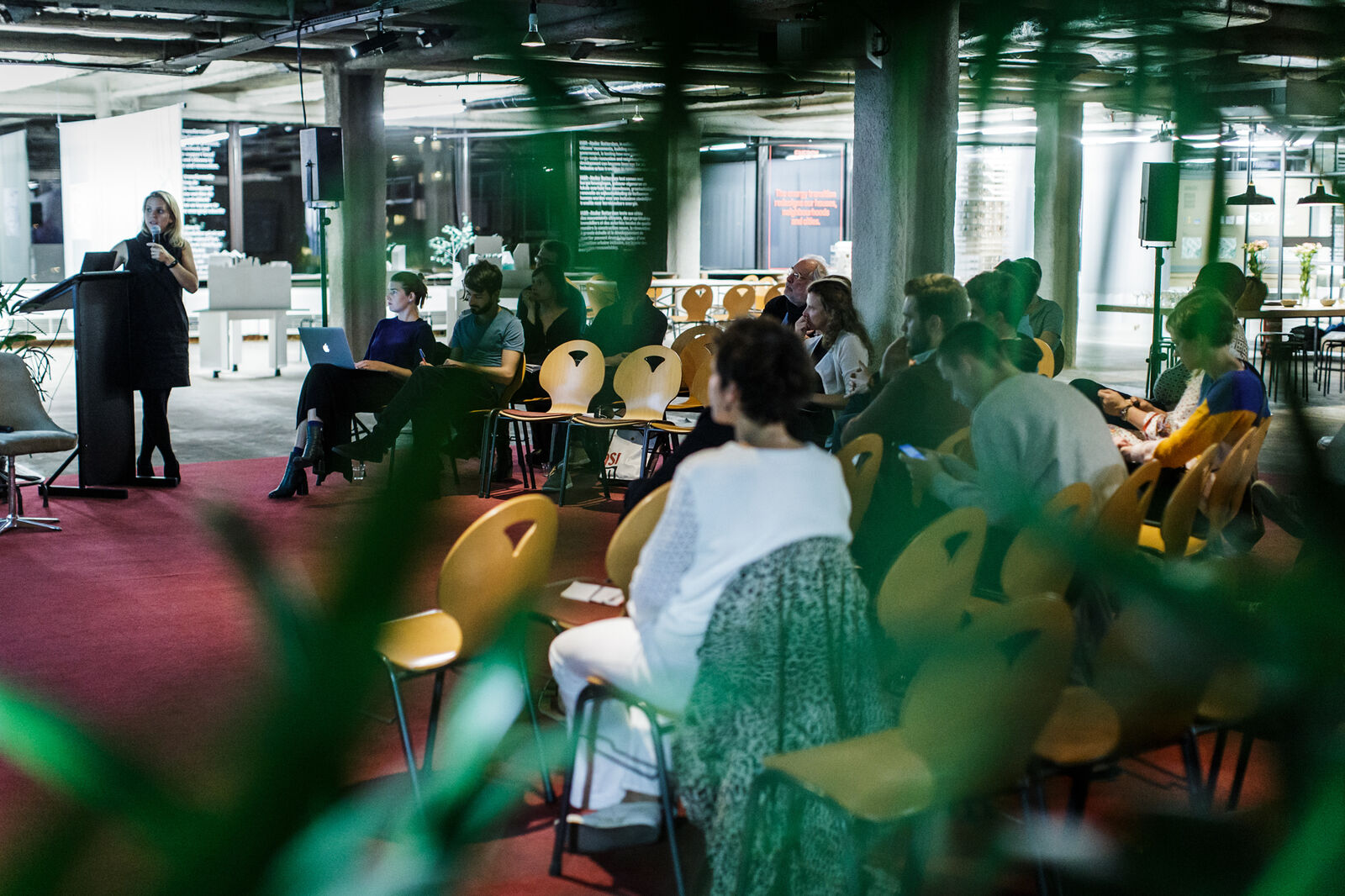
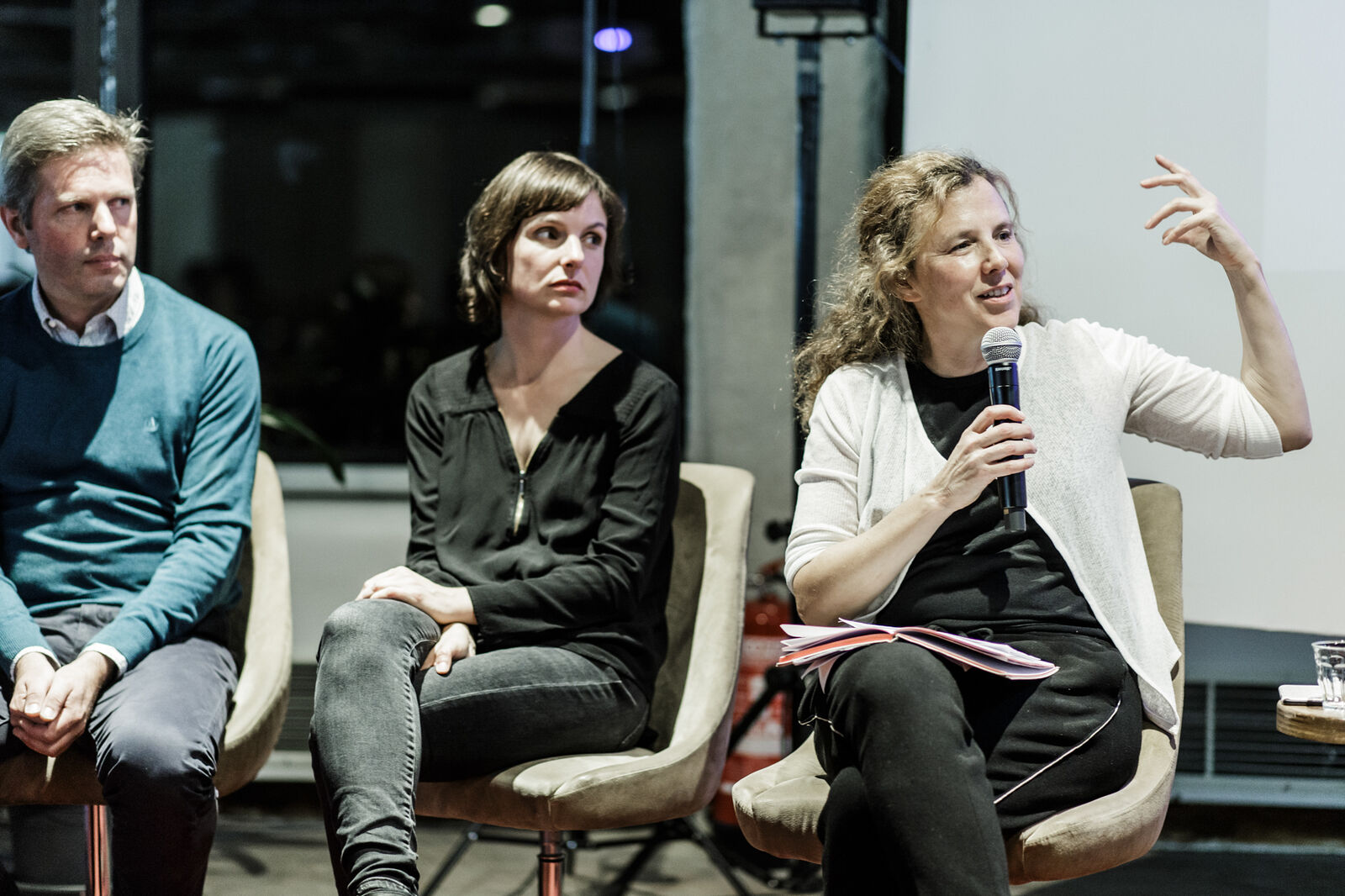
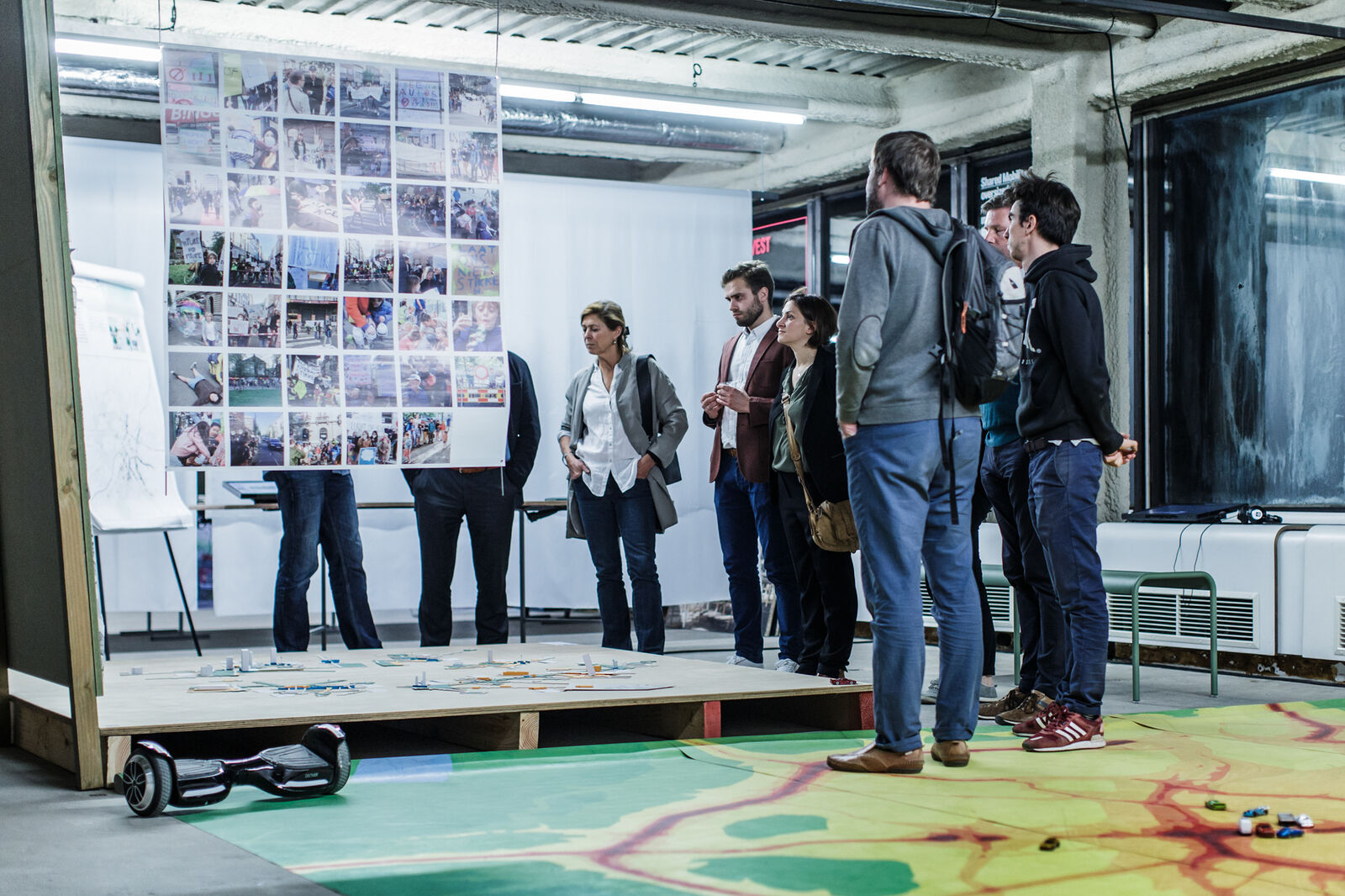
Today, air quality around schools is high on the agenda, partly thanks to the weekly campaigns by civil movement Filter Café Filtré. Together with Architecture Workroom Brussels, it founded Air for Schools to convert the energy from this urban activism into constructive pleas for the city of tomorrow. In a participative process involving school boards, concerned parents, local residents, experts and designers, work is being done in the school environment to transform the city to improve air quality.


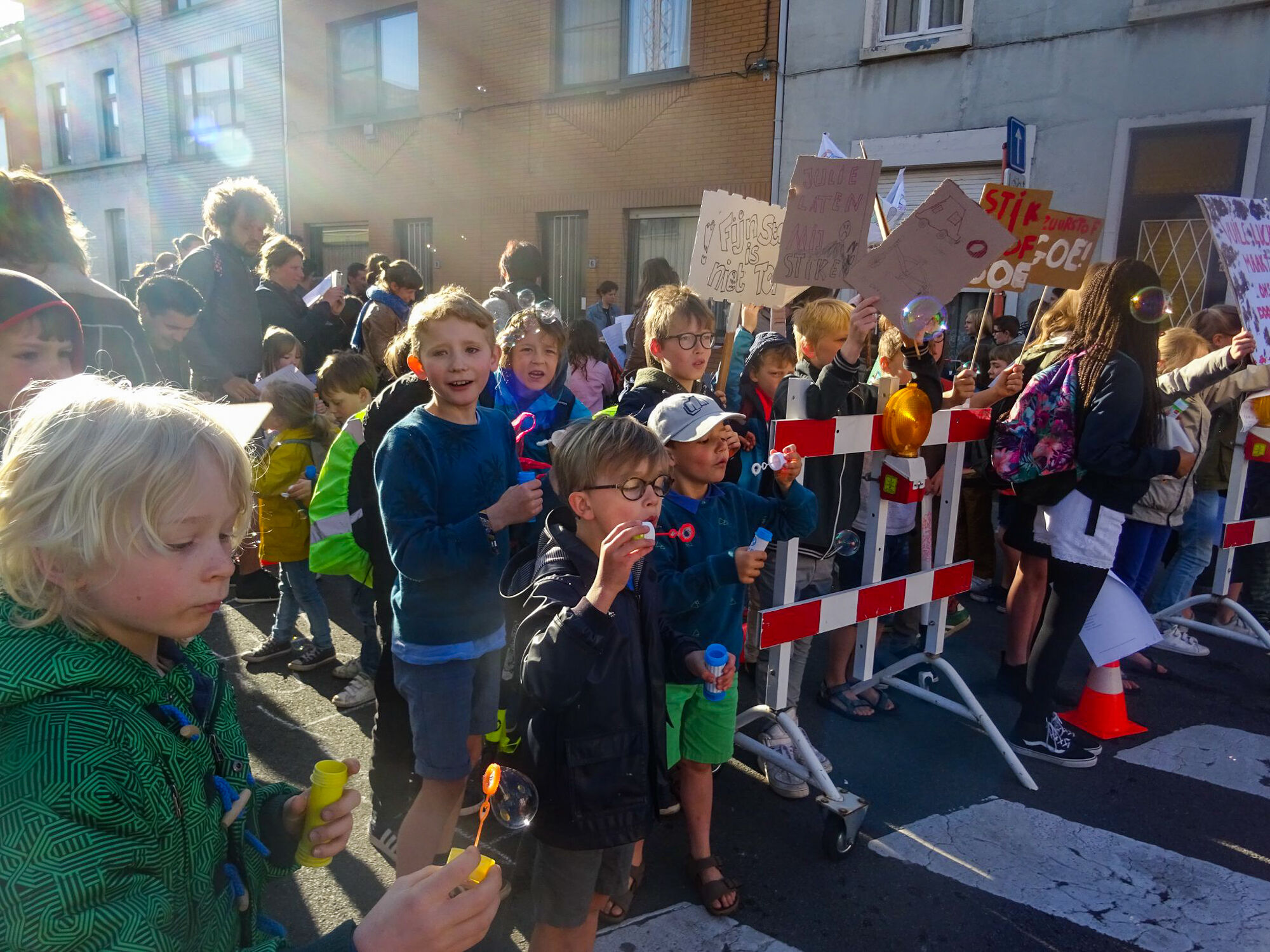
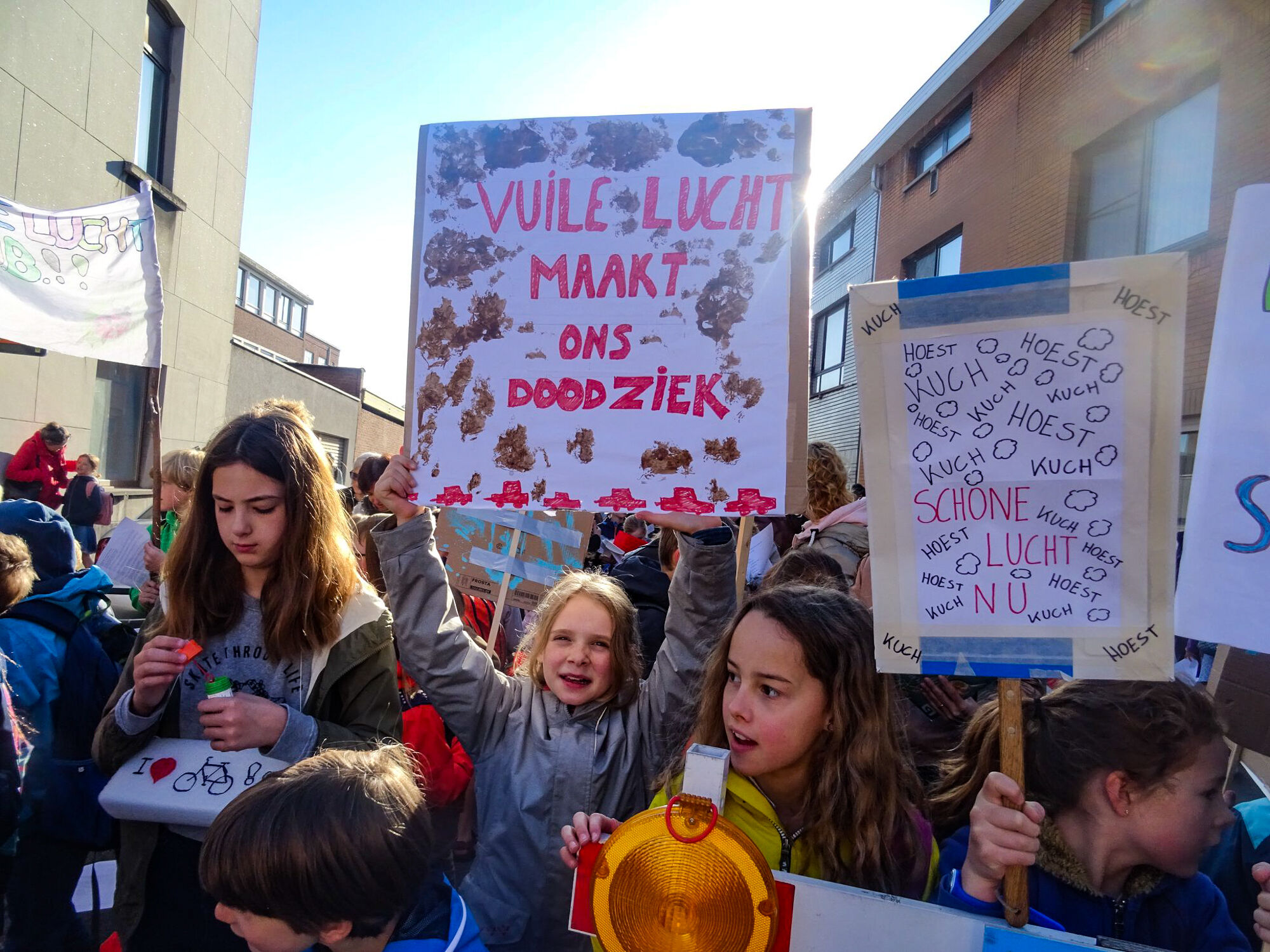


By means of a constructive climate Air for Schools aims to support parents and school boards in their ambition to create healthier and safer school environments. A great many of the protesting parents, some of whom are architects, also see opportunities in addition to the problems of designing a better city via schools. Their aspirations go further than an extra zebra crossing, a temporary school street or a few traffic bollards: they want to make space for wider pavements, a parvis, seating or 'living streets' – a sequence of spaces in which children can move safely on their way from home to school or to their hobbies. This would transform school environments into breeding grounds for road safety, mobility and the climate, and systematically set in motion a transformation that extends to the city as a whole.
Parents from 137 Belgian schools have now joined the Filter Café Filtré initiative. They want to actively participate in the whole process, from the problem definition to the design and implementation, and Air For Schools aims to support them in this endeavour. As a result street protests by Filter Café Filtré can grow into solution-oriented campaigns, by bringing together demands and proposals, and jointly working on scenarios for school streets and districts alongside designers and experts in air quality and mobility.
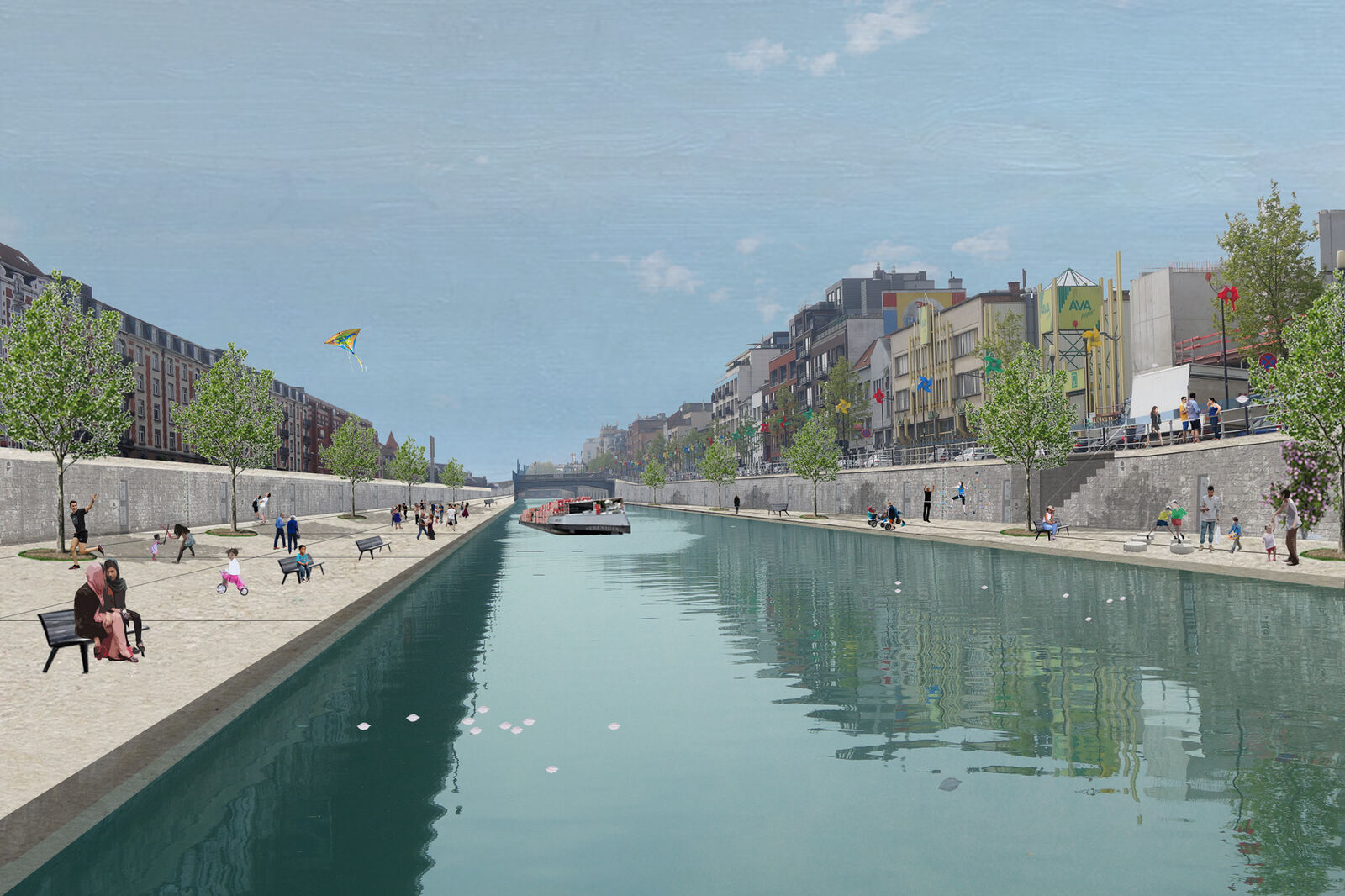
The focus is on participative design ateliers including local stakeholders and experts to improve school environments. On the one hand quick-wins and specific implementation-oriented plans are examined and on the other they also want 'realistic dreams' for structural transitions in the long term, and to visualise how the city could look in 2025, or even 2050. In addition we constantly zoom in and out from the smallest scale (the school, the parvis) to the larger levels of scale (street, district, city). By placing this study on the agenda of policy-makers, urban activism becomes a powerful tool for arriving at constructive proposals for the design and implementation.
The objective of Air for Schools is to increasingly focus on building a 'learning network' so the results from the various workshops can also be applied in school environments facing similar challenges. The results of the different cases and related ongoing projects are exchanged between schools, cities and communities, to create a learning platform and provide tools that can be used by parents, school boards and supralocal authorities throughout Belgium.





|
Call for action: Air for Schools (NL) | 36 KB |