News
Who heats the city?
14. Jul 2026
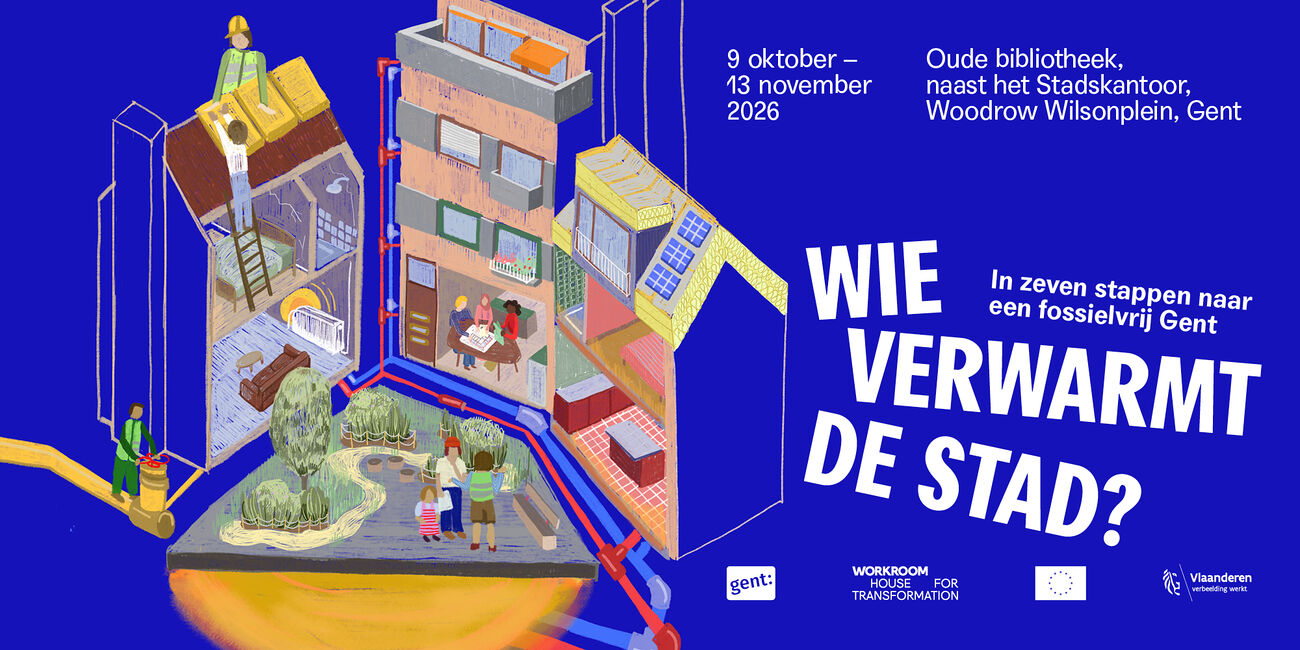
Ghent aims to be climate-neutral by 2050. To achieve this, all buildings will have to be heated using fossil-free heat rather than gas. Beyond a technical challenge, this presents the city with major societal choices: who takes the initiative? Who bears the risks of the necessary investments? How can heating remain affordable for everyone? And what role do residents, businesses, network operators and public authorities play?
From 9 October to 13 November 2026, ‘Who heats the city?’ will take over the old library next to the City Hall. It is not a traditional exhibition, but a temporary space for development and dialogue for everyone involved in the heating transition. Through seven questions, the space explores how a fossil-free Ghent can become a reality: ranging from the choices residents make today to the planning, financing and organisation of collective heating systems at neighbourhood and city level.
The space brings together reference projects, maps, diagrams and practical examples, and for five weeks will serve as the backdrop for discussions, workshops, lectures and working sessions. Various lessons learnt from the Muide Meulestede Living Lab are showcased, supplemented by examples from other Flemish cities involved in the 100 Neighbourhoods Platform. ‘Who heats the city?’ is an invitation to collectively map out the next step: how do we move from isolated pilot projects to a widely supported and affordable heating transition for all residents of Ghent?


