News
This autumn: open workroom Houses for the Common Good
8. Jun 2026
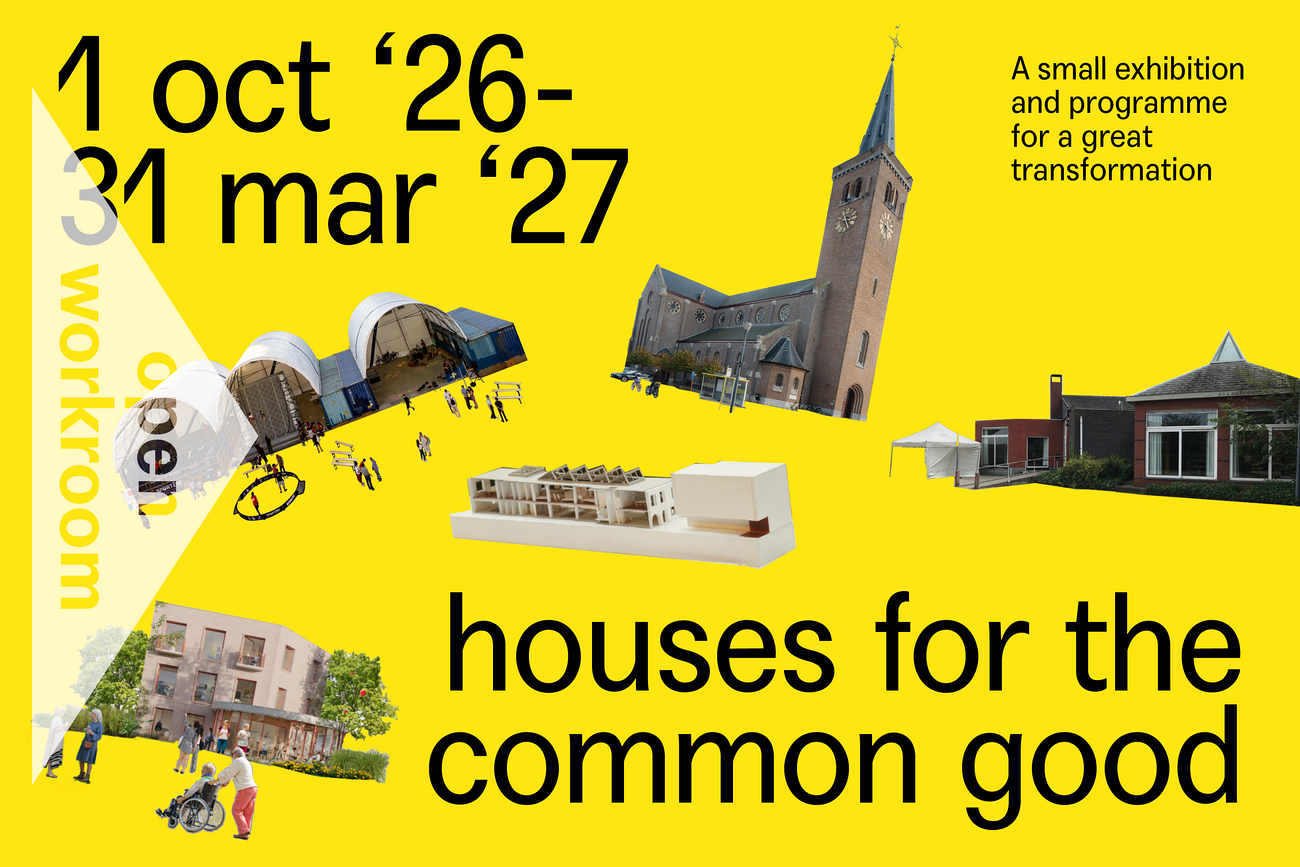
Schools that share their spaces with neighbourhood associations, cultural centres with community-oriented programming, parish churches that provide space for youth, gathering and care, care homes that open their doors to the neighbourhood... At a time when society is becoming ever more diverse, but also more individualised, these Houses for the common good, or Huizen voor gemeengoed, create space for encounters across social divides. What can we learn from these hopeful places? And how can we create a framework in which such practices can flourish everywhere? That is the mission of the open workroom!
The renovation challenge facing our public patrimony is considerable, not only because of the physical condition of many buildings, but also because their original programmes are often difficult to reconcile with the needs of society today. As a result, public real estate is ending up on the private market more quickly than ever before. At the same time, in an increasingly diverse, ageing and individualised society, the demand for places of encounter where different groups and programmes come together continues to grow. How can these two dynamics be connected?
In 2025, Workroom brought together local initiators, local and supra-local authorities, representatives of funding bodies and other partners within the Learning Environment Societal Infrastructure to address this challenge. This process resulted in a framework of nine keys, enriched with numerous building blocks that support initiators in developing societal infrastructure. One conclusion became clear: without a supportive framework, cross-sectoral use, shared space and the ability to respond to changing needs will remain the exception rather than the rule. Yet Flanders and Brussels need thousands of Houses for the Common Good. Achieving this requires collective action through collaboration between initiators, local governments, civil society organisations and policymakers.
The open Workroom Houses for the Common Good, running from 1 October 2026 until 31 March 2027 on the sixth floor at 34 Pachecolaan, is intended to provide exactly that kind of space. The exhibition, developed in collaboration with filmmaker Bertrand Lafontaine and PLEK-WERK, presents portraits of five inspiring Houses for the Common Good within their local contexts. It also creates a working environment for public conversations, workshops and encounters focused on developing new project logics, governance models, funding approaches and a supportive framework. The aim is to ensure that transforming public buildings into Houses for the Common Good no longer depends solely on the inexhaustible energy of local initiators, but becomes a well-supported and widely established practice


