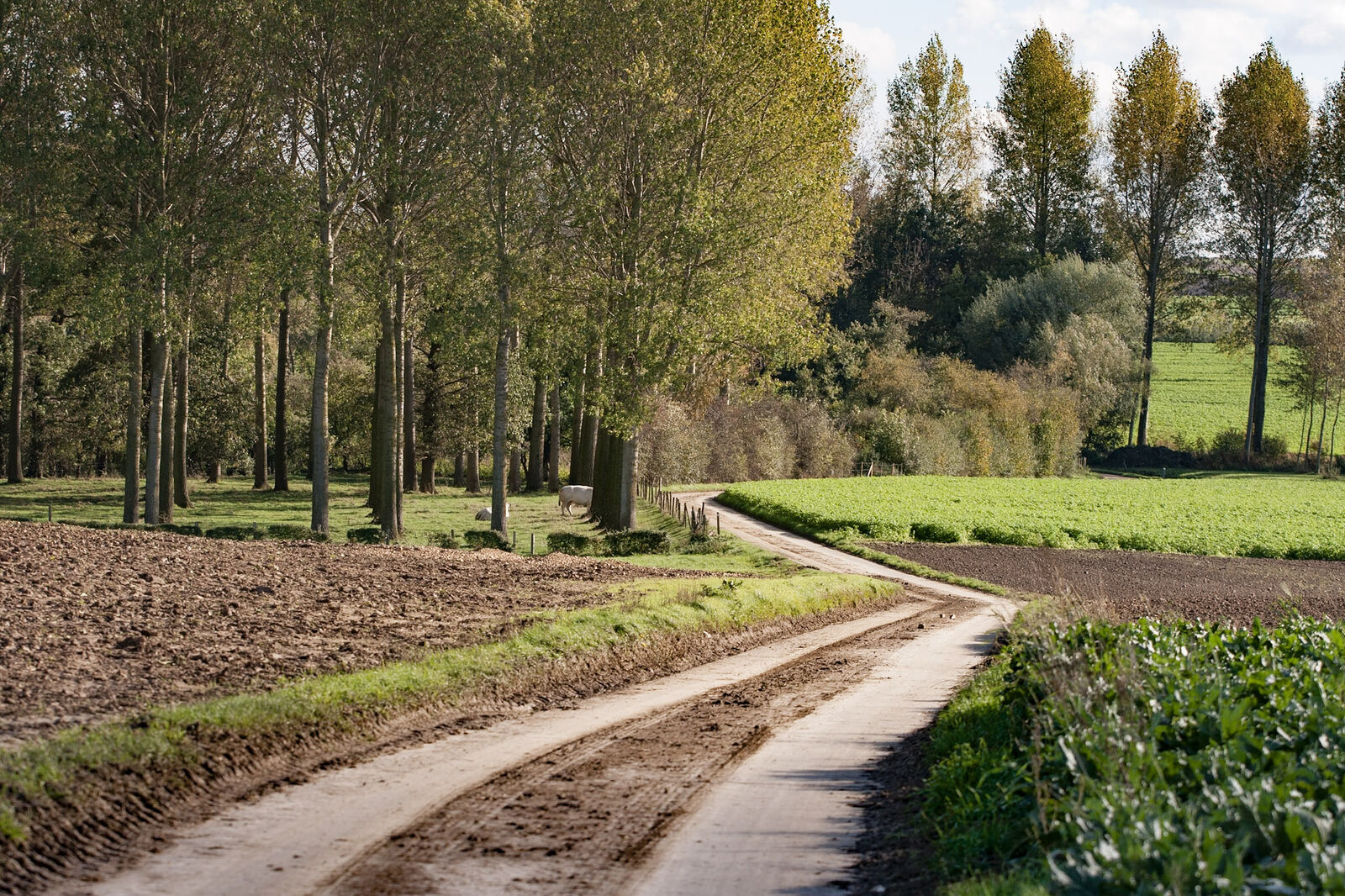
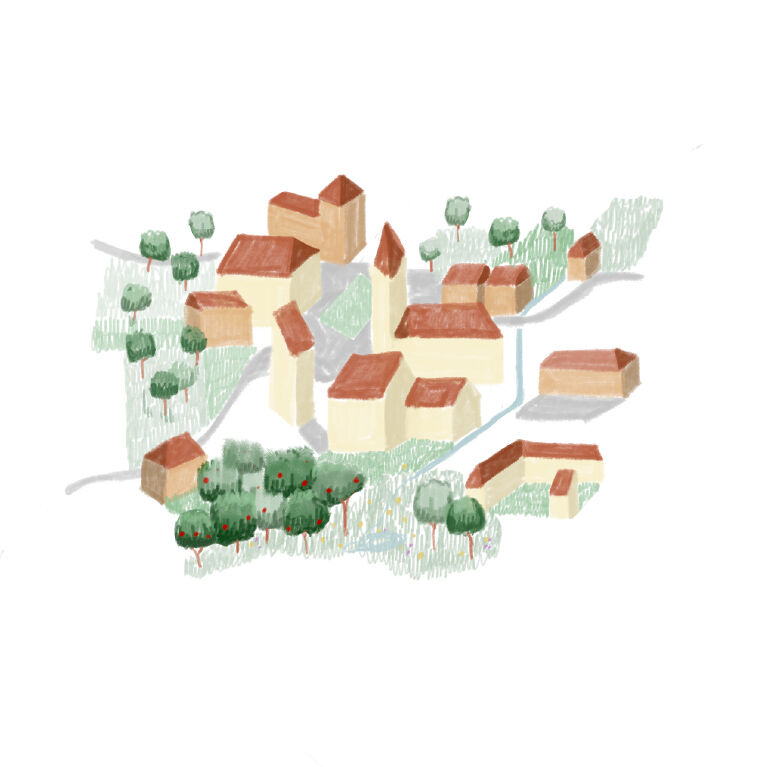
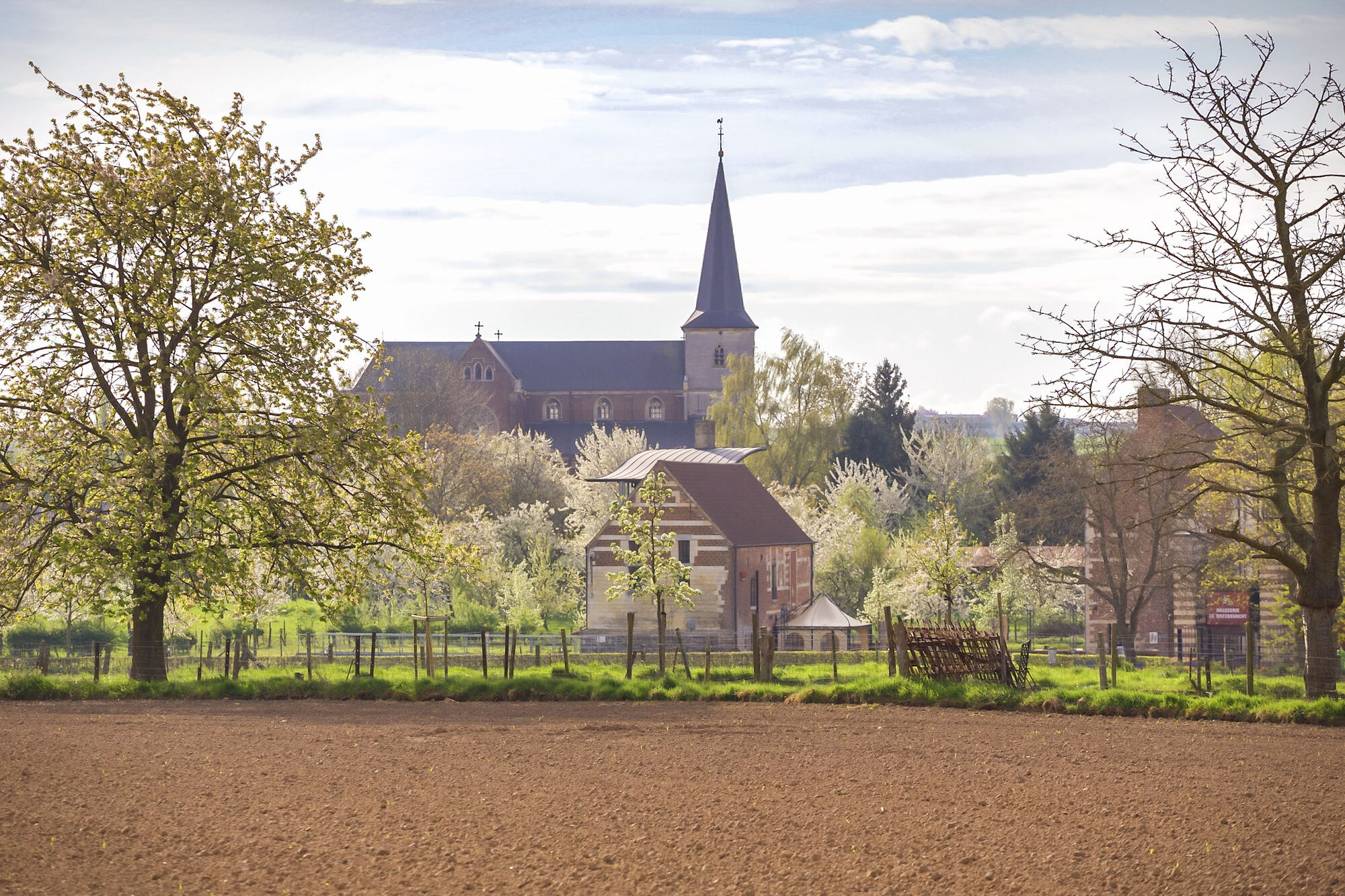
Behind Haspengouw’s fertile and productive agricultural landscape lies an exceptional ecological wealth. This richness is found not only in its valuable natural areas, but also, and above all, in the way the agricultural landscape is interwoven with winding stream valleys, flower-rich grasslands, traditional standard orchards, sunken lanes and small landscape features. It is precisely this interweaving that makes Haspengouw such a remarkable Landscape Park. Yet this ecological cohesion is under increasing pressure from fragmentation, desiccation and intensive land use. In the fields of water management and agriculture, the Living Lab Herk and Mombeek has already identified many of the area's key challenges. From a nature conservation perspective, however, the overall picture remained fragmented, as knowledge and expertise were spread across numerous partners. That is why, together with Landscape Park Haspengouw and local nature partners, we developed the Ecological Core Structure of Haspengouw: a shared voice and a long-term vision representing the nature conservation sector.
Fragmented natural areas and scattered knowledge call for an integrated vision
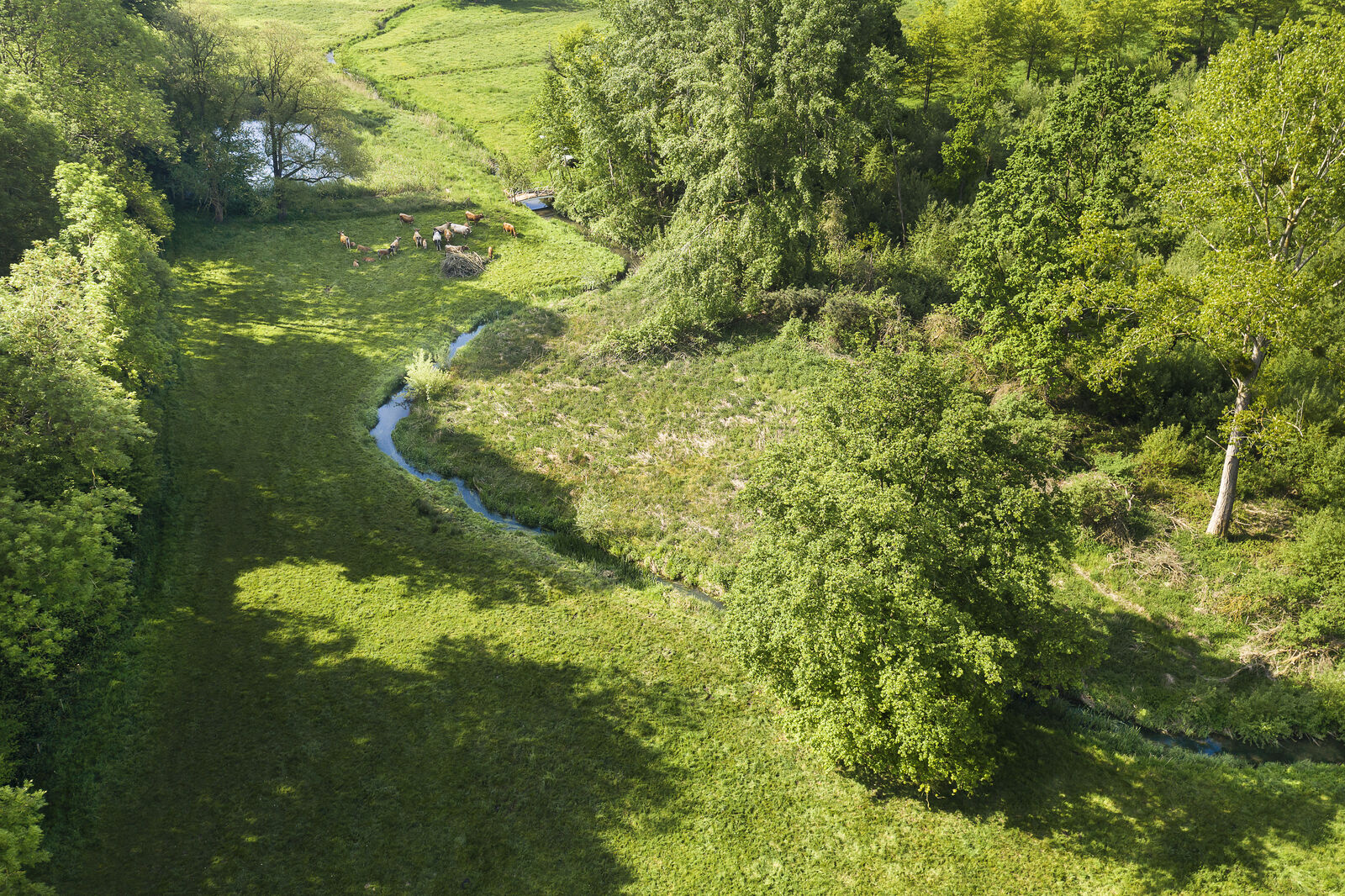
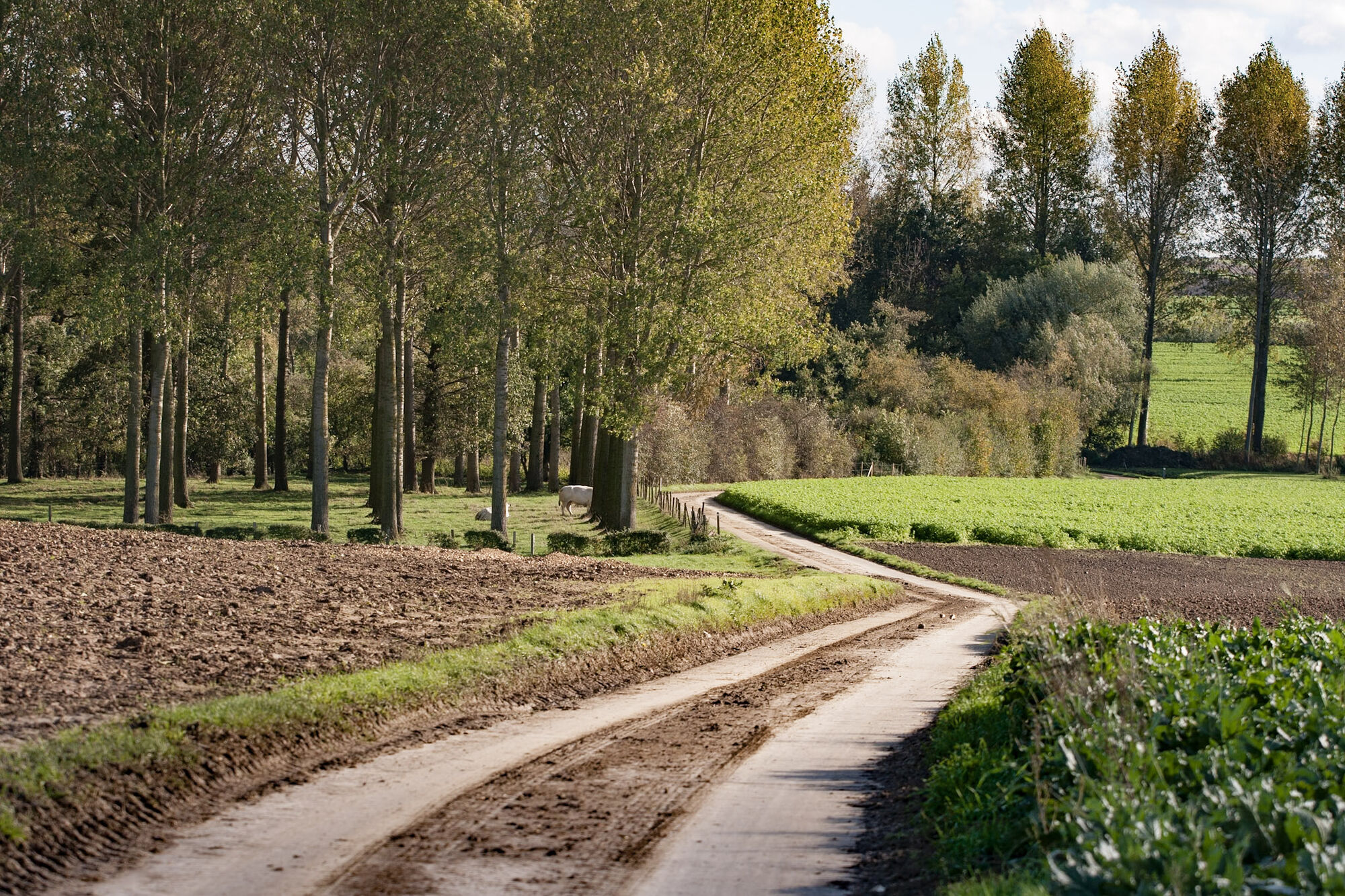
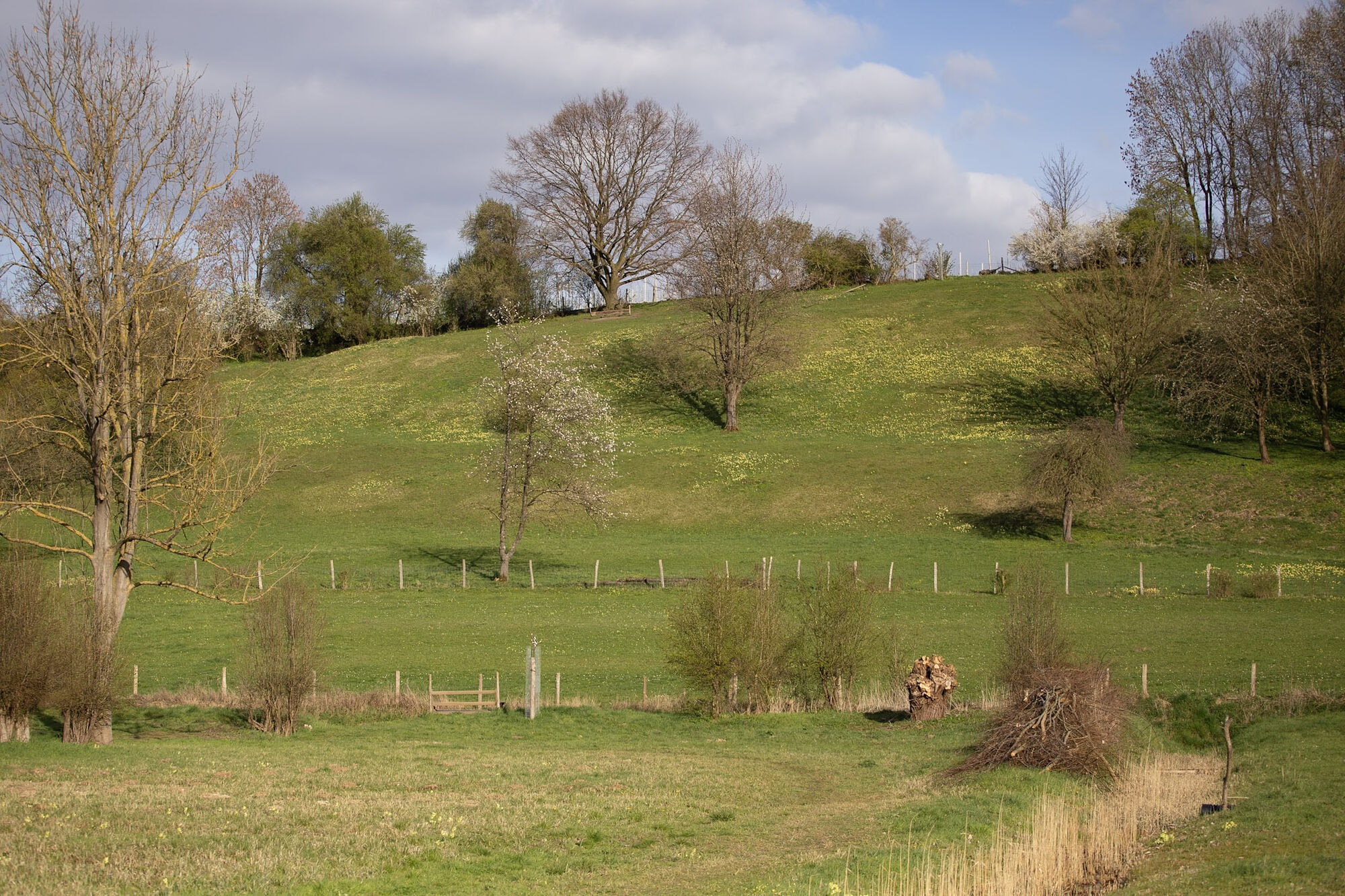
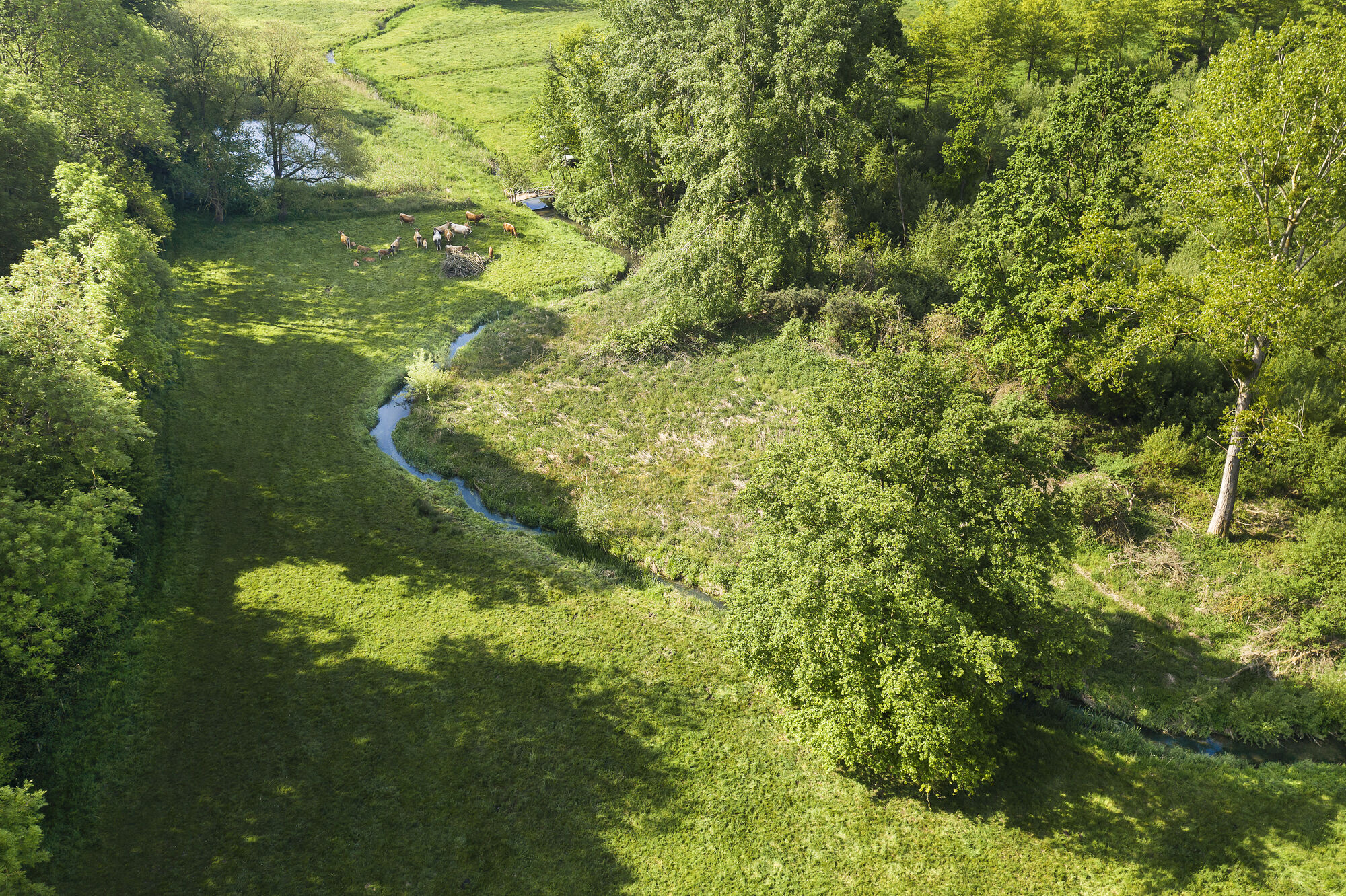
Haspengouw’s Natura 2000 values encompass a wide range of habitats, from stream valleys, marshes and forests to flower-rich and calcareous grasslands. But beyond these outstanding natural areas, it is precisely their interconnection with the surrounding agricultural landscape, with its ponds, traditional standard orchards, grasslands and small landscape features, that makes Haspengouw ecologically unique. Together, these elements form a finely woven network through which species can move across the landscape and in which natural values can be maintained and strengthened.
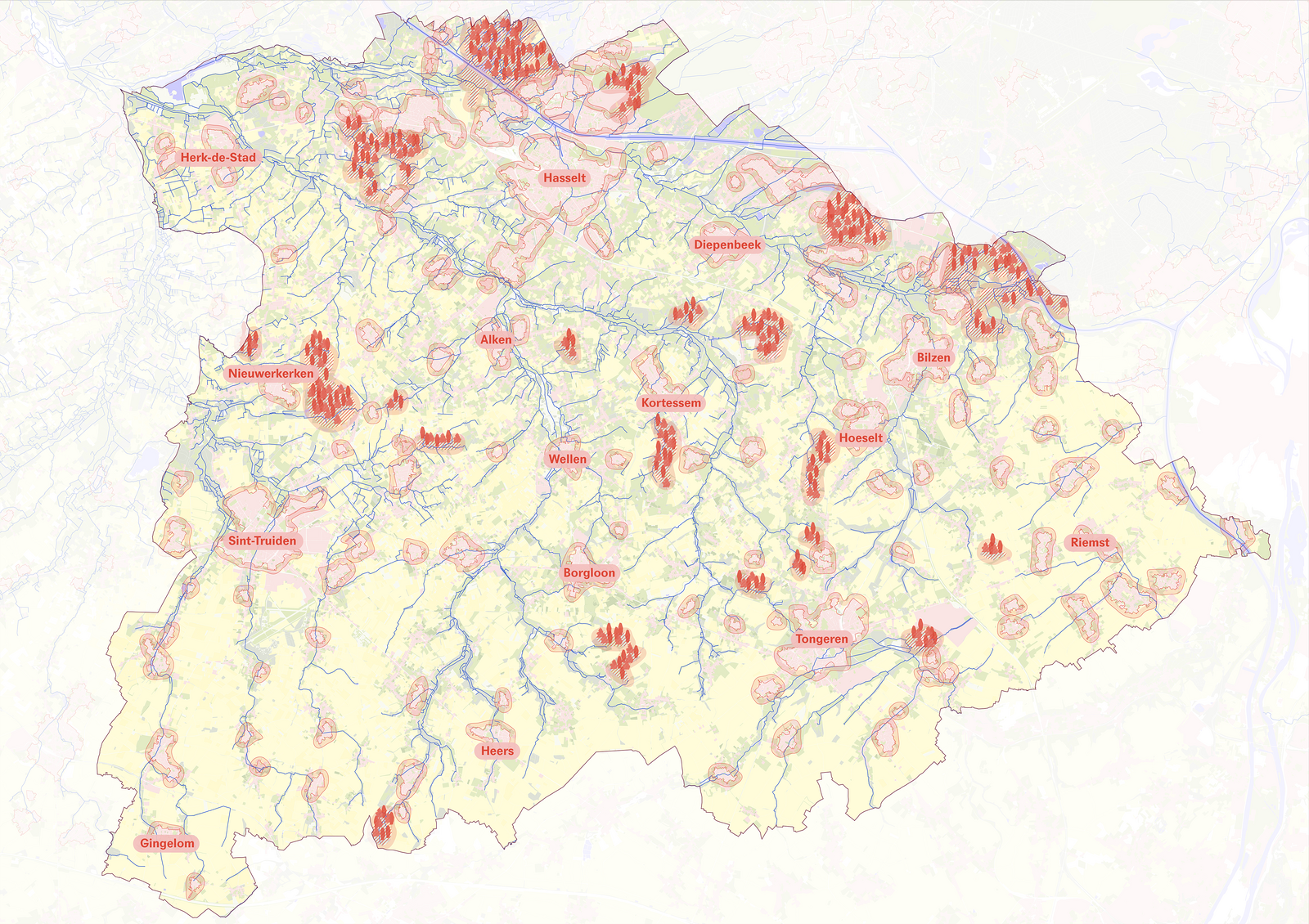
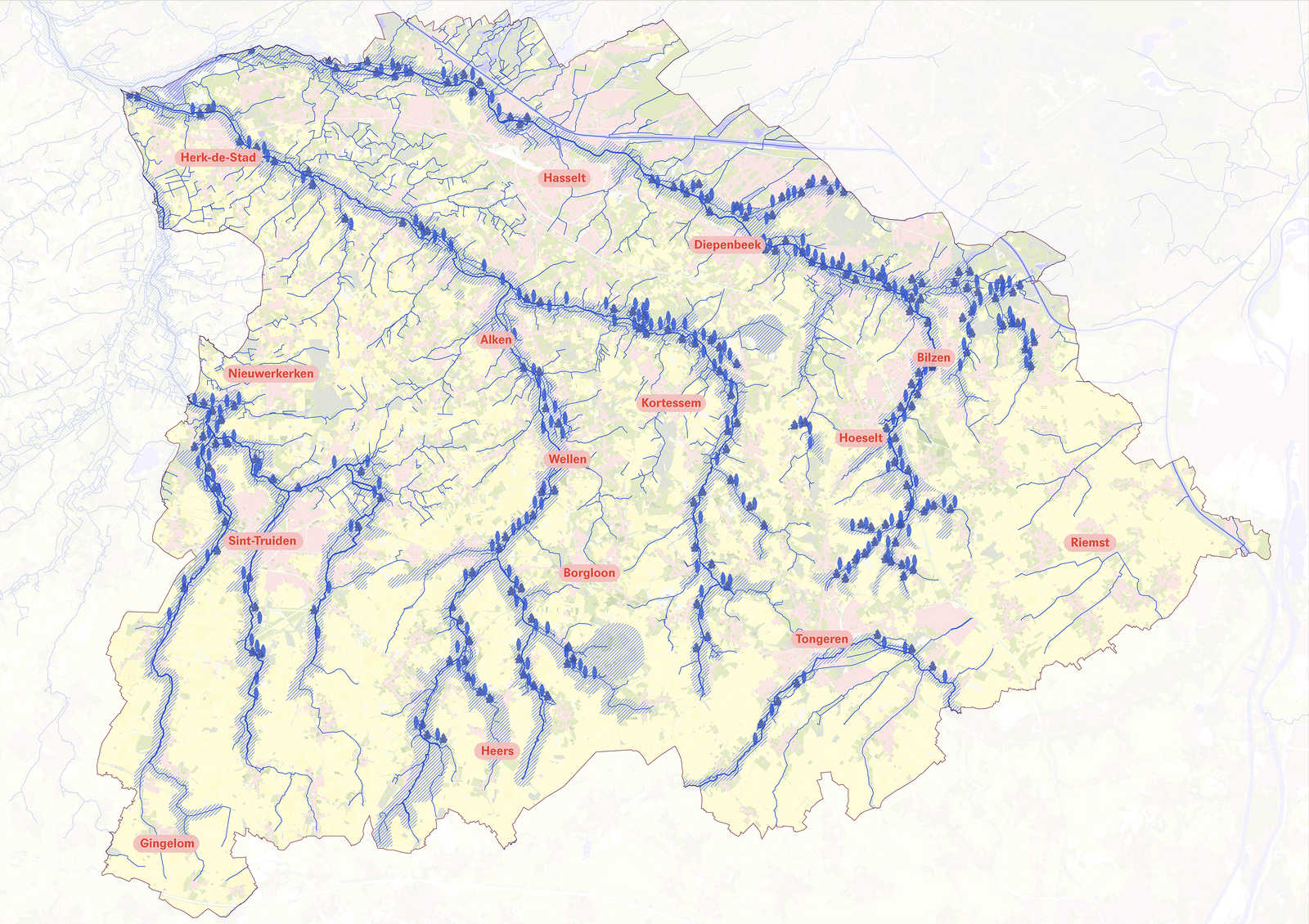
Today, this cohesion is fragile. Over the years, valuable natural areas have gradually become confined to valley bottoms and fragmented along the valleys. Their location makes them vulnerable to flooding, desiccation and pollution resulting from upstream land use. At the same time, small landscape features, traditional standard orchards and grasslands are gradually disappearing as a result of agricultural consolidation and intensification, increasing development and climate change. The challenge, therefore, is not only to protect existing natural areas, but also to strengthen the resilience of the entire system by improving the connections between them. This calls for a new ecological strategy.
For many years, various organisations have been working on ecological issues across the area, each bringing its own history and perspective. However, local knowledge about specific species and areas remains scattered across different nature management organisations and is often focused on managing a single site. Opportunities in the surrounding agricultural and cultural landscape also frequently remain untapped, even though this is precisely where many opportunities for ecological connections can be found. Over the years, a wealth of ecological knowledge has been accumulated. What has been missing until now is an integrated long-term vision at the scale of Haspengouw: a shared framework that brings this knowledge together and translates it into a vision for the entire landscape.
An Ecological Core Structure that connects and strengthens
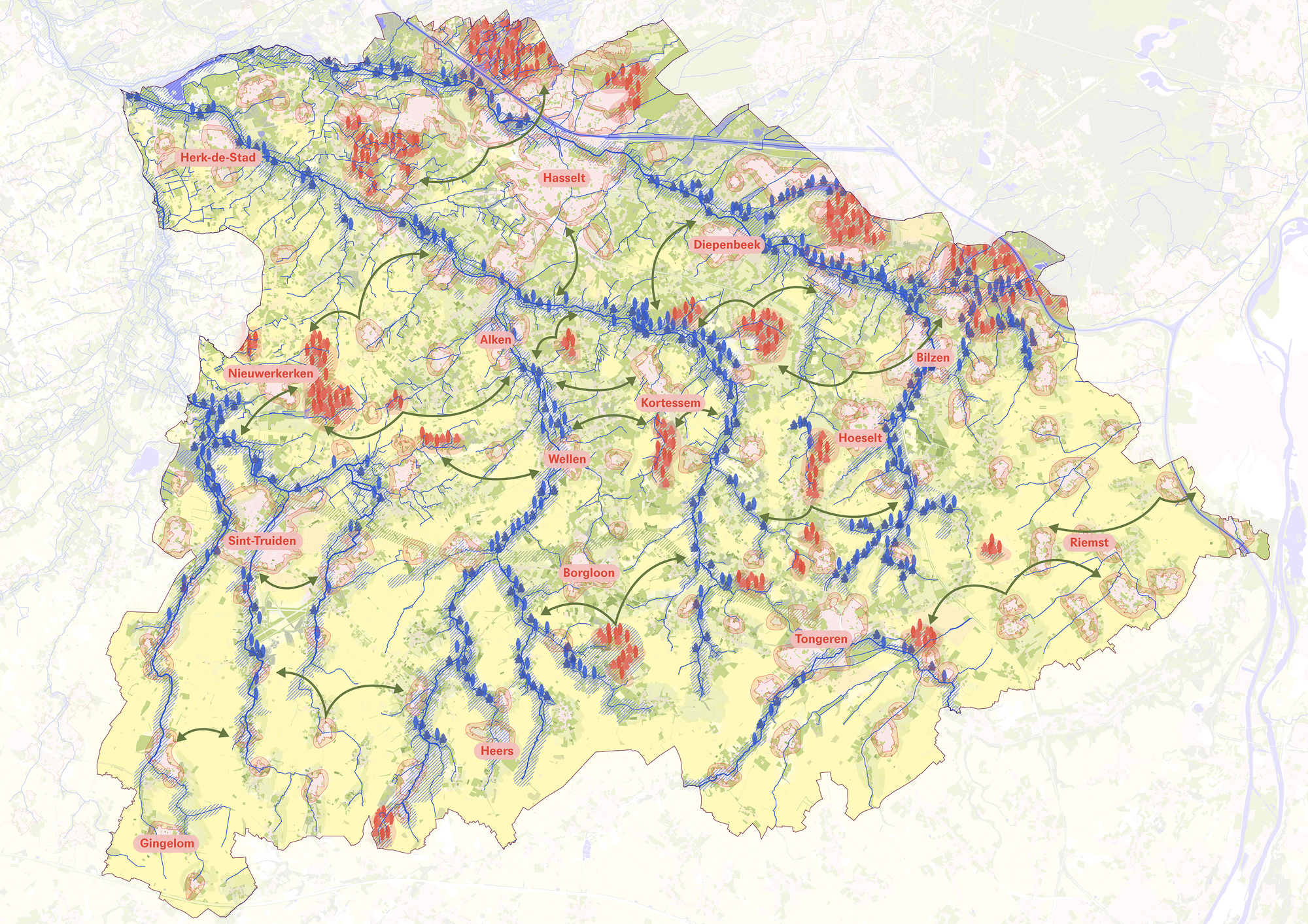
The Ecological Core Structure is the first key action in Landscape Park Haspengouw’s 10-point plan. The approach is rooted in in-depth ecological knowledge: bringing nature organisations together makes it possible to map challenges and opportunities across the whole of Haspengouw and enables these organisations to speak with one shared voice. This voice must also be understandable and relevant when engaging with other sectors. Several working sessions therefore focused on identifying opportunities for collaboration between nature conservation, on the one hand, and agriculture, water management, housing and landscape experience, on the other.
9 distinctive Haspengouw landscape types and 4 guiding principles
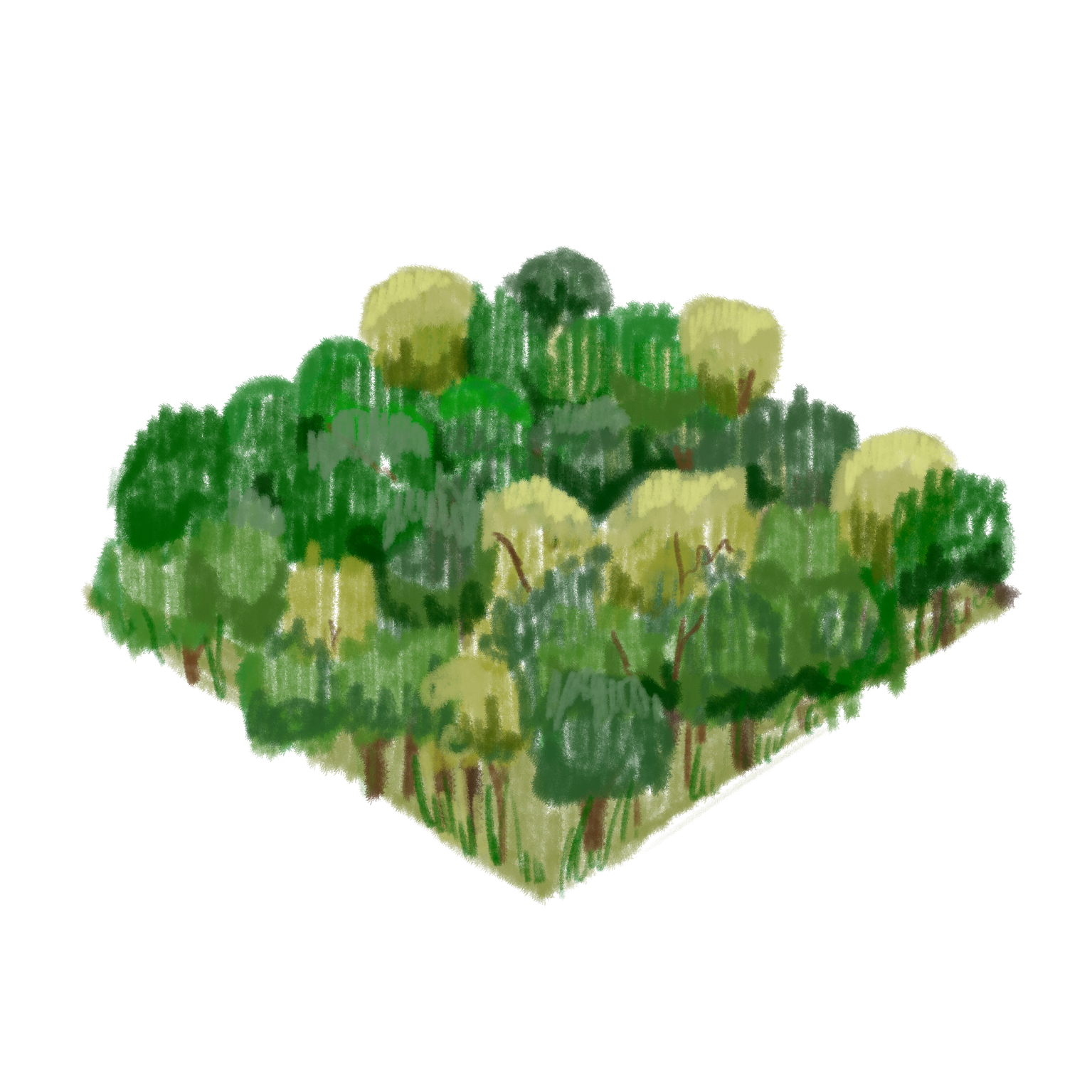
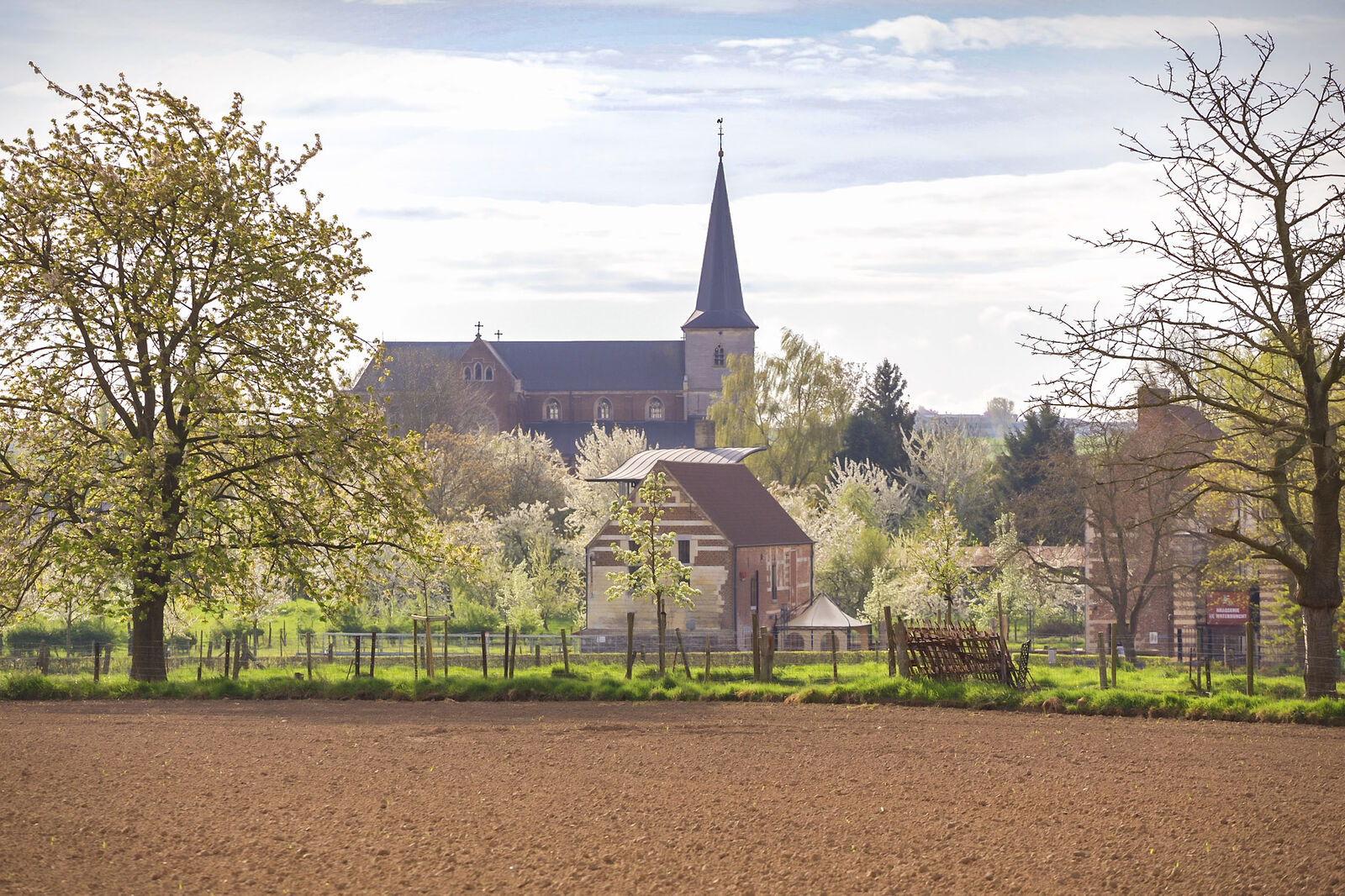
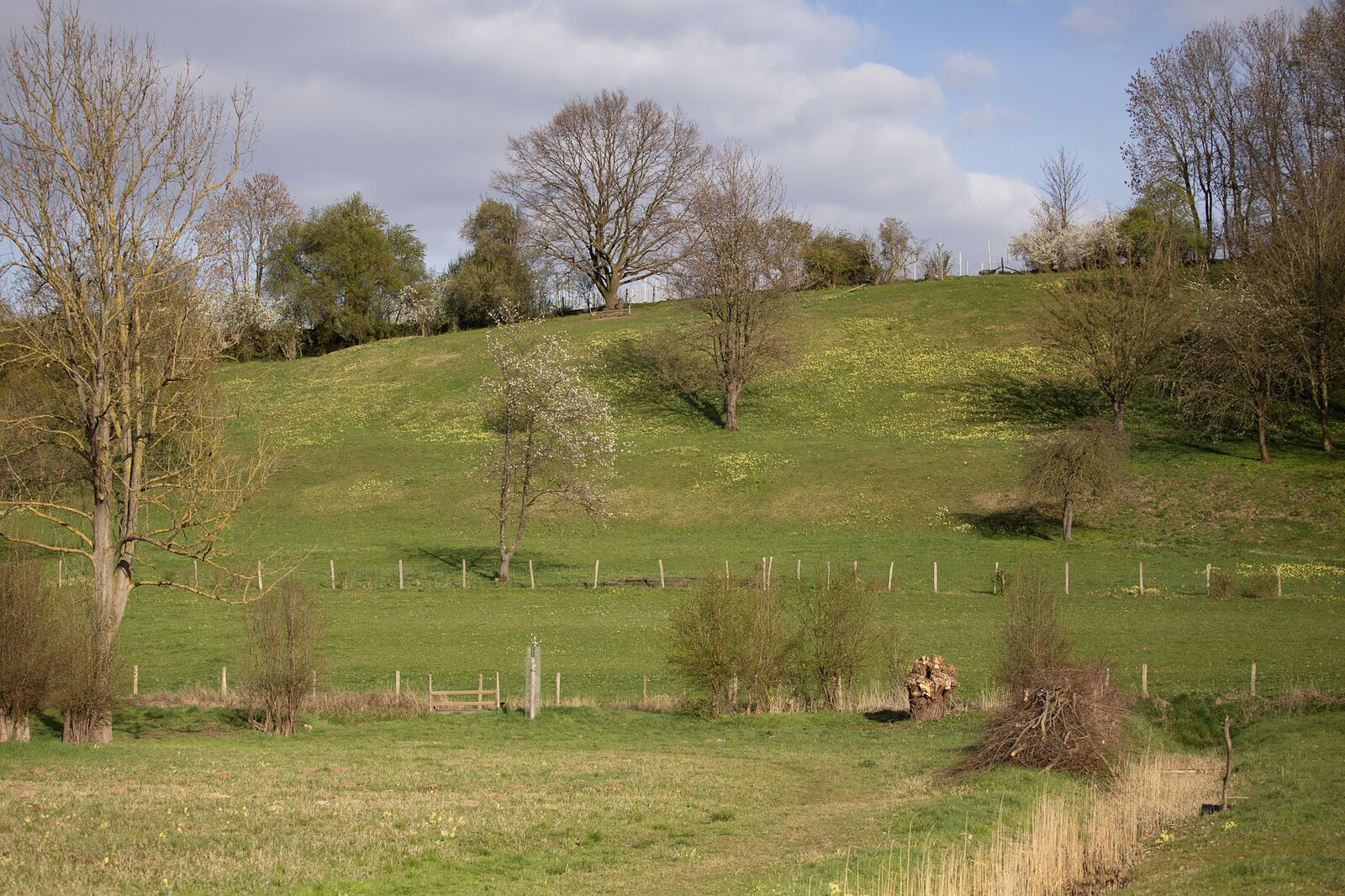
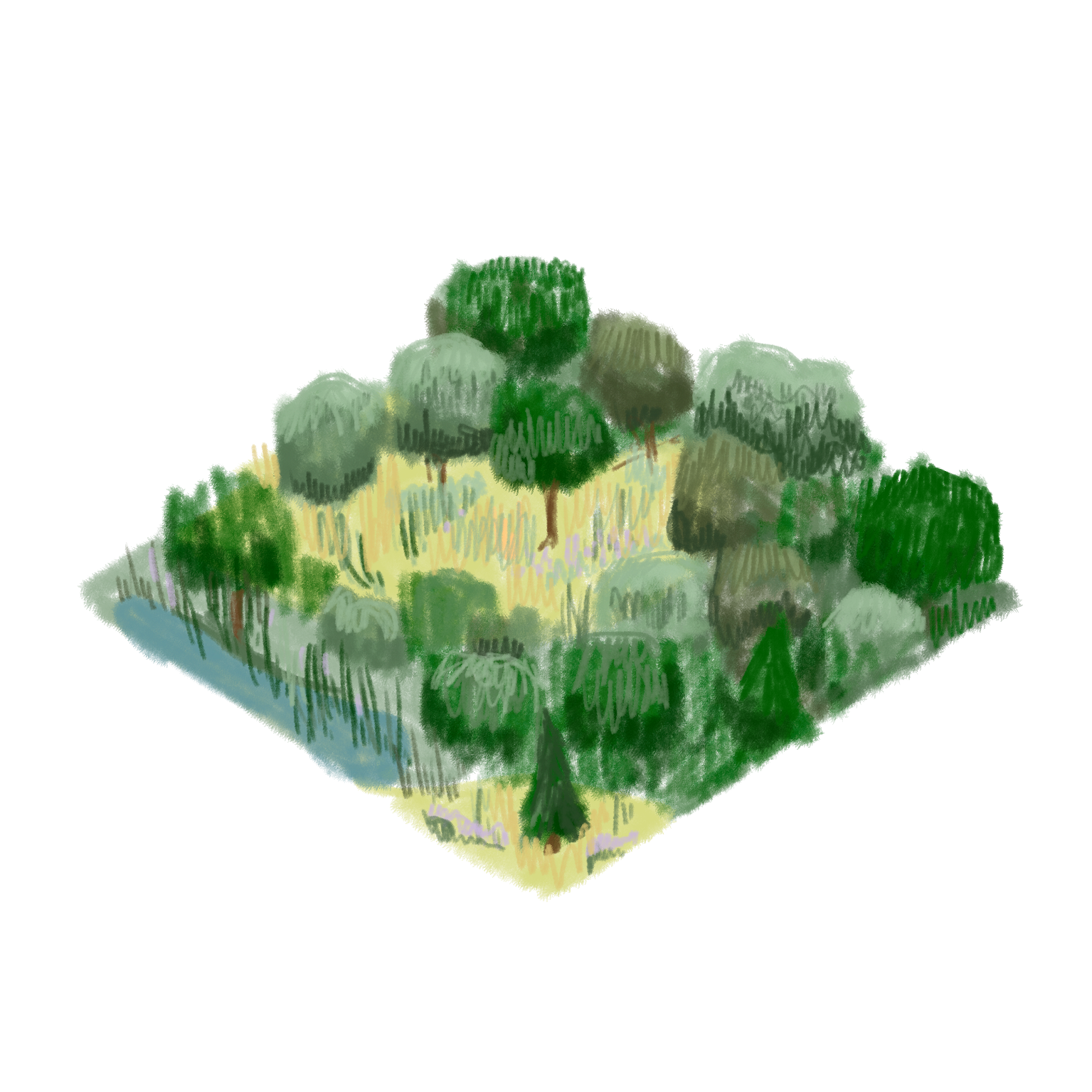
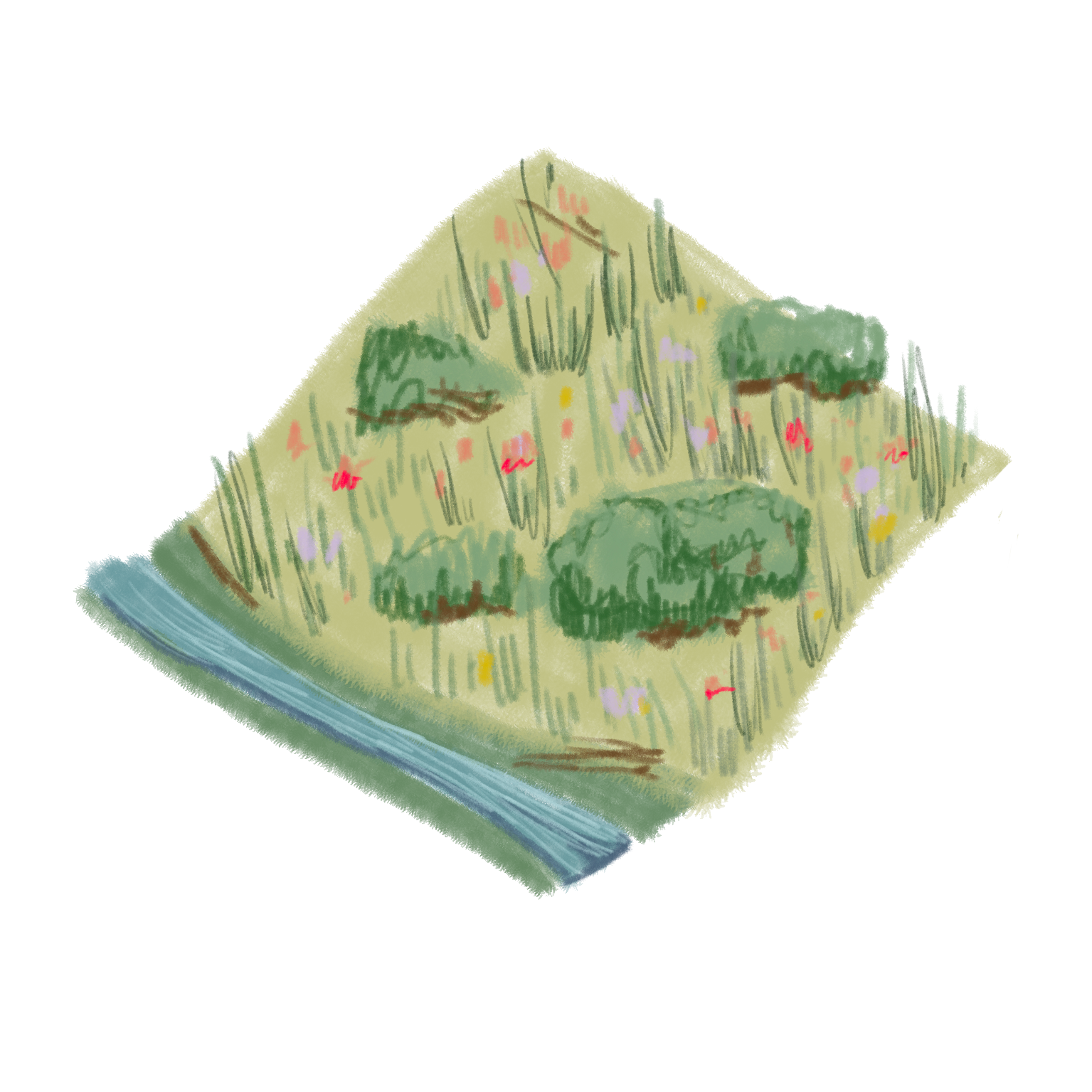
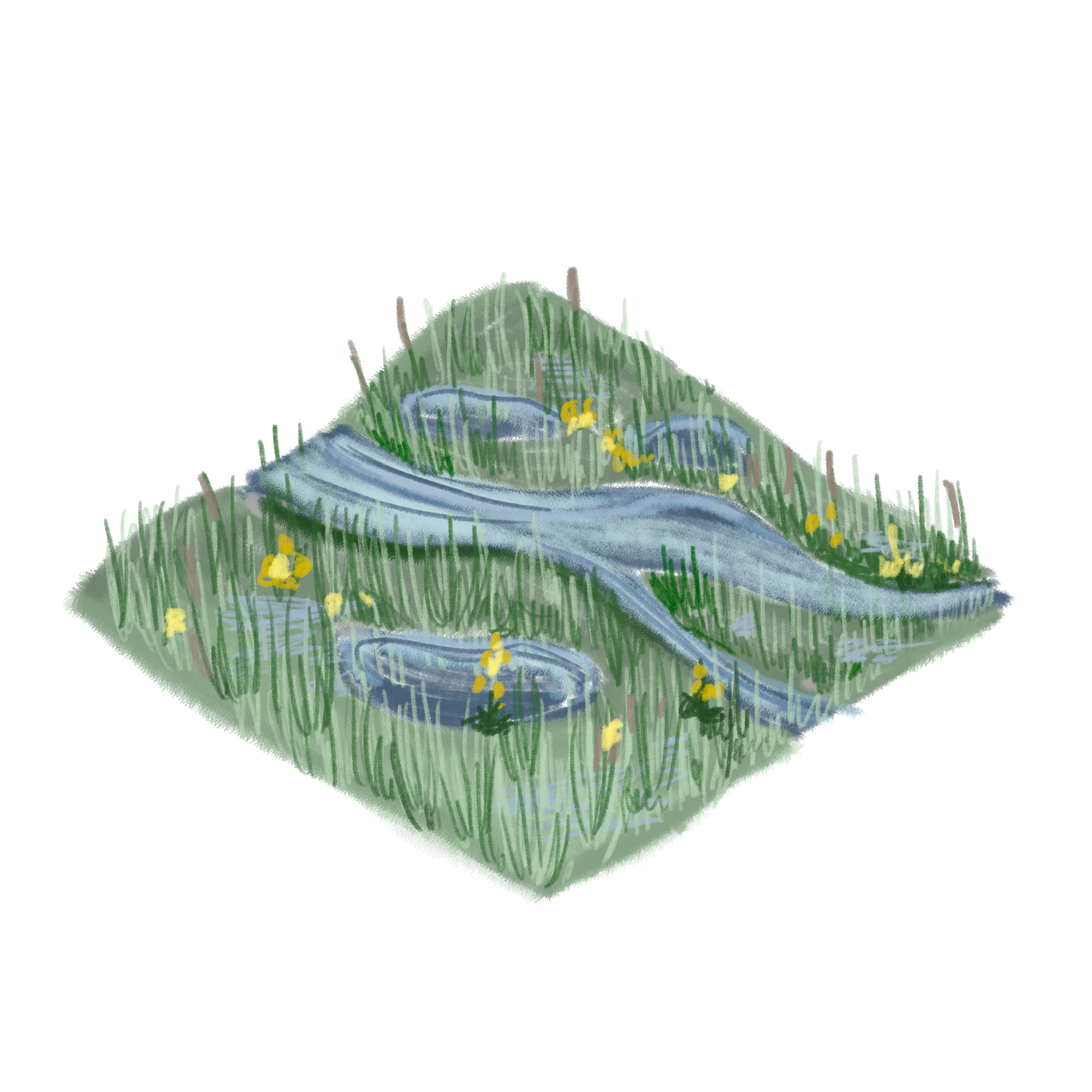
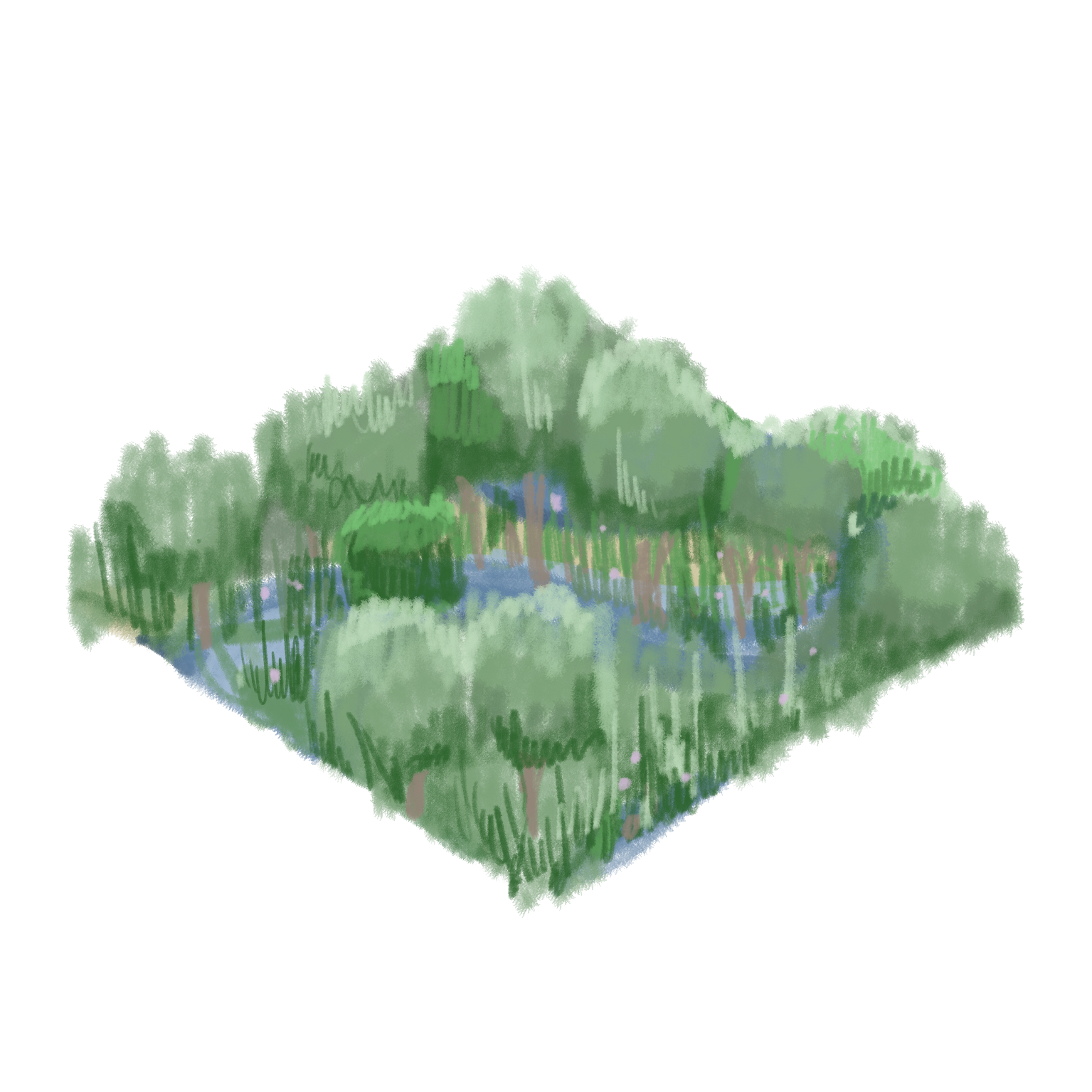
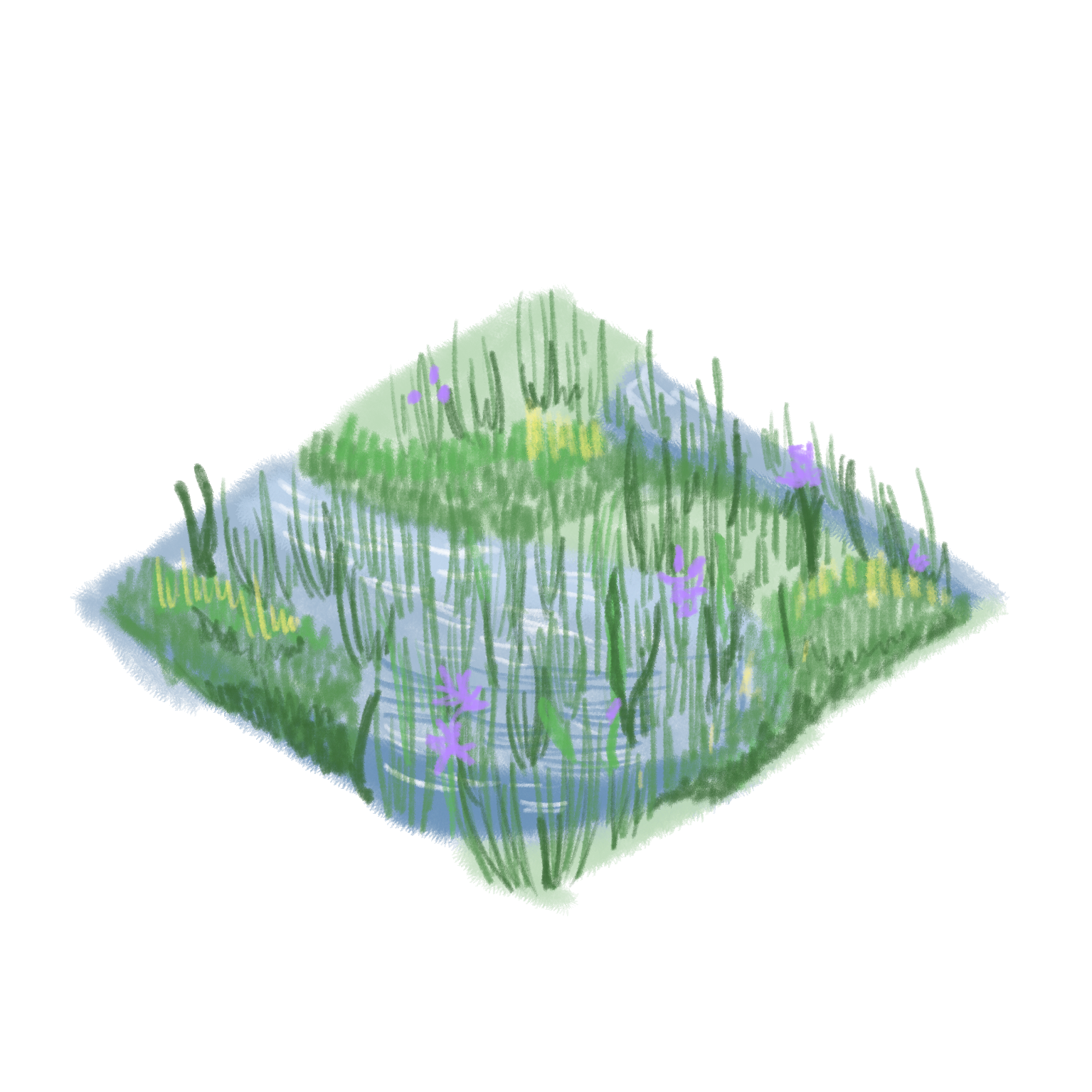
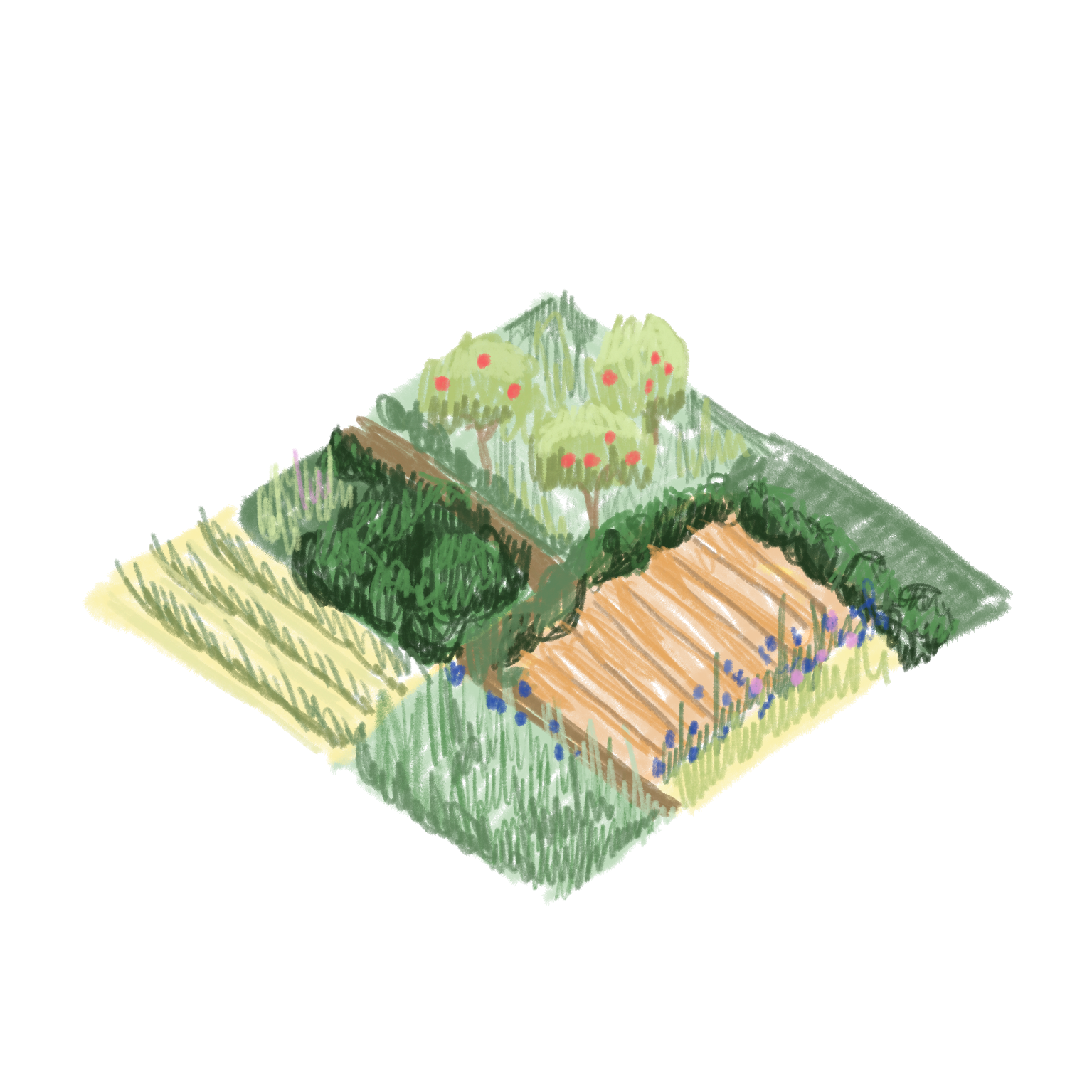
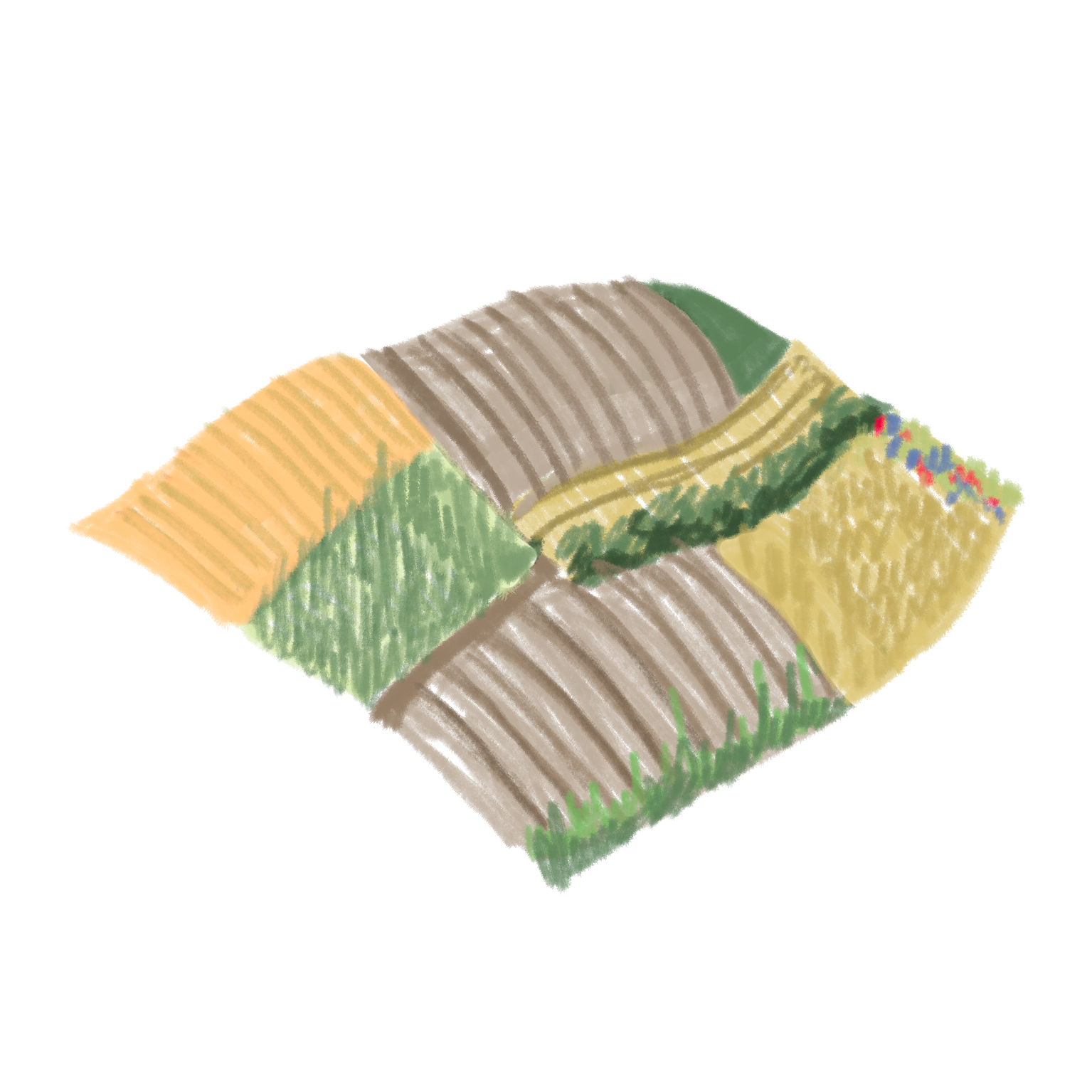
Haspengouw is characterised by a wide variety of landscape types, each with its own ecological qualities, species and challenges: from ancient woodlands and woodland edges to flower-rich slopes, wet stream valleys, open agricultural plateaus and green-blue village centres. Throughout the process, we identified nine distinctive landscape types that together define Haspengouw’s ecological richness. For each type, Workroom worked with the nature organisations to identify characteristic habitats and species, as well as the conditions required to maintain them and opportunities for collaboration. This creates a shared language that also speaks to farmers, local authorities and water managers.
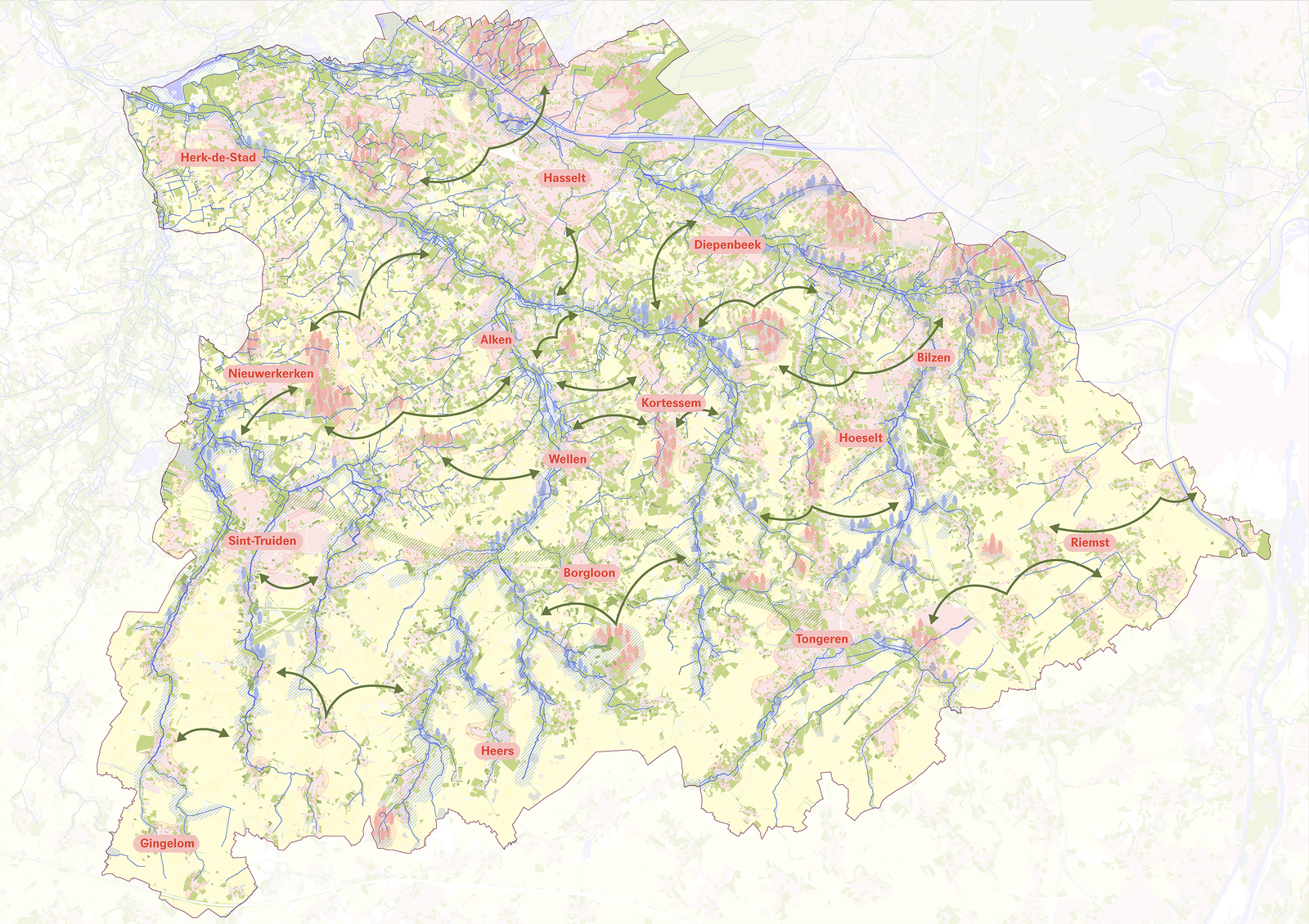
The ecological quality of these nine landscape types depends heavily on how they relate to one another. Species need not only suitable places to reproduce and find food, but also sufficient space and safe connections to move through the landscape. A pond, woodland or flower-rich grassland can only function sustainably if it forms part of a larger, interconnected whole.
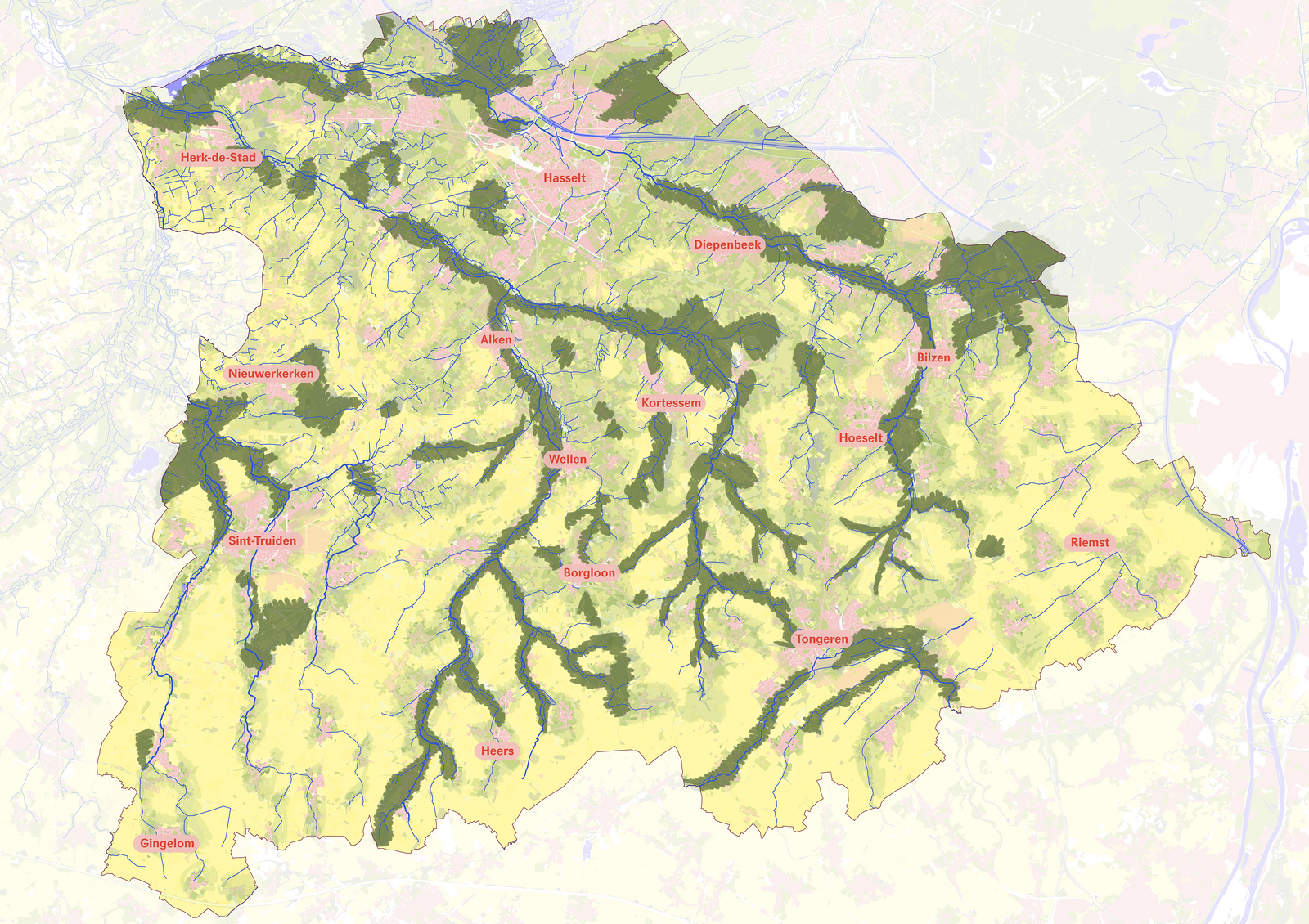
That is why the Ecological Core Structure is based on four guiding principles that reinforce one another: a biodiversity-rich cultural landscape, robust and continuous stream valleys, ecological belts around woodlands and villages, and connections throughout the landscape. These principles do not just define the ecological agenda; they also help address other challenges facing Haspengouw. Robust valleys, for example, help retain water, ecological connections such as hedgerows help reduce erosion, and healthy soils contribute to resilient and productive agriculture.
The Ecological Core Structure of Haspengouw thus establishes a shared ecological framework for the first time. The innovation lies not so much in the meaning of the principles themselves, but in bringing together existing knowledge, scattered expertise and different perspectives into one accessible and practical narrative for Haspengouw’s ecological future.
Its real added value will become clear through its practical application. Examples include a shared management vision for the valleys, joint actions by partners or the use of the maps as input for implementing the Local Blue Deal. In the coming planning periods, the landscape types and guiding principles will help Landscape Park Haspengouw better coordinate investments and new initiatives, based on one overarching vision for the ecological development of Haspengouw.