News
Two days of designing a neighbourhood energy action plan for Muide-Meulestede
25. Feb 2025
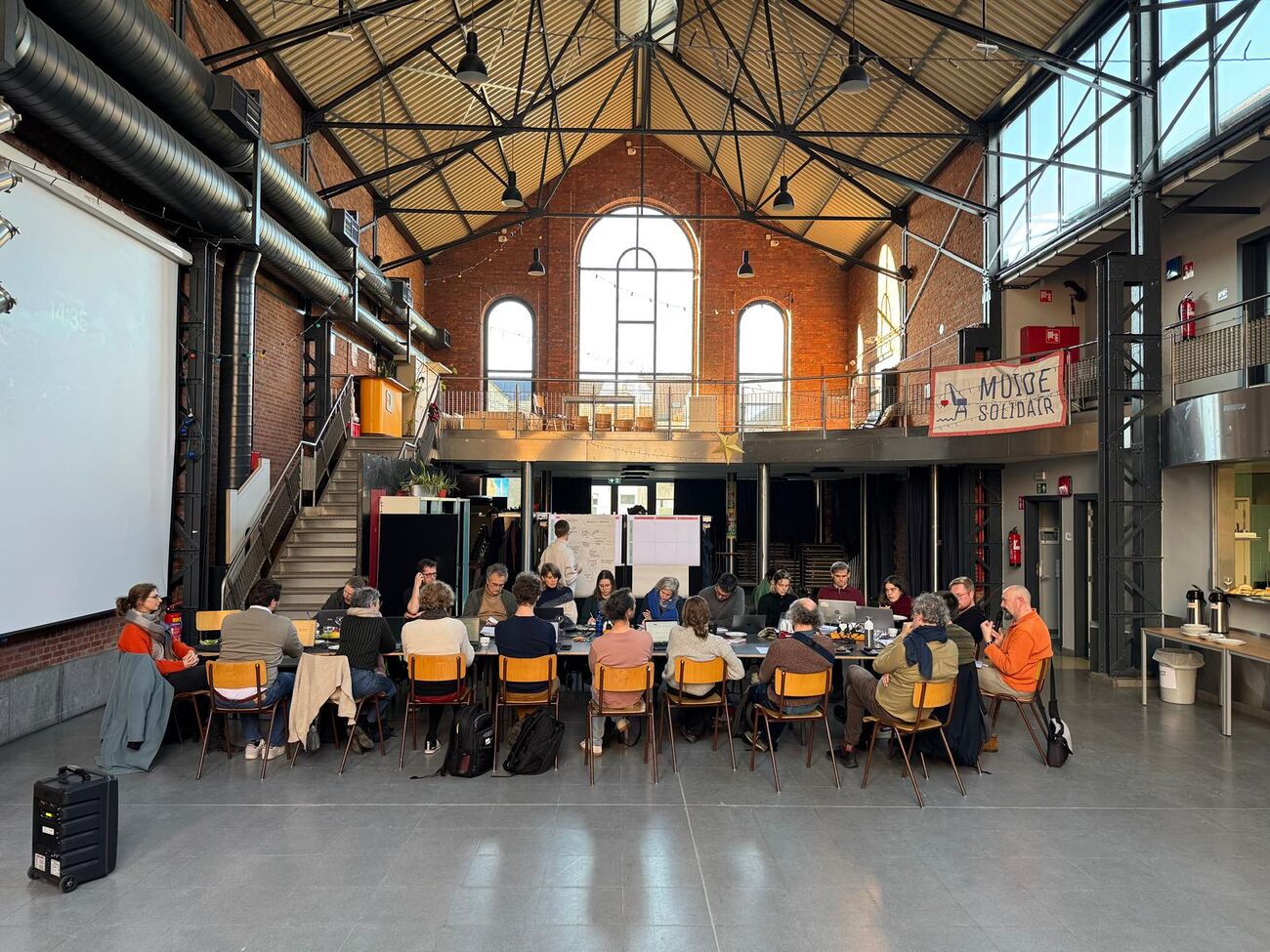
At the end of January, our energy team travelled to Ghent for the fourth design session within the Living Lab Muide-Meulestede Fossil-Free. Together with the City of Ghent, we brought together all partners to map the project's substantive progress, make new links and define the next steps. For the first time, a number of local residents involved in specific aspects of the project joined a design session.
Since 2023, the Living Lab aims to accelerate the transition of Muide-Meulestede into a sustainable, inclusive and fossil-free neighbourhood. On the peninsula at the Ghent harbour, an urban renewal programme is underway, there is a lot of local business activity, and local partners and organisations colour the area. At the same time, Muide-Meulestede is a neighbourhood with socio-economic and cultural challenges. The average income and housing quality are low, while both relocation movements and cultural and ethnic diversity are high.
In recent months, we have focused on two neighbourhood logics: ‘collective heating projects’ and ‘a solar roof project for the whole neighbourhood’. We talked to residents about a developed concept for a geothermal micro-heating network under the Standaard Muide football field. We visited a number of the homes directly adjacent to the football pitch, together with De Energiecentrale, to map their current consumption and renovation needs as closely as possible. We also mapped the heating potential and demand for the entire neighbourhood, and identified ‘heating clusters’ where supply and demand can be matched.
At the same time, we invited engaged residents to discuss the question: how can we harvest as much solar energy as possible in, by, and for the entire neighbourhood? With several reference groups (tenants, landlords, elderly people, those in an emergency purchase situation, and people from the Turkish community), we focused on offerings that would matter to them. We developed various models starting with collective investment in solar panels on large and residential roofs. The conclusion? Given the decreasing feed-in tariffs, the complex regulations around energy sharing, and the uncertainty of electricity purchase contracts, it is far from straightforward to create a compelling case for a neighbourhood-wide solar roof project. But what if, for example, we could proactively use the social energy tariff for investments in renewable energy? Could we succeed in building an inclusive and sustainable model through such alternative routes? We are currently compiling these insights into a report that can soon be consulted.
On 27 and 28 January, we held an intensive two-day session at a pivotal moment in the Living Lab process. With one year left to go, we came together to cross-fertilise the insights from the different workstreams. With our toolbox full of building blocks, we can now start to integrate solar energy, heating, and renovation into a single system. We can further develop the heating clusters and translate them into a neighbourhood energy action plan that proposes a sustainable solution for everyone in the neighbourhood. This is what we will continue to build on over the coming year!
The Living Lab Muide-Meulestede is an initiative of the City of Ghent and Architecture Workroom. We work closely with a consortium of social, technical, academic, policy, and civil society partners: Wattson, SAAMO Ghent, Kelvin Solutions, SWECO, Energent, Blixt, Daidalos Peutz, Trividend, Flux50, VITO, and Ghent University.


