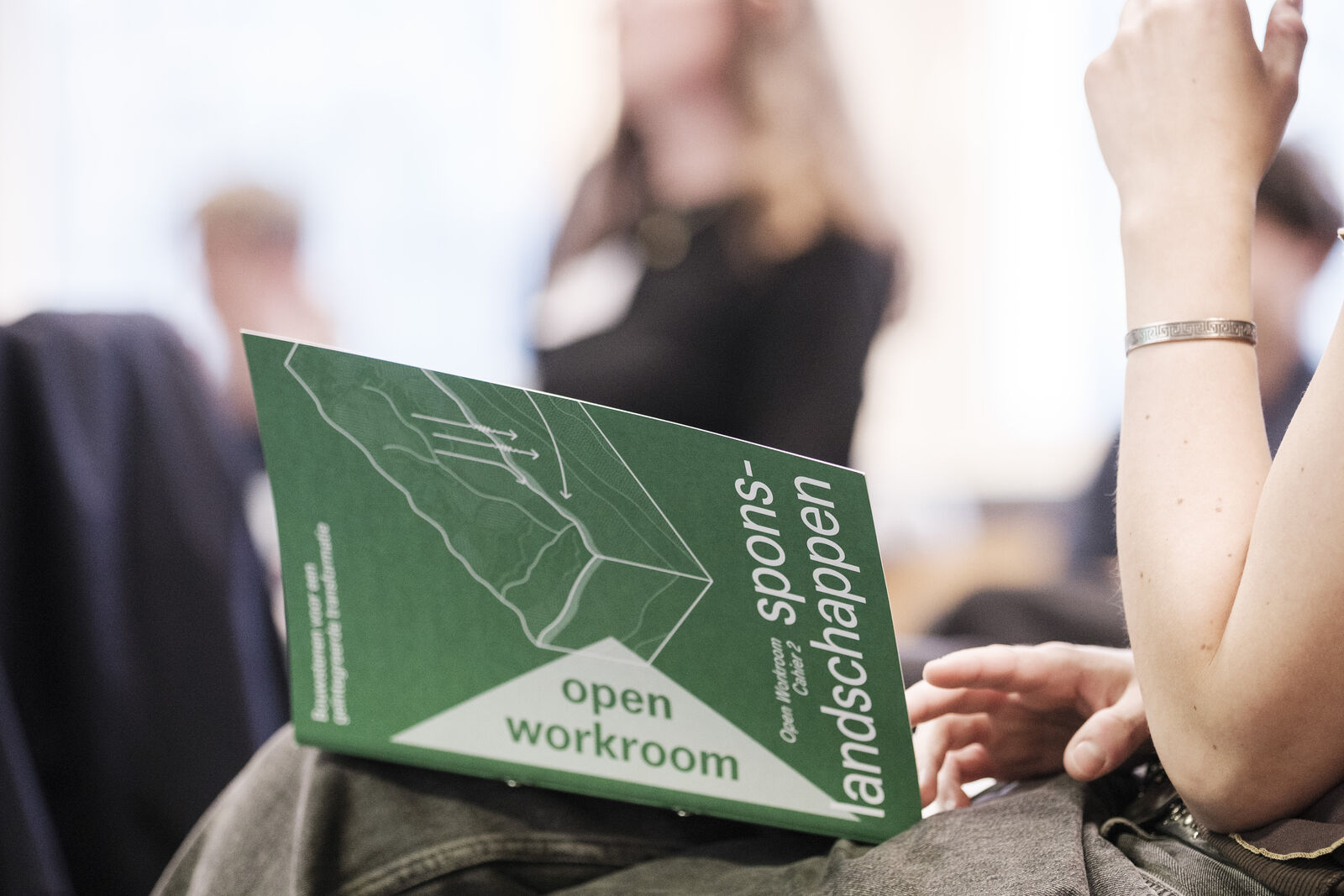
“We can keep making beautiful maps and designs for integrated landscape transformation that envision basin-wide resilience, but we are tired of producing paper projects. Where is the landing space for sponge landscapes?". This question formed a central thread throughout the Open Workroom Sponge Landscapes, from the Call for Projects & Objects to the closing conference, Re-sponging Europe.

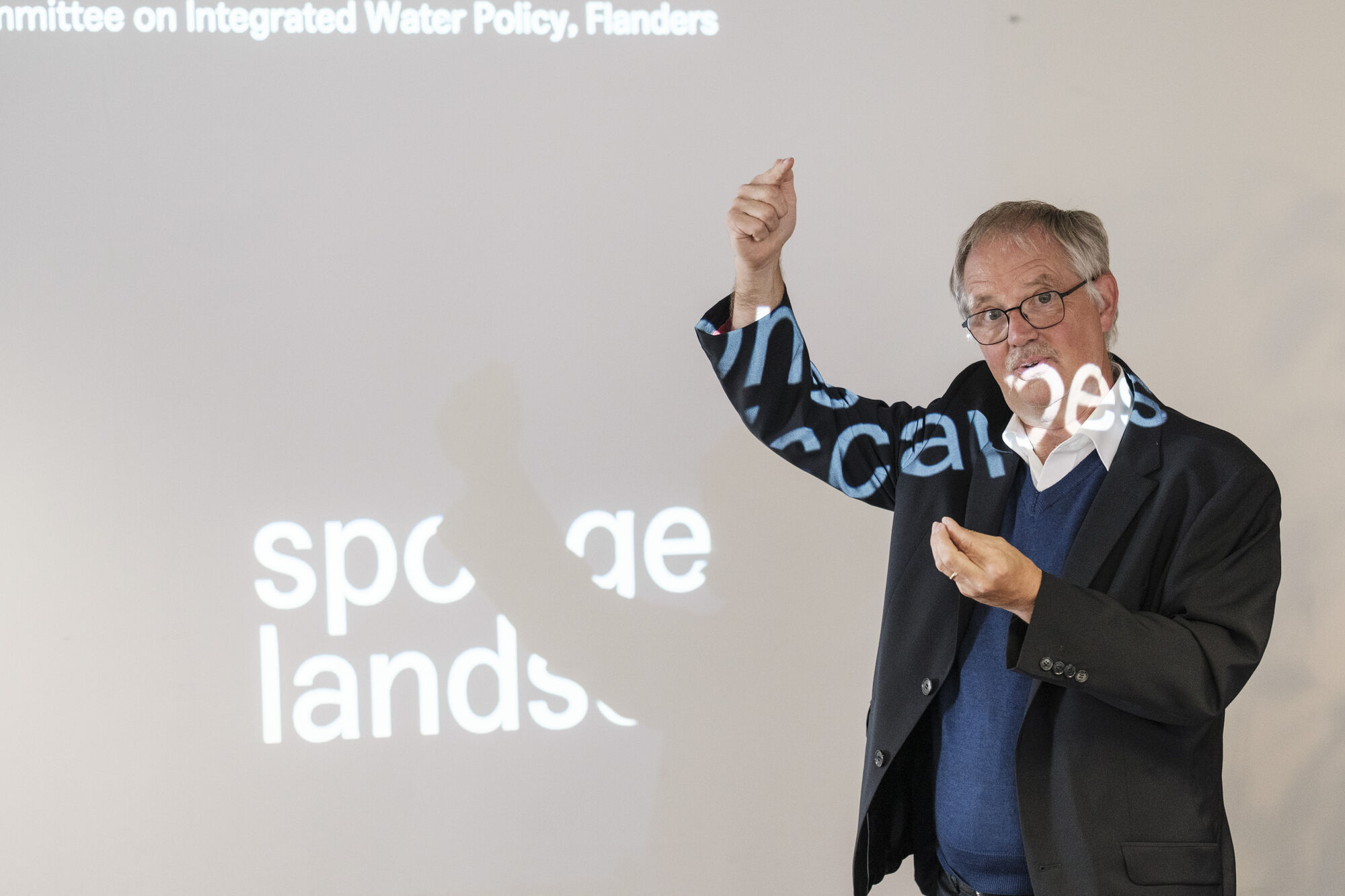
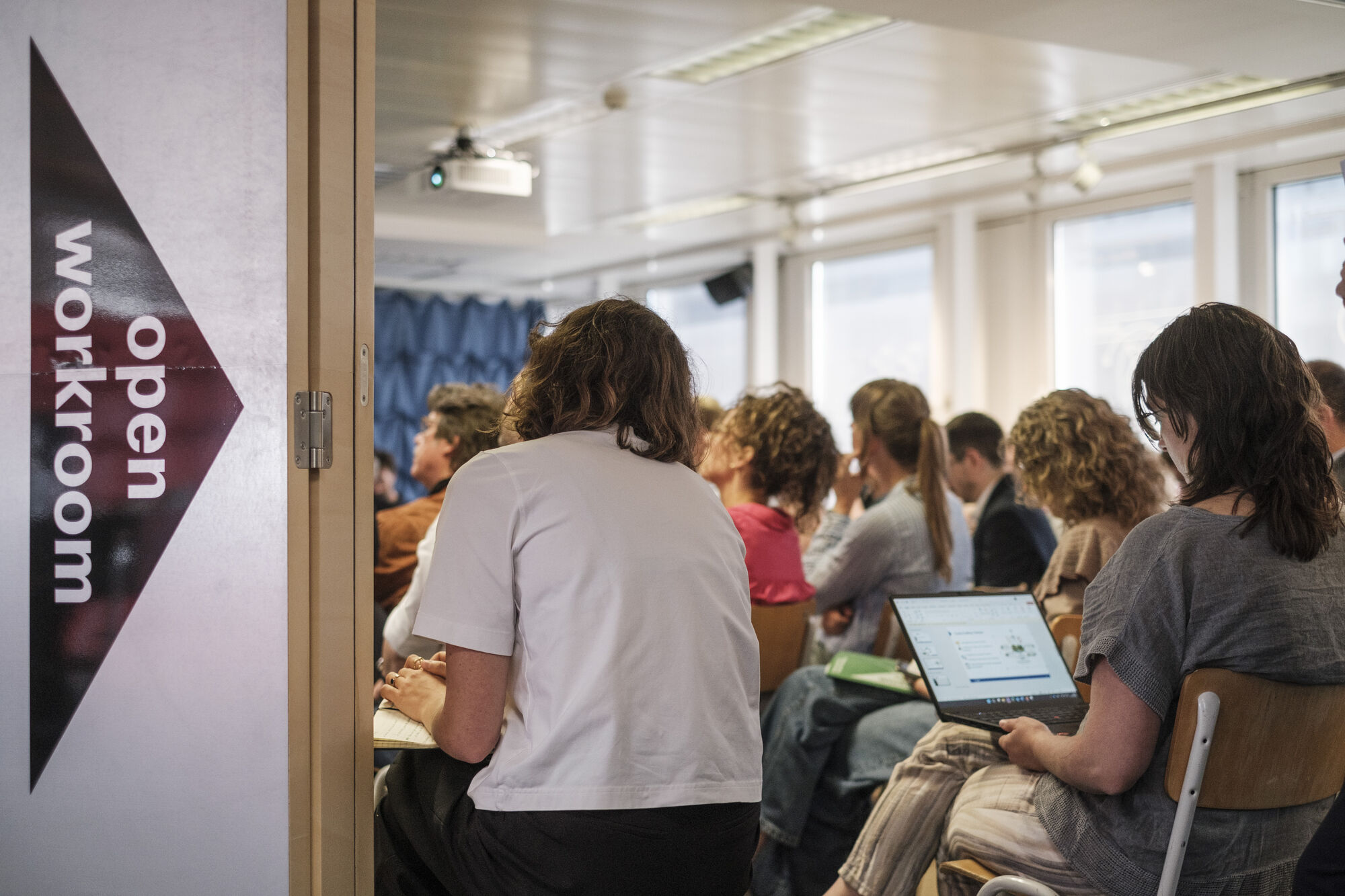


The statement was made during the first Sponge Talk of the Open Workroom Sponge Landscapes and captured a widely shared frustration: how do we ensure that promising design proposals actually gain traction on the ground? From late 2025 until the summer of 2026, we brought together a growing international community of practice around sponge landscapes. Regional coalitions, landscape architects, farmers, water managers, nature organisations, researchers, policymakers, financial actors and designers collectively explored what is needed to move from isolated sponge measures towards landscape-scale transformations tailored to local challenges.
Sponge landscapes stand for an integrated approach to deal with drought, floods, resilient food production and nature restoration. The open workroom focused on the question that lies beyond technical solutions and policy frameworks alone: how do we organise ourselves accordingly? Where is the landing space for ambitious sponge landscapes – where the paper plans are not put aside because they are too long-term or unrealisitc, but situated within a basin coalition that is enabled to take ownership and to build long-term resilience step-by-step? Can we design the organisational, financial, and institutional conditions that enable a basin-wide process of transformation?
Sponge landscapes are inherently a public-private-civic undertaking. No single institution controls the necessary resources, competences or land. At the same time, no actor is explicitly mandated to organise the collective process to re-sponge our landscapes. As a result, everyone tends to look to someone else. One example among many: land users expect governments to continue compensating for climate-related damage, while governments assume that farmers, landowners and citizens will take the necessary measures themselves. Between these expectations, the transition risks stalling.
Whether we call it the Politics of One's Responsibility or the Hot Potato: if nobody owns the whole challenge, then we need to imagine structures that can. That set the question for the closing conference of the open workroom.
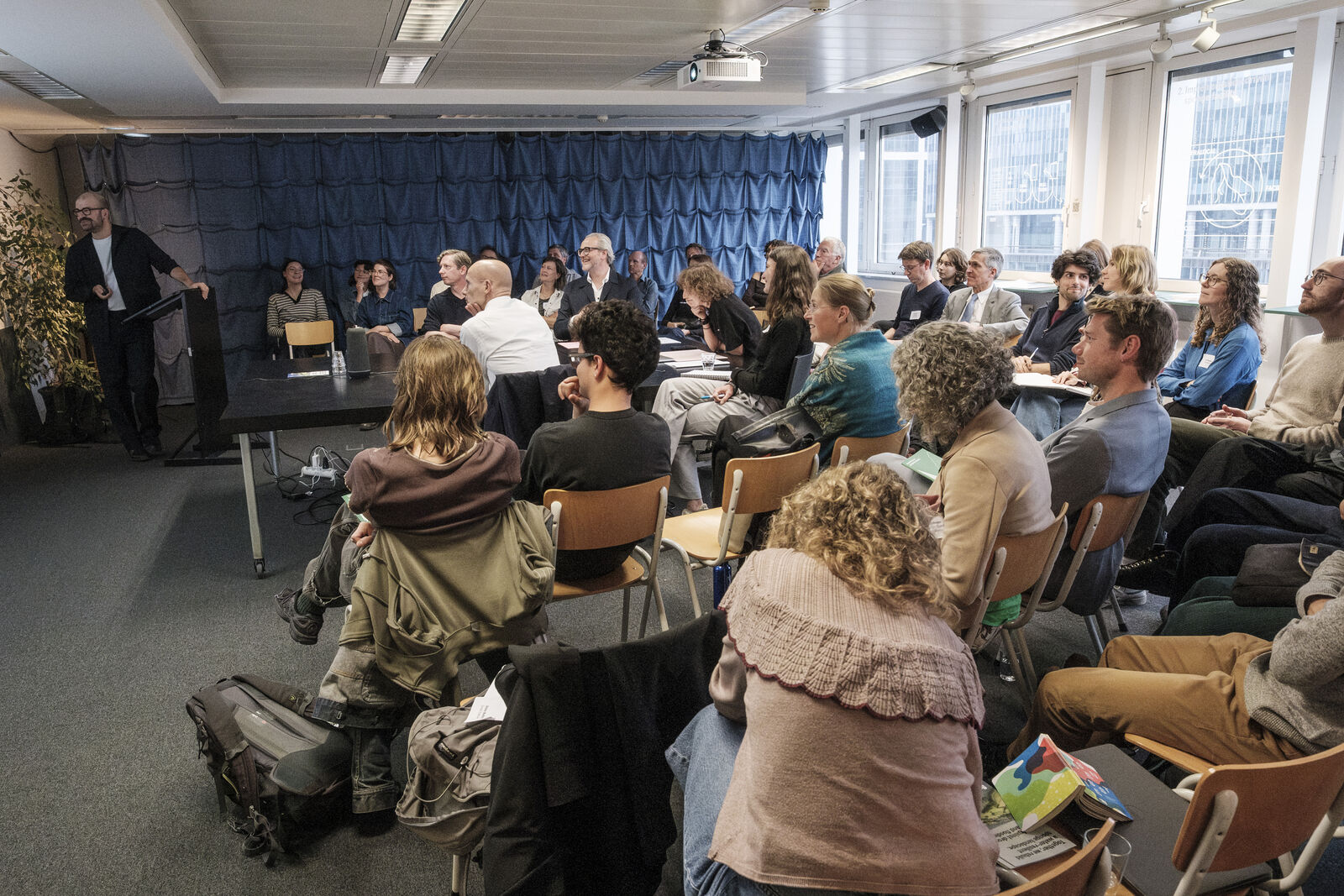
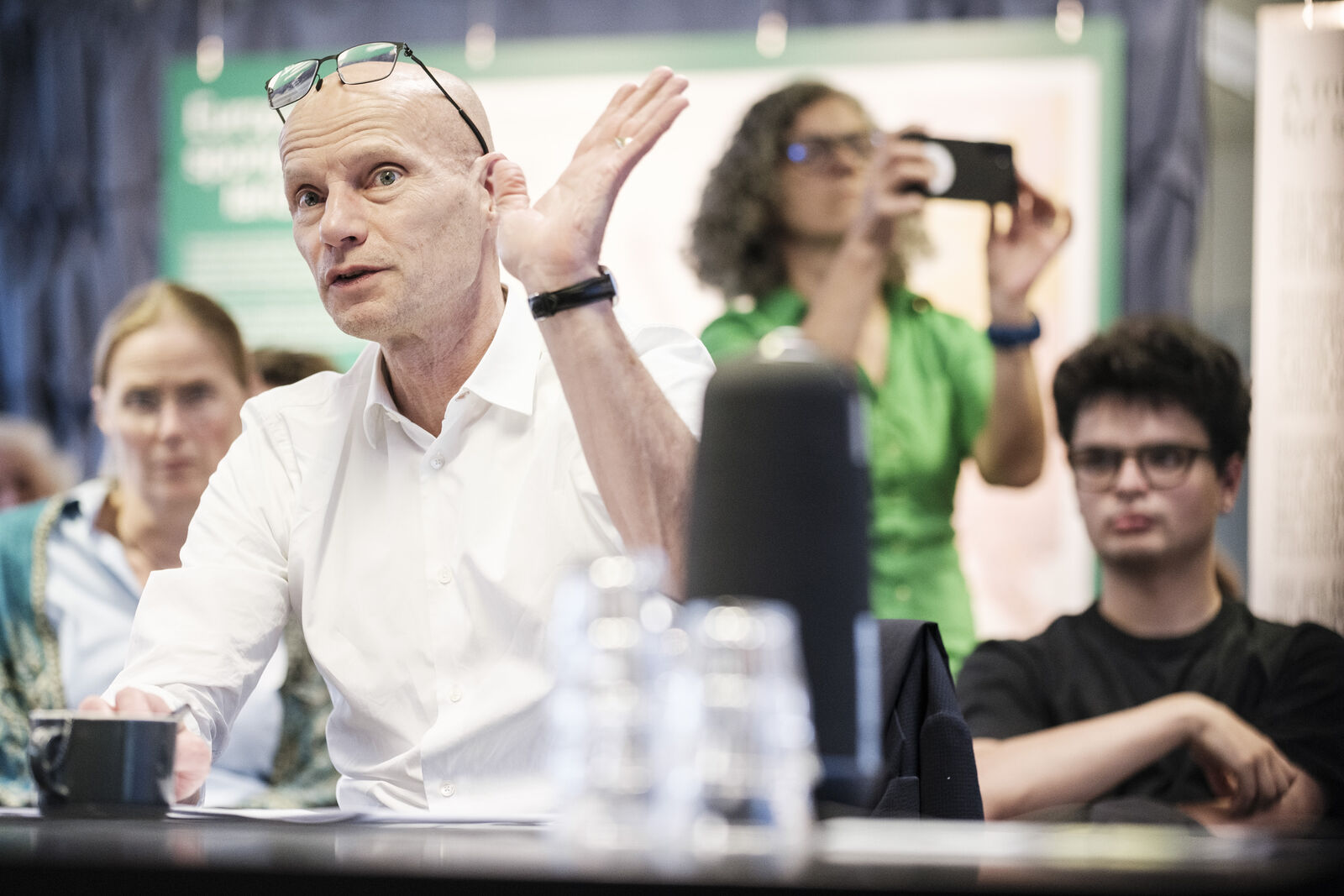
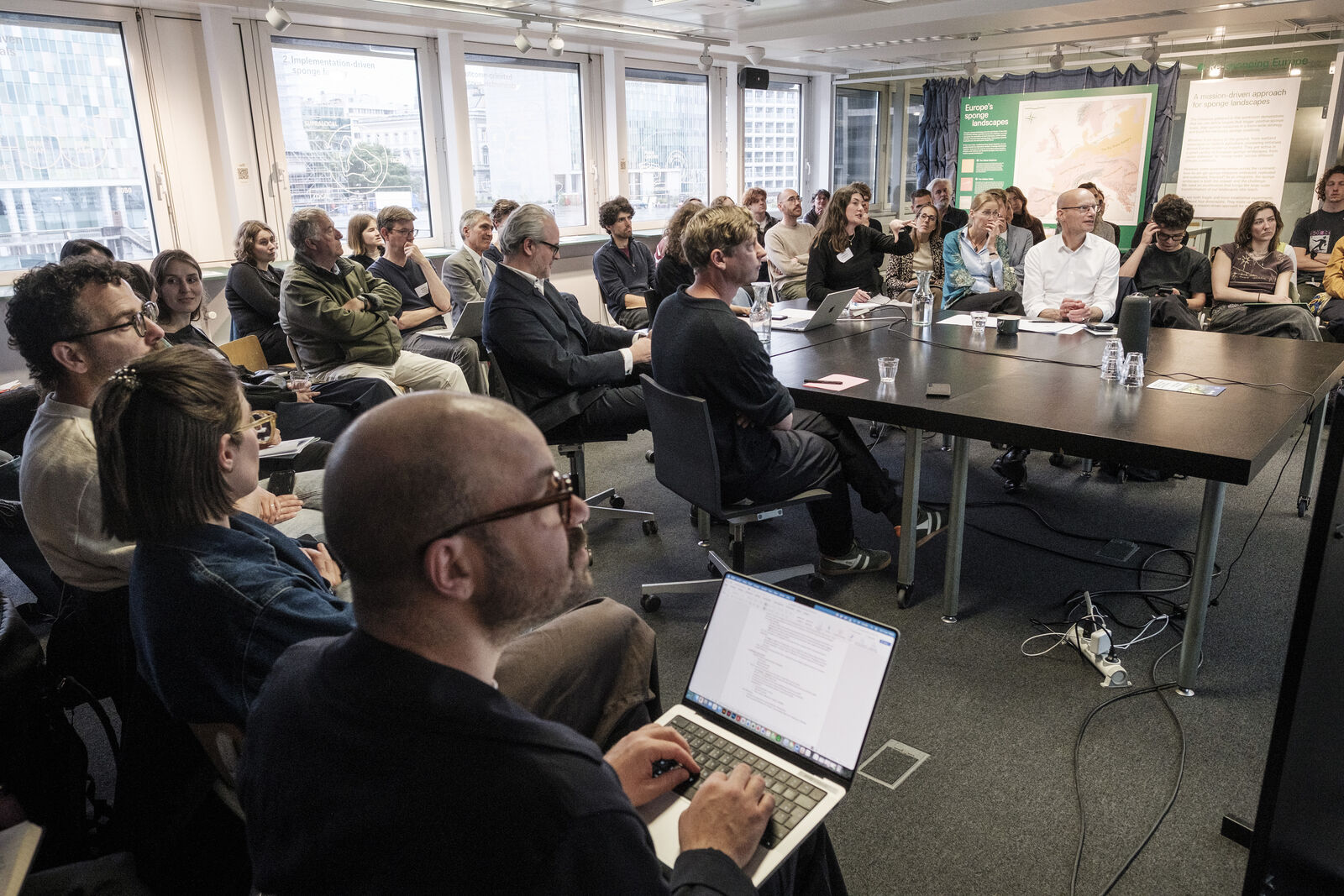
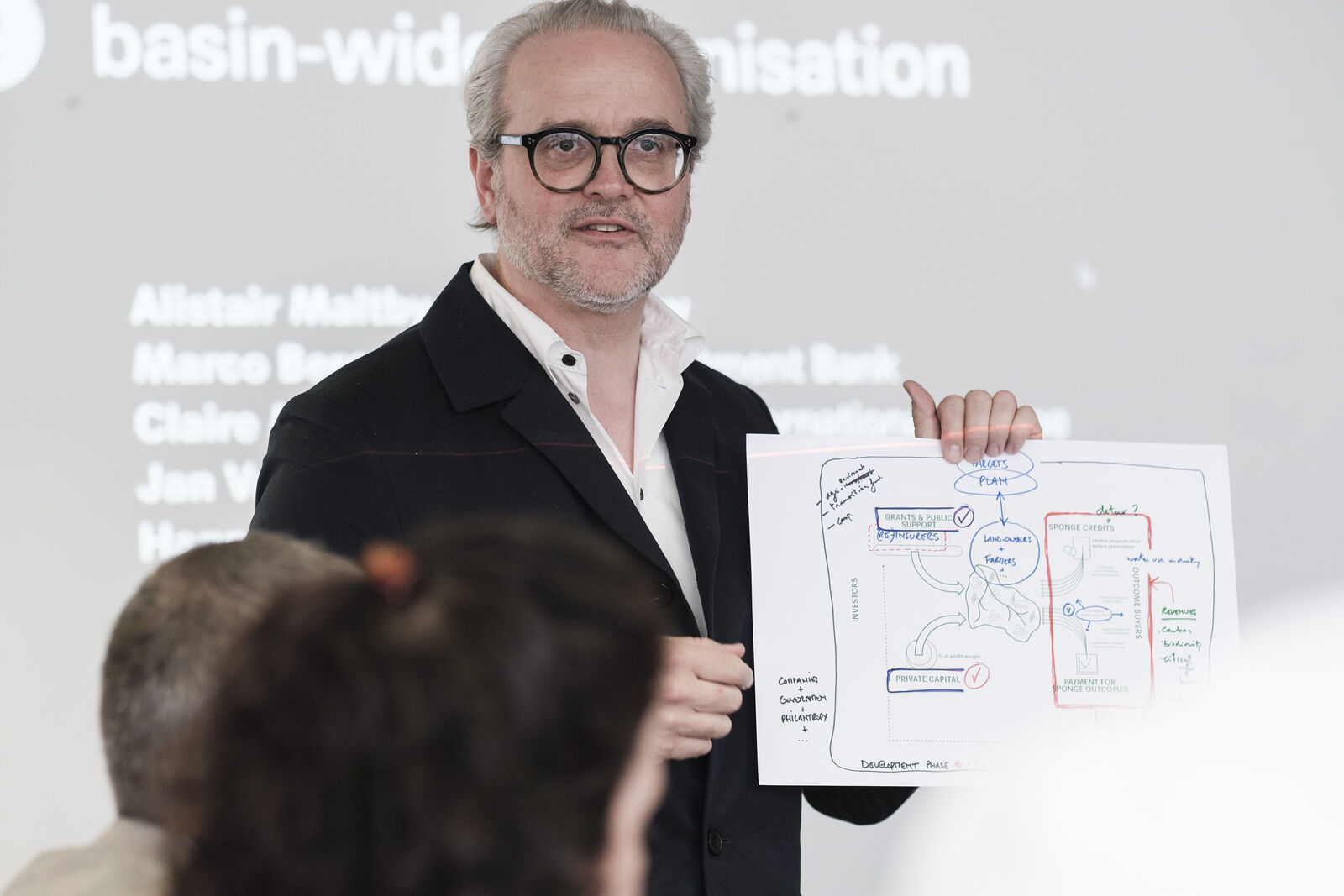
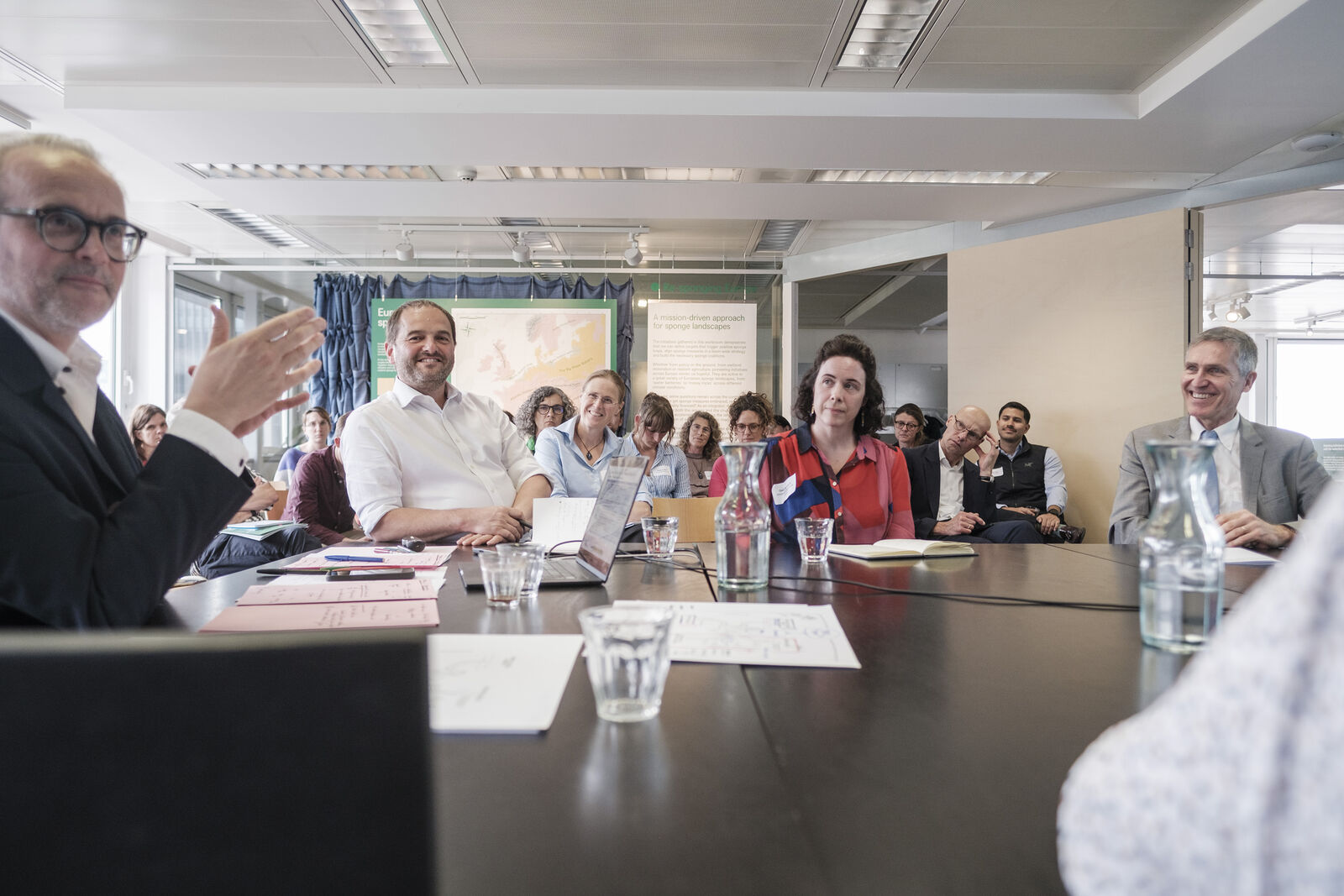
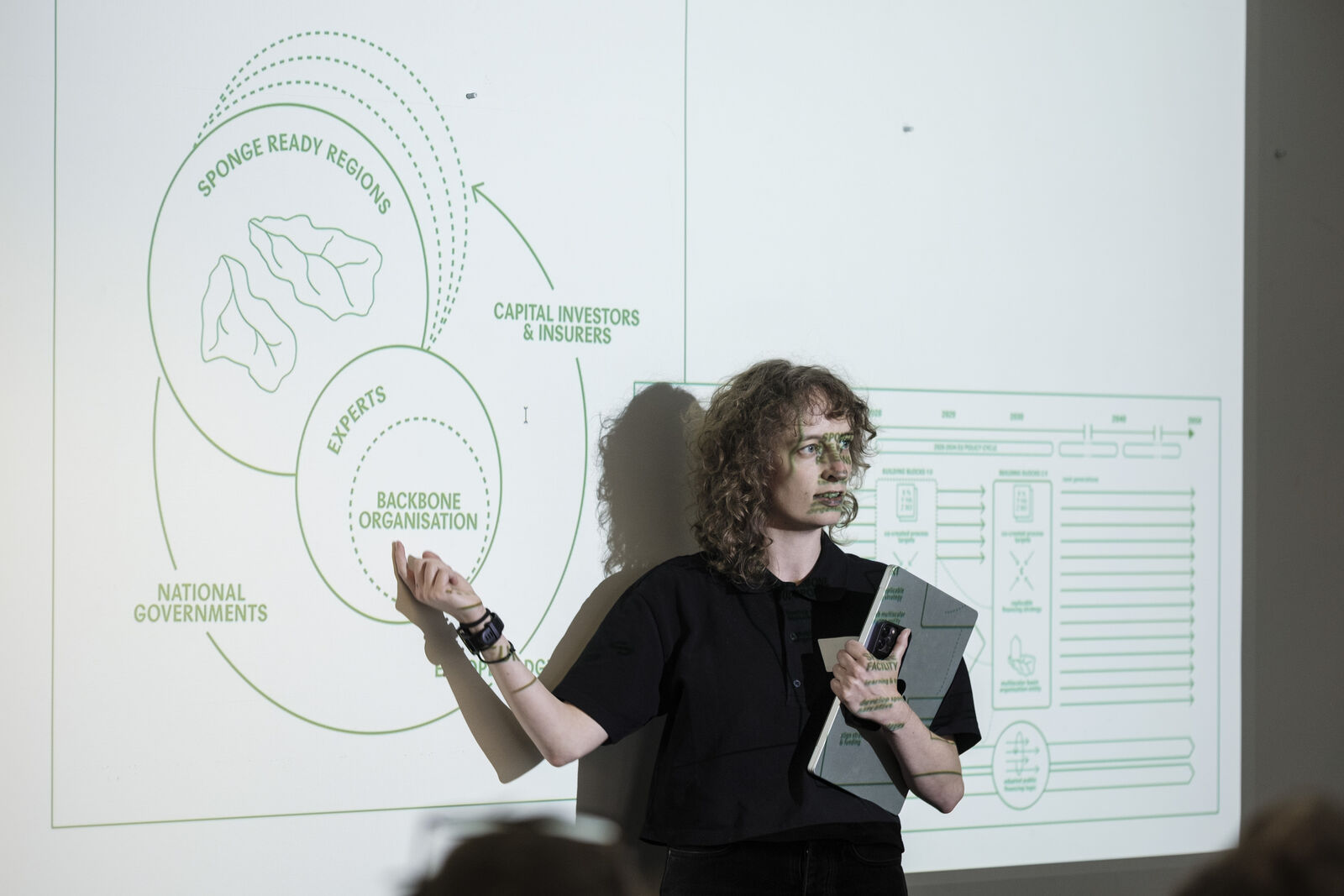
Building on a series schematic building blocks (see accompanying note) and inspired by contributions from Ellis Penning (Deltares), Kjell Clarysse (Natural Infrastructure) and Alistair Maltby (Great Yellow), we engaged a full room of practitioners on 11 June 2026 in three multidisciplinary working tables. Together, we sketched and re-sketched the contours of a possible sponge landscapes delivery infrastructure.
While the scale of the challenge is overwhelming – and while 2050 is effectively tomorrow when considering the speed of climate change's effects and the slow restoration of our landscapes – the discussion confirmed that there are reasons for optimism. Why?
• The discussions reinforced the conviction that a sponge-based approach at river basin scale generates significant social, ecological, and economic value. This is no longer merely intuition or hypothesis. We increasingly have access to practical examples and scientific evidence. Together, these provide the ingredients needed to shift the underlying economic logic. Today, the costs of landscape degradation often only become visible after floods or droughts occur, while investments in healthy landscapes are rarely recognized as economic assets. Participants outlined a perspective in which sponge landscapes are treated as infrastructure: infrastructure that prevents damage, protects economic value, improves insurability, reduces risks, and avoids future costs.
• To make this happen, the real breakthrough lies not in financing or technical optimisation, but in scale and role allocation. There is sufficient capital available, yet it is not reaching the right projects. Nearly all financial contributors emphasised that funding is there. The recurring questions were: Who takes responsibility? Who organises collaboration? Who bears risk? How can we better connect the objectives and instruments of different policy domains?
• The river basin repeatedly emerged as the most suitable scale for addressing these questions. Water, risks and benefits move throughout an entire catchment. We are also becoming increasingly capable of understanding and mapping these interdependencies, including both groundwater and green-water flows, enabling us to organise shared responsibility at the scale of the basin.
• During the conference, we explored different forms of basin vehicles as organisational structures capable of enabling long-term implementation, pooling financial flows and distributing risks. These are not intended to replace existing water governance structures or take over the responsibilities of Member States. Rather, they offer an integrating scale for implementation and public-private collaboration.
• To make a financing and governance model for sponge landscapes work, several essential ingredients are required: coordinated implementation with measurable outcomes; the pooling of revenue streams through contractual and performance-based arrangements; sufficient scale through project pipelines that enable risk diversification; robust monitoring and reporting of the multiple benefits generated by sponge landscapes; and targeted government guarantees that can act as leverage for private investment.
• However, the coalition leaders, designers, coordinators, policymakers and investors responsible for making this happen are faced with more than a technical assignment. They also have a cultural and societal role to play. This means being honest about future risks, making alternatives visible, building trust and designing territorial solidarity.
Perhaps the greatest reason for optimism is this: the willingness to collaborate within river basin coalitions is often far stronger than national and international policy debates might suggest. Across Europe, pioneering regions are ready to move beyond isolated pilot projects towards place-based approaches that accelerate implementation at basin scale.
The challenge is therefore no longer “knowing what works”. The challenge is how to translate that knowledge into structural change.
Who will create the space in which these sponge-ready regions can learn from one another, align their strategies and, together, make the leap from experimentation to a new practice?