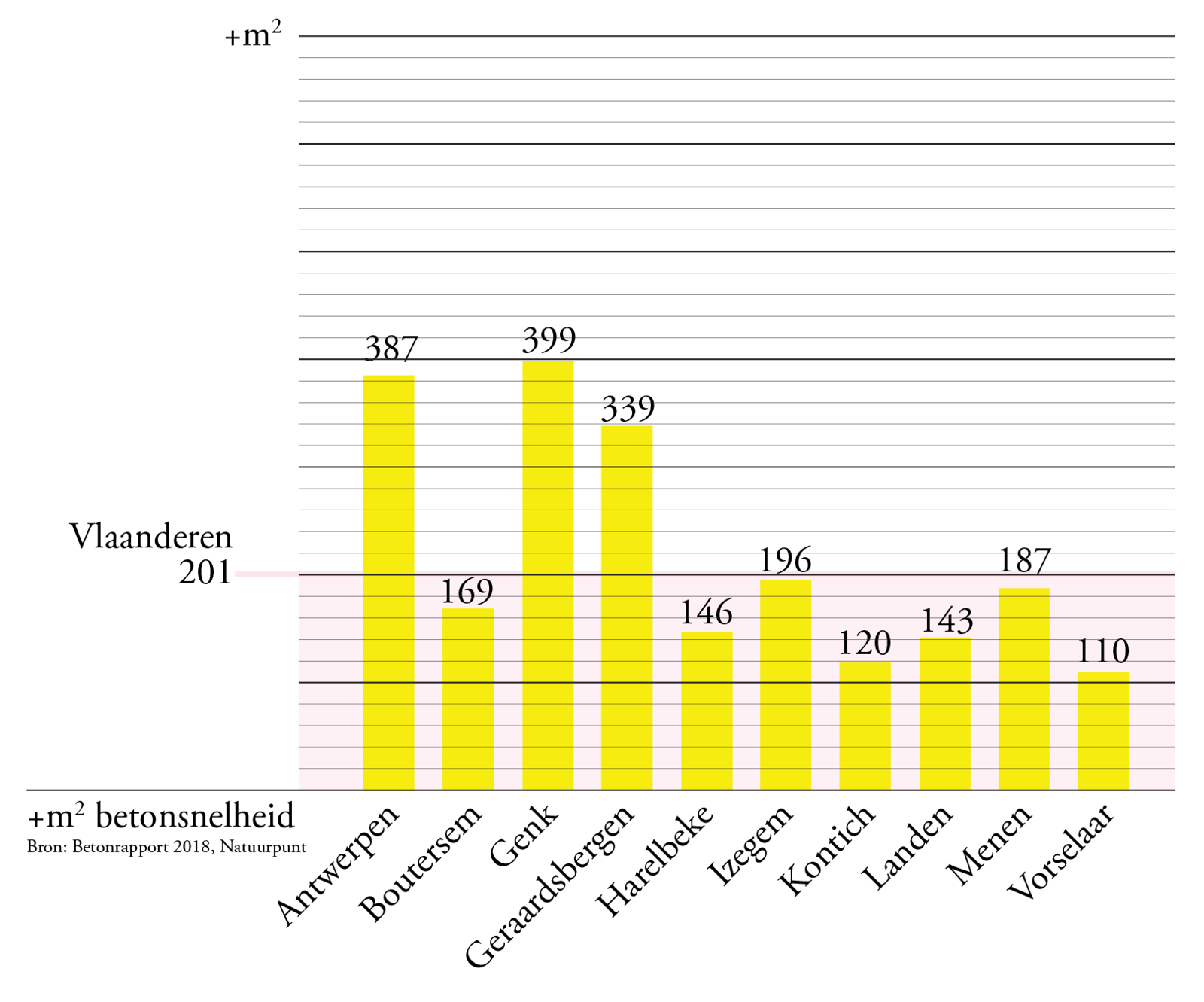
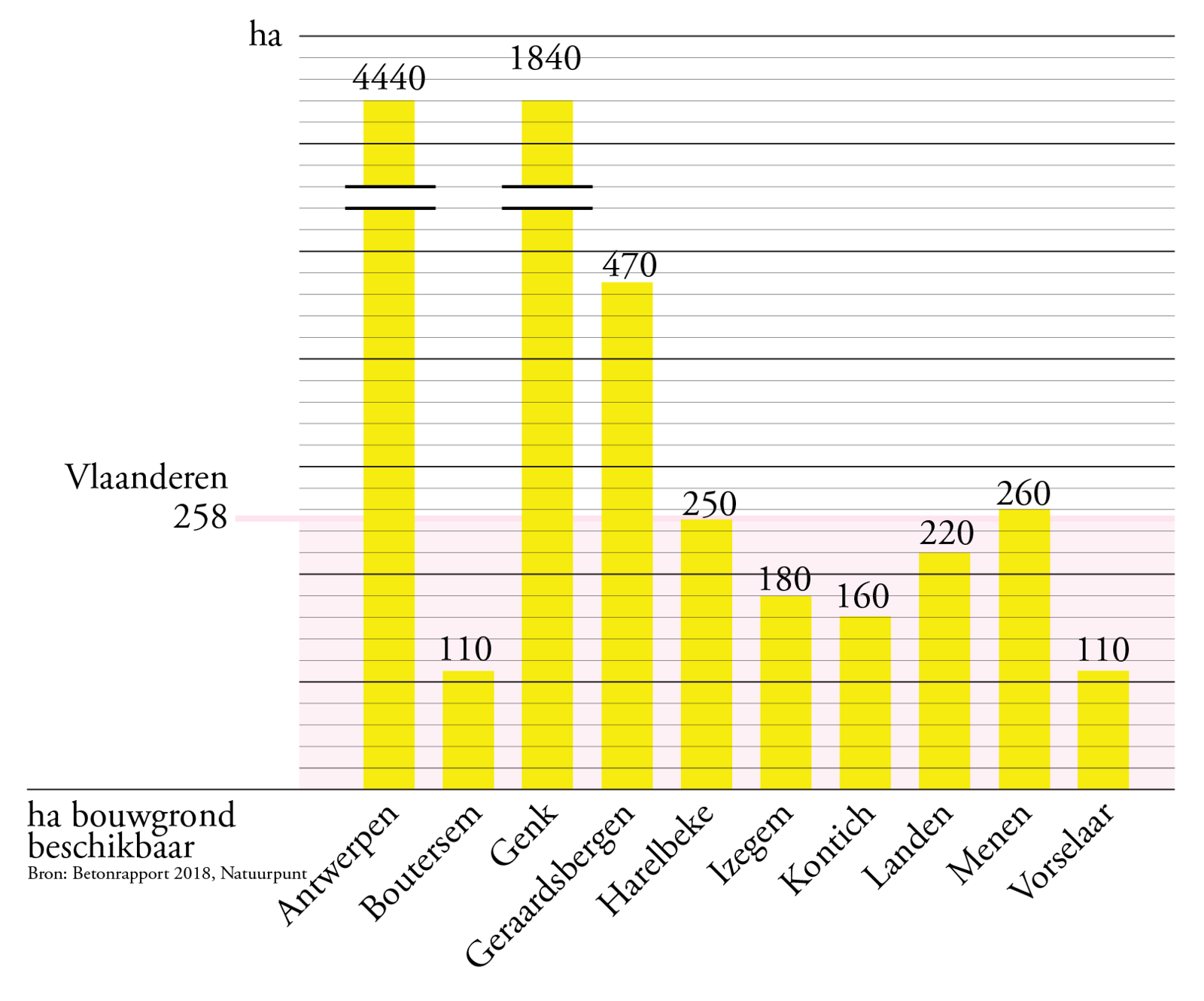
Desealing is in. For several years now, we have seen schools transforming their playgrounds into green play oases, neighbours joining forces to remove paving stones from their streets, and local governments greening their village squares and town markets. At the same time, paving in Flanders has still increased by 10 football pitches per day since 2015. Therefore, 18 ambitious towns and municipalities, supported by the ‘Green-Blue Network in Built-Up Areas’ subsidy call, took the lead to make green-blue ambitions standard practice. Reversing the paving trend is the equivalent of silver, creating healthy and resilient municipalities that offer better quality of life is pure gold!


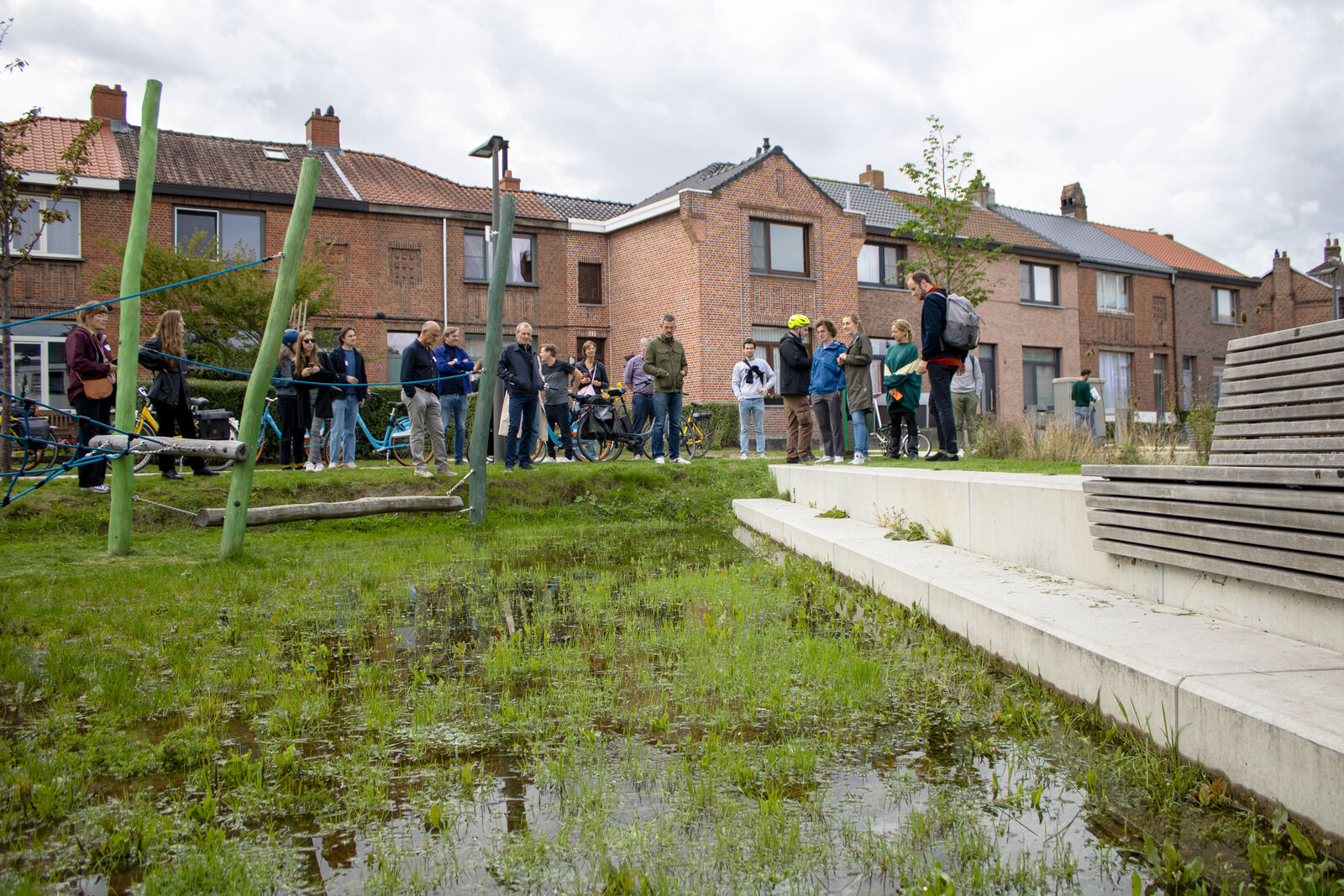
The project call is supporting more than 50 projects. They include opening up hidden watercourses, creating wet play forests, restoring landscape connections, custom green-blue street profiles or rewilding projects. There are also many issues to be addressed at the process, partnership and impact level: how can we scale up the lessons learned in the construction of one street, to develop an approach for all the other streets in the municipality? How can we safeguard, legally and from a planning point of view, parcels of land in the most strategic locations for the water system in the long term? How can you forge the right partnerships to ensure the project is achievable substantively, procedurally and financially?
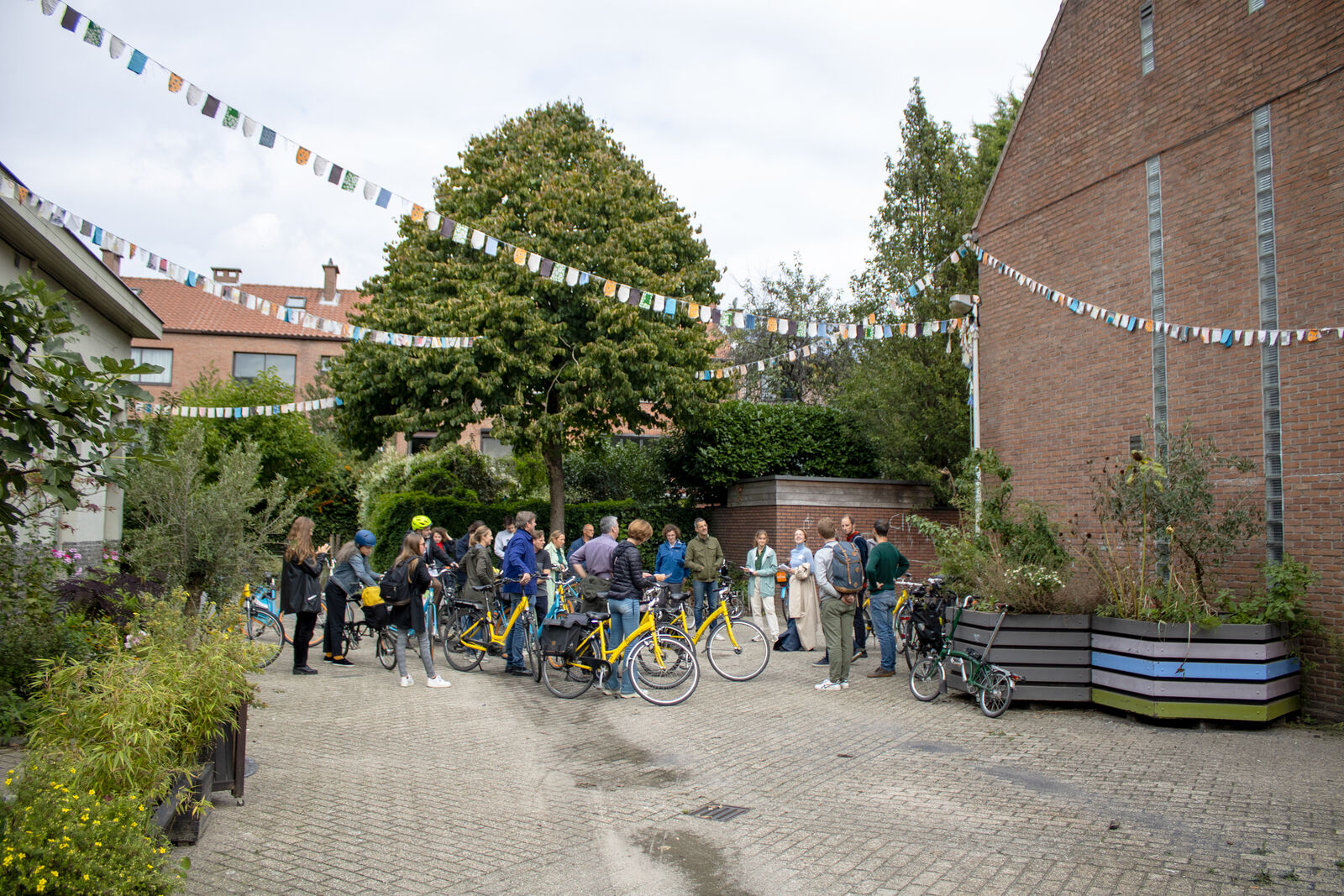
During several days of coaching and breakthrough workshops between end of 2022 and 2025, the 18 municipalities met with design facilitators and experts to discuss questions they had in common and to exchange knowledge. The common issues are bundled into five working tracks. They paint a picture of what has been explored in the process and are intended to help the other 267 Flemish cities and municipalities make a start.
· Green-blue system reflex
Green-blue measures such as desealing, water buffering or infiltration and planting drought-resistant plants, etc. don’t have the same impact in each location. The interplay of the relief, soil, water and land use is decisive. Effective green-blue projects rely on a close reading of the ecological landscape system. We developed a concise methodology with the available map layers to provide insight into how to read a green-blue system, and the questions that should be explored. Cases from Kontich, Menen, Alken, Arendonk and Herne illustrate how this systemic reading is applied in practice, from project definition to implementation.
· Green-blue projects in the spotlight
The 50 projects are highly diverse, in terms of scale, location, the way they are embedded in the water system, the partnership involved, etc. We zoom in on five different cases which, being type projects, are illustrative of other places in Flanders: the green-blue cemetery (Menen), the purple rewilding spot (Avelgem), the water square on the hillside (Geraardsbergen), the green-blue infrastructure axis (Izegem) and the upwelling oasis (Linkebeek). We document their design choices, design principles, materials used and planting choices, as sources of inspiration for the next generation of projects.
· Portrait of green-blue project leaders
Green-Blue Networking revolves around people. Green-blue projects are challenging and dynamic, and our systems have not yet been adapted to them. Moreover, any initiative that brings about change, no matter how positive, encounters resistance. Project managers face new types of issues while having to manage high expectations both internally and externally. In this working track, project leaders have their say in five in-depth interviews. They tell us about the continuous process of deliberation, negotiation, and finding the right momentum to achieve a breakthrough: with an ambitious local parking policy (Temse), through strategic land positions (Kortemark), through effective collaborations across municipal borders (Landen), thanks to the creation of a street inventory (Vorselaar) or with successful cross-service operations from a vision to execution (Kortrijk)
· A strong negotiating position for green-blue projects
The political, juridical and legal tools to encourage or enforce high-quality green-blue landscapingare today incomplete. There are conflicts involving land use, the is not always a legal lever to safeguard green-blue function and the financial resources are not systematically available. This means it is crucial that local governments adopt good management and a strong negotiating position. Illustrated by the experience of cases in Menen, Harelbeke, Genk and Antwerp, Filip Canfyn (Rebel) and Laurens De Brucker (Xirius) offer tools to strengthen the starting position in negotiation processes through gaining insight into and developing a strong land position, legal preconditions and policy frameworks.
· Policy Innovation
The Flemish Department of Environment & Spatial Development compiled an overview of the planning tools currently used by municipalities. On the one hand, this overview reflects the most commonly used tools and, on the other, reveals the gaps in the current framework.
The 18 municipalities are supported by the Flemish Department of Environment & Spatial Development with funds from the Blue Deal. The municipalities were individually supported by design facilitators Fallow, 51N4E and Plant & Houtgoed, Maarch & GroenLab, and PTArchitects and were able to call on a pool of experts to answer questions related to hydrology (Sweco), biodiversity (Corridor), circularity (Sweco), participation (The Middle Men), financial (Rebel) and legal issues (Xirius). In addition, throughout the process, Break Iron developed a “Desealing Scanner”. Based on our experience in the first generations of Desealing Pilot Projects (Proeftuinen Ontharding), Architecture Workroom Brussels supported the Flemish Department of Environment & Spatial Development by organising a shared learning environment, bundling lessons learned throughout the three-year trajectory and chairing the Quality Chamber with (external) Quality Chamber members An Rekkers, Sylvie Van Damme, Jorryt Braaksma and Oswald Devisch.