In association with the City of Leuven and Leuven MindGate, and with the support of Flanders Technology & Innovation, we are helping to build a social design space for innovation and transformation in Leuven's historic Town Hall: the studio. The Town Hall will undergo extensive renovation works starting in 2025. Until the end of 2024, temporary use of the vacant second floor of this beautiful building will provide space for an experimental living lab. The Future Generations Lab is led by ten young people from Leuven and reflects on the impact of social and technological changes on the future of jobs. This included a 'takeover' of the Town Hall by young people and a wider debate on innovative learning and working environments as part of the FTI And& festival in March 2024.


The Town Hall is the hub and base where the people of Leuven envision and shape the city of tomorrow. In the Town Hall we seamlessly connect the present with the past and the future. As a key part of the Town Hall's operations, the studio offers an open opportunity and an invitation to jointly think about the city and its challenges. Bringing different people, expertise and ideas together creates innovation. We invite experts, organisations, companies and institutions, as well as citizens and associations, to reconnect, experiment and innovate together. The studio aims to be active, using digital and analogue methods, in many forms and in many places around the city and the world. In spring 2023, Wissel Architectuur Studio designed a setting for discussions and presentations in the Town Hall.
Future Generations Lab
From October 2023 till March 2024, a group of young people from Leuven have worked in the studio on experiments that result in debate, reflection and new insights regarding the future of jobs. Our education system and labour market are under pressure. More and more 'new' jobs remain unfilled and an increasing number of young people are becoming disconnected from the educational offering available. The studio's experiments depart from very different worlds, but all explore the impact of future changes on the city and society in which young people will live, learn and work.
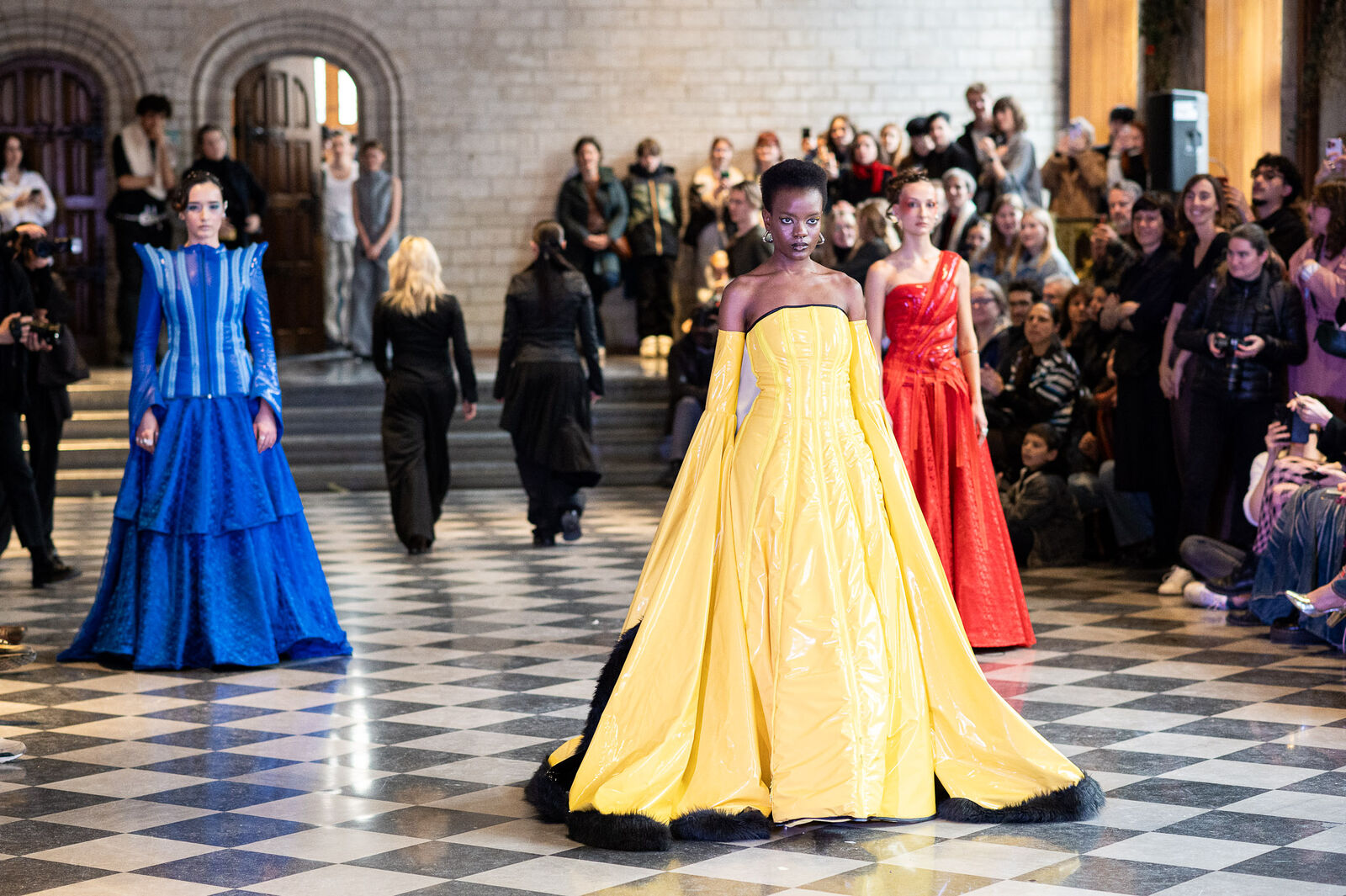
In the Future Generations Lab, these young people bundled their insights in exchanges, in dialogue, in presentations, in documentaries, in music, but also in designs, constructions, prototypes, physical or virtual. The young people develop their ideas with the help of experts, policymakers and businesses, and present their experiments in Future Fusion - a public event on Saturday 16 March, featuring a fashion show, a hip-hop concert, community activities and artistic and architectural installations in and around the Town Hall.
Documentary-makers Bertrand Lafontaine and Michael Lombarts followed the young people both in front of and behind the scenes and made a fascinating portrait of this talented and socially engaged group. This aftermovie was screened a first time at Cinema ZED in Leuven on 27/6 in the presence of the young people who participated in this track.
The studio
The studio is keen to test its operating and workshop model in relation to the insights of other innovative learning and work spaces. This will create an international network of innovative workshops that will collectively help prepare Flanders for the future.
On Monday 18 March, we hosted a working session at the studio on 'Future-Driven Learning and Working Spaces'. Many professional sectors are facing major changes. Not only technological changes will have a major impact on how we will learn and work in the future, social innovation is also taking place in many places in Flanders. We need new forms of learning and working to meet the social challenges with new talent and new jobs.
Among other things, we invited initiatives currently engaged in innovative work on learning and working environments. New innovation sites are emerging around Flanders, which focus on the debate about the transitions in our society and provide space for new forms of learning and working on the one hand, and new forms of collaboration and practices on the other.